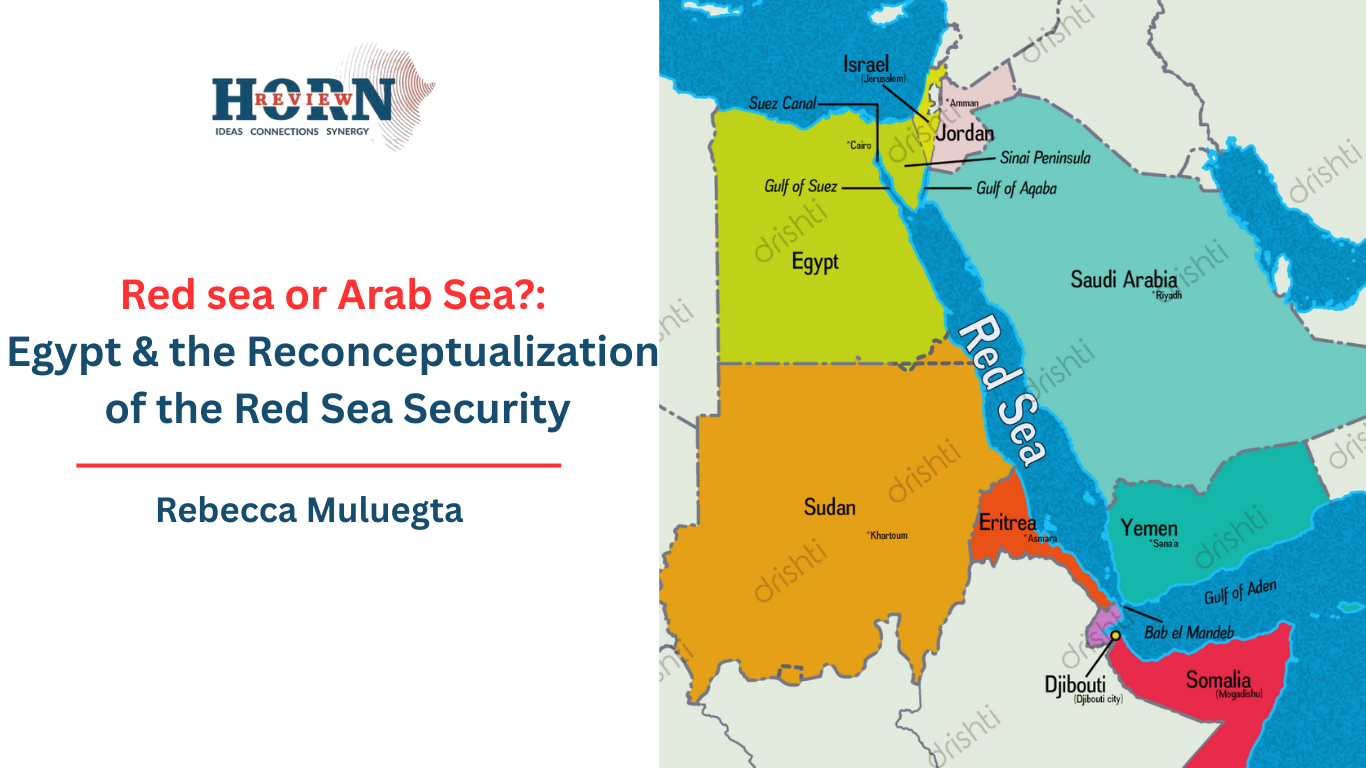
The Red Sea has been reconceptualized as an exclusive “Arab sea” a strategic corridor where Egypt exerts hegemonic influence through a sophisticated lattice of alliances with Saudi Arabia, Sudan, Eritrea, and Djibouti. Within this rigid geopolitical architecture, Ethiopia is systematically positioned as the “aspirational outsider” , a landlocked titan whose pursuit of maritime sovereignty is viewed by the established littoral powers not merely as a commercial ambition, but as a disruptive intrusion into a closed sovereign club. By leveraging a high-stakes mix of financial diplomacy, joint defense pacts, and gray-zone backroom deals, Egypt has successfully marginalized regional rivals and relegated non-Arab interests to the periphery, effectively transforming the Bab-el-Mandeb into a theater of controlled Arab dominance. This maneuvers Ethiopia into a precarious “containment trap,” where any move toward the coast is met with a coordinated, multi-state “red line.”
Egypt’s got history on its side, the kind that whispers of pharaohs sailing these waves to snag treasures from distant shores. Today, they spin it modern: this sea belongs to the folks whose feet touch its sand, Arab brothers standing tall against anyone else. Egypt calls it a cheeky overstep, like a guy from the hills trying to claim the beach house. They don’t just talk, they act. Quiet arms trickle to Somali groups still sore about the deal, stirring up noise that echoes all the way to parliament votes. Eritrea, with its grudge from old scraps, rolls out the welcome mat for Egyptian ships, letting them drill and park right on Ethiopia’s doorstep. It’s like neighbors teaming up to build a fence, Egypt watching from across the water with a knowing smile, selling the whole thing to Arabs as protecting our backyard.
The Red Sea serves as the primary theater for a sophisticated strategic encirclement led by an Egypt axis, where Israel remains a tolerated but siloed participant, permitted to “float through” while being systematically excluded from regional governance. While the Abraham Accords have facilitated tactical coordination, Egypt views northern port competition and Israel’s high-profile kinetic responses to southern maritime threats as a challenge to its own “gatekeeping” hegemony. This maneuver is now inextricably linked to the hydro-political conflict over the Nile, as Egypt has effectively merged these distinct geographies into a single security sphere; by signaling that any achievement of Ethiopian “sea legs” will be met with a tightening of the “water taps” downstream, Cairo is attempting to force a zero-sum bargain that trades maritime access for upstream concessions.
That story sticks, lighting up Arab ears, pulling in Gulf voices eager for smooth sailing to their shiny new coastal dreams. Sudan tags along for the ride, Egypt’s narrative fitting like a glove. Ethiopia fires back with their own legends, old kingdoms ruling these seas, tales of prophets finding safe harbor there but it gets drowned out in the louder Arab chorus. Egypt’s pitching this as unity, summits in sunny spots where admirals clink glasses with princes, maps showing just the right names. Ethiopia’s leader rallies crowds with fire about shared history, lining up friends from afar with gear and goodwill. Still, Egypt’s threads hold tight, shadows moving in alleys, hulls trailing hopeful newcomers. Israel stays sly, weaving quiet links that keep Cairo glancing over its shoulder
The strategic landscape has shifted as Cairo successfully rebrands a traditional turf war into an epic of regional solidarity, framing every containment measure against Ethiopia as a victory for collective “brotherhood.” This narrative fueled by proxy maneuvers, the visceral weaponization of river fears, and Gulf-capitalized diplomatic momentum has temporarily consolidated Egypt’s role as the primary architect of the Red Sea status quo. However, this high-stakes storytelling faces a looming credibility gap; Ethiopia’s historical resilience and demographic gravity suggest a “spirit of grit” that cannot be permanently contained within a restrictive maritime architecture. As Israel identifies the loose threads in this consensus and as sub-state actors from maritime insurgents to regional rebels exploit the friction between established powers, the neighborhood is beginning to rumble. The current “magic” of Cairo’s dominance is increasingly vulnerable to a systemic rewrite, where the grit of the hinterland and the opportunistic maneuvers of outsiders threaten to unravel the carefully constructed containment of the giant.
By early 2026, the strategic atmosphere in the Red Sea has reached a high-pressure equilibrium: a landscape of silhouettes chasing bold sails and localized unrest flickering against tense horizons. While Egypt’s diplomatic corps emphasizes formal stability, its sub-surface maneuvering with littoral allies suggests a continued commitment to a restrictive, state-centric narrative. However, the Red Sea is too dynamic for a single storyteller; the current geopolitical pull is toward a multi-polar reality that Egypt’s “pen” cannot fully dictate. Maintaining an inflexible containment strategy risks escalating friction into a series of systemic chokepoints and spillover conflicts that could jeopardize the entire “Arab Sea” project. The ultimate hook is a demand for adaptive regionalism: by integrating Ethiopia’s energy surplus and acknowledging the shifting security landscape, the region could transition from a theater of scars to a high-flow economic corridor. In this high-stakes environment, the choice for entrenched powers is clear: adapt to the inclusion of rising hinterland giants, or risk being rewritten by the very waves they seek to control.
By Rebecca Muluegta, Researcher, Horn Review