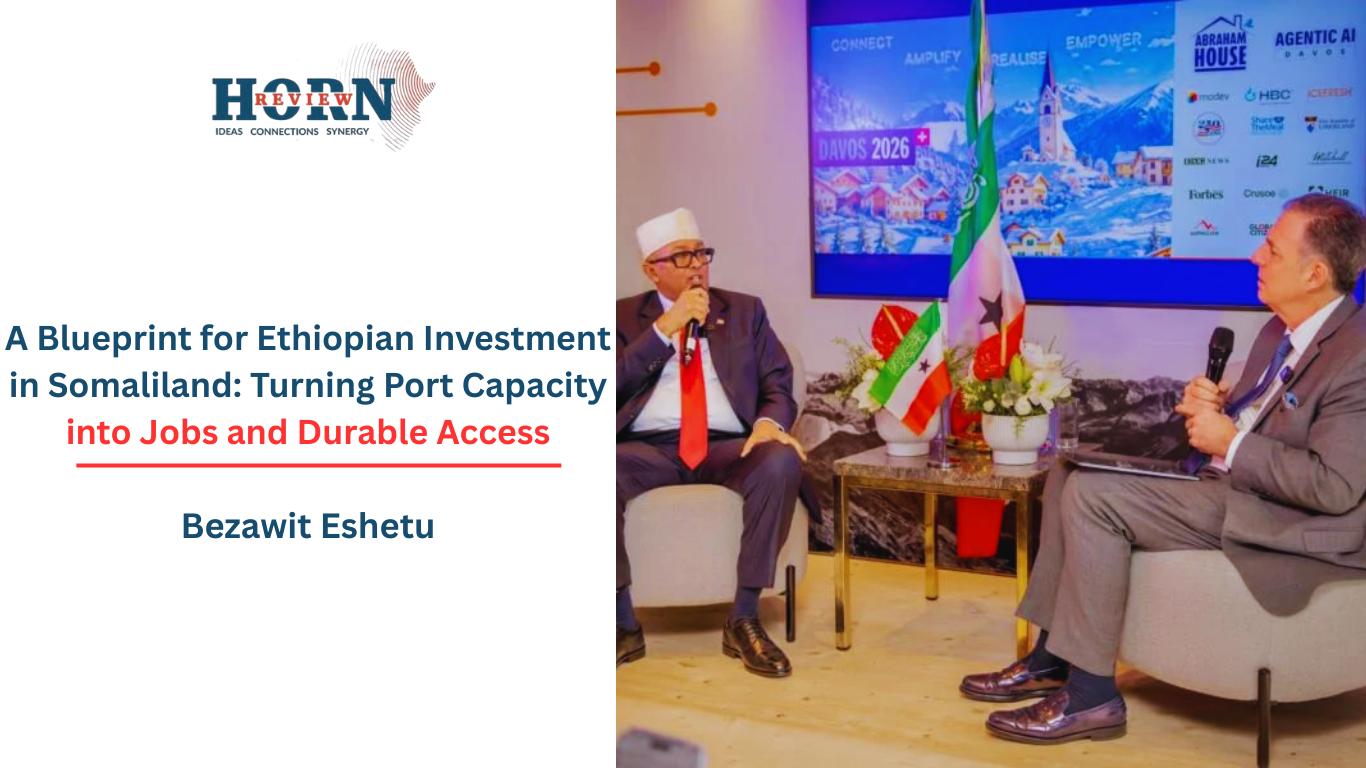
At the 2026 World Economic Forum in Davos, Somaliland President Abdirahman Mohamed Abdullahi cut through diplomatic uncertainty. He positioned his nation as a strong partner for institutional investors, supported by stable governance and reliable legal frameworks. This bold repositioning transformed Somaliland from a sovereignty puzzle into a commercial powerhouse, focusing on economic zones and regional connections that provide tangible benefits for Ethiopia’s landlocked economy.
This “Davos Doctrine” signifies a turning point in the Horn of Africa. Somaliland is building prosperity without UN recognition. By attracting multinational corporations to set up operations in Berbera, it achieves informal recognition through operational success, where business activity surpasses official endorsements. For Ethiopian investors, this promotes the private sector as the leader of credibility, creating a practical legitimacy that prioritizes trade over border disputes.
Israel’s recognition of Somaliland on December 26, 2025, changed the risk landscape, enhancing Hargeisa’s global standing and simplifying cross-border cooperation with modern technical and financial tools. While this move sparked regional backlash and increased political tension, it also boosts the legitimacy of Ethiopian partnerships and heightens strategic risks.
Investors must carefully evaluate these factors, considering how the DP World-funded $442 million Berbera port upgrade and its nearby economic zone could help Ethiopia’s exports of coffee, textiles, and perishables. This improves value at this important Red Sea route and turns logistical challenges into lasting competitive advantages.
The progress benefits from Somaliland’s resources aligning well with Ethiopia’s manufacturing strengths. Ongoing livestock shipments to Gulf states already highlight these connections. However, the 850-kilometer coastline’s fisheries and developing mineral deposits have immense untapped potential. Ethiopian businesses, using proven agro-processing and logistics skills, are capable to improve these products through partnerships in slaughtering, cold storage, and mineral processing. This would create jobs and increase income, bringing the two economies closer together.
This route is supported by a “coalition of the invested” already active in Somaliland, providing Ethiopian companies with successful models for engagement. The United Arab Emirates, through DP World’s extended concession, has turned Berbera into a key maritime hub, channeling investments that upgrade infrastructure and strengthen supply chains.
The United Kingdom, via British International Investment’s shared ownership of the port, offers institutional support, enhancing territorial durability with funding that emphasizes long-term viability. A significant step occurred on December 25, 2025, with the launch of a $20 million livestock quarantine zone in Berbera, led by a collaboration of Taiwanese, Saudi, and U.S. private investors. This initiative standardizes export protocols and opens premium Gulf markets.
India views the corridor as a crucial route for pharmaceutical shipments, seeing Berbera as an efficient entry point to East African consumers and leveraging its role in supplying 16 percent of the continent’s pharmaceutical imports. China sees Berbera as a vital part of its broader infrastructure network and has previously proposed funding for roadway improvements, despite diplomatic complexities surrounding Somaliland’s relations with Taiwan. These interactions show how major economies navigate recognition challenges, committing to strong, profitable pathways supported by multinational interests.
The business sector and multinational companies play an essential role in strengthening informal ties, acting as unofficial diplomats who weave economic connections into the fabric of Ethiopia-Somaliland relations. By investing and sharing expertise, they avoid stalled formal processes, embedding mutual interests that encourage cooperation and protection.
This commercial diplomacy is evident in the actions of key players: the UAE’s DP World not only invests but also brings global operational standards, making Berbera a hub for Ethiopian exports. The UK’s British International Investment serves as a stabilizing force, its ownership stake sends a message to markets about the territory’s reliability and encourages joint logistics ventures.
The U.S., through private sector participation in the same project and discussions at Davos involving Eric Trump, seeks strategic positions that align with broader security interests, enhancing informal partnerships. India’s focus on pharmaceutical access and China’s infrastructure initiatives further illustrate how multinational corporations create interconnected dependencies, transforming bilateral agreements into resilient multilateral frameworks that prioritize economic stability over political uncertainty.
In this environment, businesses and multinationals go beyond funding to establish functional sovereignty. Through major asset investments, they create paths that require political moderation, prioritizing operational effectiveness over ideological disagreements. This evolves through the introduction of global standards and mandatory international arbitration, which unify the regulatory environment for smooth participation.
For Ethiopia, engaging its business leaders acts as a trust builder. Their commitments to lasting infrastructure signal financial stability to global insurers and investors, lowering risk premiums and encouraging more inflows. This group then forms a protective network of American, British, Indian, and Gulf interests, making the Berbera corridor a crucial international asset.
Such reinforcement is essential against adversarial actions, like Egypt’s 2025 deployment of thousands of troops and equipment to Mogadishu. This was framed as defense but aimed to undermine Ethiopia’s Berbera goals. Ethiopia’s response should involve integrating U.S., British, and Gulf entities in the economic zone, positioning disruptions as threats to global financial systems rather than isolated incidents.
Multinational companies thus function as informal representatives, driving commercial relations during diplomatic impasses. They inject capital, technology, and supply chains, providing the institutional strength that recognition usually offers, complete with legal agreements, maritime protections, and insurance arrangements that embody practical statehood. In the Ethiopia-Somaliland dynamic, firms like DP World and British International Investment are already forming sovereign-like partnerships, expanding a bilateral agreement into a complex safeguard essential for Western and Gulf investors.
Disruptions at the port affecting these companies’ profits trigger significant geopolitical consequences, extending beyond any non-binding agreement. To strengthen this defense, Ethiopia must evolve from vague strategies to solid, project-specific legal agreements that hold international partners accountable regardless of political changes.
A non-binding memorandum of understanding carries inherent weaknesses, as isolated recognitions lack the legal framework necessary for universal market access. Ethiopia should enforce asset protection through binding agreements, incorporating Somaliland’s Investment Act No. 99/2021 into a safeguard compatible with its domestic promises.
Strong stabilization clauses, ensuring consistent regulatory and financial conditions throughout the project’s duration, prevent arbitrary disruptions and maintain investor rights. This approach draws inspiration from examples in Taiwan and Northern Cyprus, where additional agreements and impartial forums like the Singapore International Arbitration Centre attract foreign direct investment despite status uncertainties.
Ethiopia can bolster its companies’ positions by activating its Multilateral Investment Guarantee Agency membership and securing Somaliland side agreements that waive sovereign immunity in commercial disputes. Negotiations should emphasize practical contracts over rhetoric, creating enforceable agreements that transform tentative deals into solid arrangements.
On the ground, Ethiopian investors should focus on key initiatives like meat processing, cold chains, and textile centers. These projects are designed for immediate job creation and export growth that secure political support and reduce risks. Starting with reliable contracts backed by external guarantees and delivering quick results lays the foundation for expanded project financing.
Ethiopian business leaders need to lead in funding, supported by government-backed guarantees and agreements to boost investor confidence. This moment, enhanced by recent recognitions and improvements, requires immediate attention: careful legal frameworks and strategic investments can turn a contentious relationship into a lasting economic alliance. This positions Ethiopian investment as a cornerstone of regional unity and sustainability.
By Bezawit Eshetu, Researcher, Horn Review