Why Israel’s Ben Gurion Canal Dream is More Plausible Than Ever
In late December 2025 Israeli Prime Minister Benjamin Netanyahu signed a formal declaration recognizing the Republic of Somaliland as an independent where sovereign state, making it the first United Nations member to do so. While widely interpreted as an expansion of the Abraham Accords in the rivalry with Iran and its Houthi allies however this recognition shows a consequential geopolitics. It is the first domino in a long term strategy to resurrect one of the most intrepid infrastructure projects of the 20th century the Ben Gurion Canal. This ingenuity aims not only just to bypass the Suez but to redraw the map of global maritime trade.
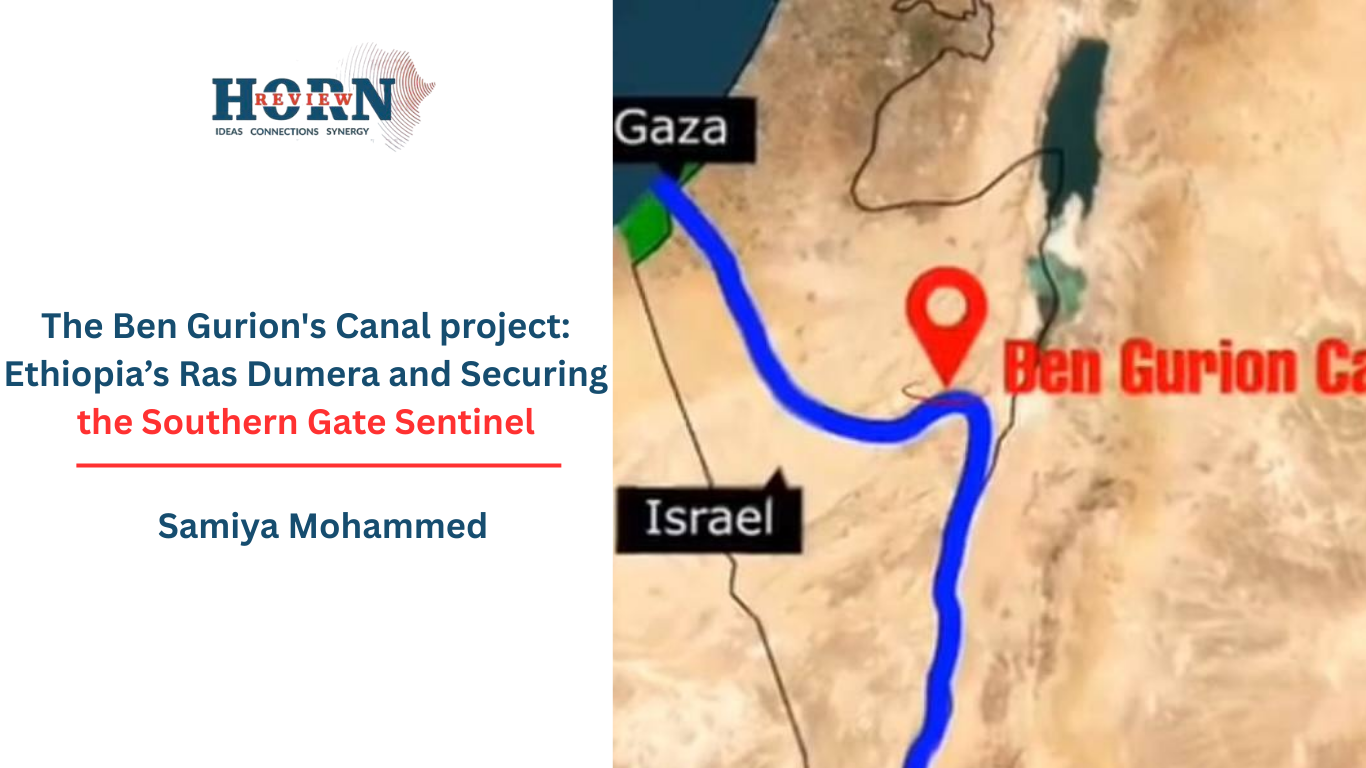
The concept of a canal under Israeli control is not new. It was born in the mid 20th century conflict directly following Egypt’s nationalization of the Suez Canal in 1956 and subsequent wars where Cairo restricted Israeli shipping. The closure of the Suez Canal and the Straits of Tiran during the 1967 Six Day War severely hampered Israel’s trade and oil imports delivering a lesson on the issues of geopolitical dependence. The proposed solution was audacious with a new independent waterway connecting the Red Sea near Eilat to the Mediterranean. Named for Israel’s founding father David Ben Gurion, the project envisioned a route of approximately 260–300 kilo meters memorably longer than the Suez’s 193 kilo meters carving through the Negev Desert and Arabah Valley.
The sheer engineering magnitude requiring moving billions of cubic meters of earth and potentially constructing locks for elevation changes along with political obstacles relegated the plan to the realm of fantasy for decades. However the idea never fully died. It has experienced periodic revivals often spurred by crises that expose the fragility of the Suez route the week long blockage by the Ever Given in 2021 and more recently the persistent attacks on commercial shipping by Iranian backed Houthi rebels in Yemen.
The Ben Gurion Canal is promoted as offering precisely that an alternative lane to reduce global dependence on a single point generate substantial toll revenue, boost Israel’s strategic autonomy and integrate with broader regional development projects like Saudi Arabia’s NEOM. While the project remains largely conceptual with no active construction, the convergence of regional realignments, economic imperatives and evolving security partnerships has created its most plausible pathway to reality in over half a century
Israel’s recognition of Somaliland must be analyzed as this pathway. The motion was undoubtedly multi motivated. In security terms it directly counters Iran’s regional influence by establishing a partner across from Houthi controlled Yemen enabling enhanced maritime monitoring and intelligence cooperation. Somaliland with its roughly 300-mile coastline along the Gulf of Aden and relative stability compared to Somalia provides a geostrategic platform of immense value.
However, the most consequential rationale extends beyond immediate counterterrorism or bilateral ties. A Ben Gurion Canal would be economically and strategically stillborn if its southern terminus in the Gulf of Aqaba remained perpetually vulnerable to blockade or attack at the Bab el-Mandeb Strait. By formalizing relations with Somaliland Israel secures a cooperative entity on the African shore. This transforms Somaliland from a peripheral actor into a guardian of the southern approach. It creates the potential for joint security arrangements, port access, and a stable logistical chain that would protect shipping destined for the canal’s entrance.
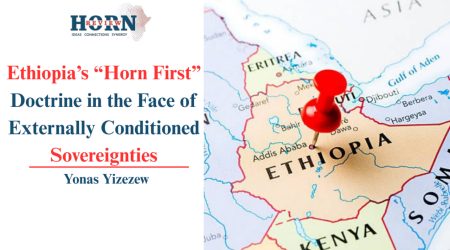
This recognition is a classic. Prioritizing functional sovereignty and strategic alignment over strict adherence to international norms of territorial integrity. It breaks a diplomatic understanding that any recognition of Somaliland would follow the lead of Africa. This is where the strategic picture expands beyond Israel and Somaliland drawing in Ethiopia as a main if indirect, beneficiary. Ethiopia’s historical quest for reliable sea access is a central feature of Horn of Africa geopolitics.
Ethiopian have revealed aspirations to establish a naval base at Ras Dumera where a coastal area near the Bab el-Mandeb Strait. The logic is with a base 31 kilometers from the world’s busiest maritime point would allow Ethiopia to project power, safeguard commercial sea lanes and assert as a regional security provider. The revival of the Ben Gurion Canal project facilitated by the Israel and Somaliland creates a new and powerful rationale for Ethiopia’s maritime ambitions. If a new Israeli controlled canal becomes a major global trade hub, the security of the southern Red Sea and Gulf of Aden becomes exponentially more important. Ethiopia positioned at Ras Dumera or through cooperative agreements in Somaliland’s Berbera or the developing Tio Port could transform historical disadvantage into leverage.
Ethiopia’s role could evolve into that of a guardian of the corridor. Naval force operating from a southern Red Sea base would have a direct prop in ensuring the safe passage of commercial traffic feeding into the Ben Gurion route. This provides Ethiopia with a tangible share and benefit in the new trade ecosystem far of just port usage. Potential benefits include negotiating rights for toll revenue sharing from protected convoy services, attracting investment for ports as feeder hubs and gaining significant diplomatic capital as security partner for Israel, Gulf states, and other beneficiaries of the alternative route.
Nevertheless, the strategic logic is compelling for its proponents. A successful canal would drastically reduce global dependence on the Suez and create a secure integrated trade route from Asia to the Mediterranean under friendly oversight. The moment demands a clear eyed and aggressive strategic posture. Passive observation risks marginalization in a reshaped regional order. The recognition of Somaliland is more than a diplomatic anomaly. It is a signal flare, illuminating a bold and long term plan to reconfigure the world’s maritime geography, the concept of the Ben Gurion Canal has been revived and with it the value of every nation along the Red Sea’s shores has been recalibrated. The question now is which nations will shape this arch and which will be left straining under its weight.
By Samiya Mohammed, Researcher, Horn Review