South Sudan is facing an intensifying cycle of political and security instability, raising alarm across the international community while exacerbating already dire humanitarian conditions. This week, the situation in Jonglei State became particularly volatile as opposition forces reported gains on the battlefield, prompting calls for a march on the capital, Juba. With elections tentatively slated for December 2026, pending yet another possible delay, South Sudan has entered a dangerous pre-electoral phase in which political competition is being driven by force rather than consent.
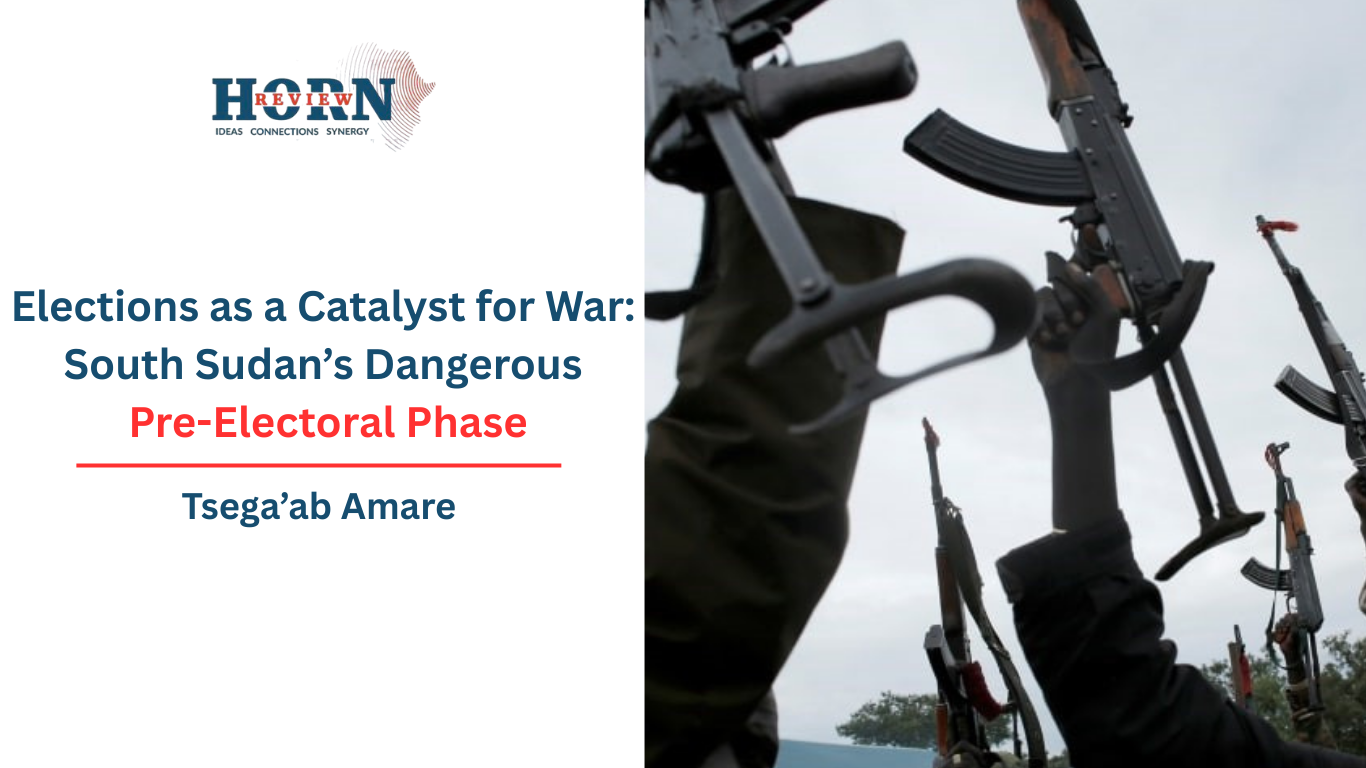
The military landscape is no longer defined by localized small raids but by structured maneuver warfare. The capture of Pajut in Duk County by the Sudan People’s Liberation Army-in-Opposition (SPLA-IO) on January 16, 2026, marks a pivotal shift. Pajut is a strategic node approximately 300 kilometers north of Juba; its fall puts the state capital of Bor within striking distance and severs government supply lines to the north.
In response to these gains, the SPLA-IO leadership has escalated its rhetoric, with Deputy Chief of Staff for Operations Wisley Welebe Samson issuing a formal directive for forces to “move to Juba from all directions” to remove what he termed the “anti-peace regime”. This is not merely a rhetorical call for a march on the capital; it represents a tactical calculation that the government’s military capacity is currently compromised by unpaid salaries, corruption, low morale, and the diversion of resources to safeguard oil infrastructure.
Moreover, this offensive is supported by the re-mobilization of the “White Army” militia, which has targeted government garrisons in Uror, Nyirol, and Nasir counties, leading to the capture of the Yuai stronghold and the surrender of at least 23 government prisoners of war.
The government’s response however, has been hindered by low morale and logistical failures. Reports indicate that the South Sudan People’s Defense Forces (SSPDF) have at times refused to airlift wounded soldiers, further alienating frontline troops.
Faced with battlefield setbacks, President Salva Kiir has moved to consolidate power through a sweeping cabinet and security reshuffle announced on January 19, 2026. The most consequential move was the dismissal of Interior Minister Angelina Teny, the wife of Riek Machar and a key pillar of the SPLM-IO’s presence in the transitional government. This dismissal is viewed by analysts as a violation of the 2018 power-sharing arrangement, which reserved the interior portfolio for the opposition.
While the executive consolidates, the judiciary is being utilized to decapitate the opposition. The trial of Dr. Riek Machar and seven co-accused members of the SPLM-IO has entered a critical phase. Facing charges of treason, terrorism, and crimes against humanity related to a 2025 attack in Nasir that killed over 250 soldiers, the proceedings moved in-camera on January 12, 2026. The defense has argued that closing the court to the media and public violates the constitutional right to a fair trial. The opposition, on the other hand, has denounced the process saying it is a “sham trial” by a “kangaroo court” designed to facilitate a political execution under the guise of the rule of law.
South Sudan’s security crisis is exacerbated by a catastrophic financial meltdown. The state is currently grappling with its most severe liquidity crisis in history, characterized by a near-total absence of physical cash in the banking sector.The banking sector has effectively ground to a halt as cash withdrawals are capped below ten US dollars and ATM services are suspended.
This crisis is rooted in the disruption of oil exports, which account for 80 percent of national revenue, due to the war in Sudan, leaving the government unable to pay civil servants for up to a year and creating a massive “confidence trap” where citizens refuse to use the formal banking system for fear of capital seizure.
The human cost of this multi-layered crisis is staggering. Since December 29, 2025, renewed fighting and airstrikes in Jonglei have displaced over 180,000 people. UN reports indicate that while overall conflict deaths fell by 18% in late 2025, there has been a 20% increase in abductions and a 7% rise in sexual violence.
Humanitarian aid is being systematically obstructed. Jonglei State has been declared a “no-fly zone,” preventing the medical referral of critically ill patients and the restocking of life-saving medicines. Furthermore, both government and opposition commanders have been accused of looting health facilities and confiscating NGO vehicles for military use, leading to the suspension of operations by groups such as Médecins Sans Frontières (MSF) in key areas like Lankien and Pieri.
Amid internal chaos, South Sudan has attempted to assert itself as a regional security actor through the “Heglig Tripartite Arrangement.” Following the seizure of the Heglig oil field by Sudan’s Rapid Support Forces in December 2025, President Kiir brokered a deal to place the field under the neutral protection of the SSPDF to safeguard the economic lifeline of both Sudans.
Simultaneously, China remains the primary international partner for Juba. Under its 15th Five-Year Plan, Beijing has reaffirmed its commitment to Belt and Road infrastructure projects and offered zero-tariff treatment for South Sudanese exports. However, the withdrawal of the China National Petroleum Corporation from Sudan’s Block 6 due to force majeure suggests that Juba’s oil-dependent revenue stream is increasingly vulnerable to regional instability.
The convergence of a structured military offensive, a banking collapse, and the judicial targeting of political rivals has brought South Sudan to the brink of a new civil war. Rather than serving as a stabilizing mechanism, the scheduled December 2026 general elections have become a catalyst for escalation. Territorial control now translates directly into electoral leverage, allowing armed actors to shape the voting landscape. Meanwhile, legal proceedings are strategically being used to pre-emptively exclude rivals from contestation.
The potential relapse of South Sudan into a full-scale conflict would also reverberate across the Horn, particularly through Sudan. The disruption of oil transit routes linking South Sudan to Port Sudan would further destabilize an already fractured Sudanese economy. Armed groups on both sides of the border could exploit ungoverned spaces to consolidate cross-border supply lines, undermining AU crisis-management credibility and straining Uganda’s northern security posture.
To stabilize the transition, interventions are essential:
The AU and UNMISS must pressure parties to lift the Jonglei “no-fly zone” and honor the 2017 Cessation of Hostilities Agreement to prevent further mass displacement. The AU “C5” (South Africa, Algeria, Nigeria, Rwanda, and Chad) should proceed with the proposed retreat for South Sudanese leaders in South Africa to rebuild trust and address the “lagging provisions” of the peace deal.
Failure to achieve a breakthrough in the coming weeks will likely result in a return to full-scale hostilities, threatening not only the civilian population of South Sudan but the stability of the entire Horn of Africa.
By Tsega’ab Amare, Researcher, Horn Review