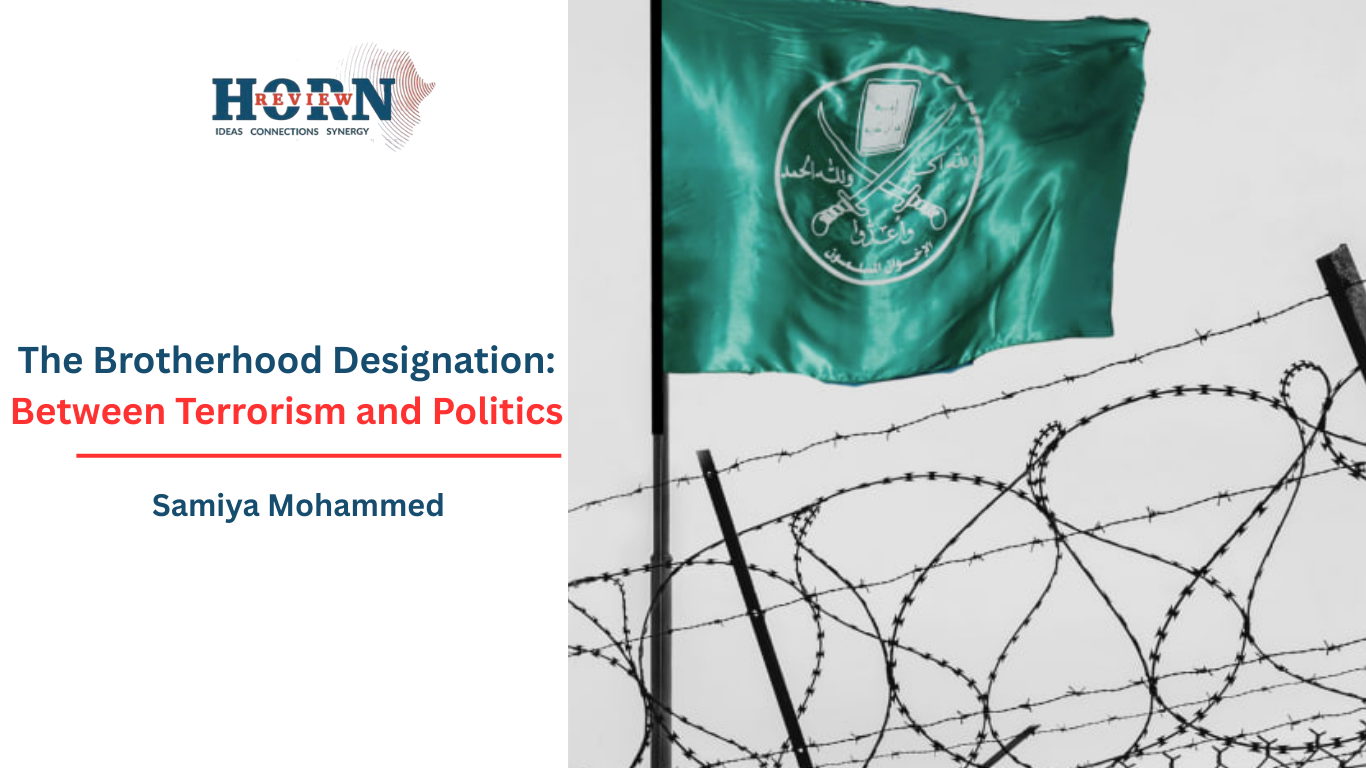
The United States decision on January 13, 2026 to designate specific branches of the Muslim Brotherhood in Egypt, Jordan, and Lebanon as terrorist organizations has elicited in particularly divergent responses across the Middle East. While Saudi Arabia officially welcomed the designation mapping out it as a supportive measure for regional security and stability however this seemingly straightforward endorsement conceals a multilayered diplomatic arithmetic with potential unintended consequences. The Kingdom’s alignment with Washington on this issue aligns with its long opposition to the Brotherhood where an organization it views as both an ideological rival and a threat to monarchical stability. However, beneath the surface of this alignment lie risks of regional polarization, political backlash and questions about the efficacy of such symbolic designations.
For years, the Kingdom has classified the Muslim Brotherhood as a terrorist organization viewing its pan-Islamist vision and political activism as direct challenges to the legitimacy of hereditary monarchies and the Saudi led religious establishment. The Brotherhood’s ideology advocates for political Islam and brought in part as a critique of traditional monarchies shows a competing source of Islamic authority and political mobilization. In official statement the Saudi Ministry of Foreign Affairs emphasize that the U.S. action aligns with shared efforts to combat extremism and the security and prosperity of Arab nations.
Despite the apparent benefits Saudi Arabia’s endorsement of the designation carries risks that could undermine regional stability and Saudi interests in the long term. The designation risks inflaming divisions within the Sunni Arab world. The Muslim Brotherhood in spite of being suppressed in Egypt, Saudi Arabia, and the UAE retains legitimate political presentation in other parts of the region. In Jordan, the Brotherhood’s political arm the Islamic Action Front holds seats in parliament and the group maintains a broad social base. In Lebanon the Brotherhood’s branch al-Jamaa al-Islamiya is a licensed political party presented in the national legislature. Labelling these entities as terrorist organizations from abroad can be perceived as a blunt external intervention that disregards national political contexts and delegitimizes mainstream political participation. This could strain Saudi Arabia’s relations with Jordan where a traditionally aligned monarchy.
Furthermore this sharpens the rift with Qatar and Turkey both of which maintains ties to and harbour sympathies for the Brotherhood. Turkey’s President Recep Tayyip Erdogan has a noted ideological affinity with the group and Qatar has historically provided a platform for its voices. U.S. officials had reportedly hesitated on the designation for years partly to avoid damaging ties with Turkey. Saudi Arabia’s welcome of the action may thus harden the contours of a regional cold war pitting the Saudi-Emirati-Egyptian axis against a Turkish-Qatari alignment with other nations forced into uneasy neutrality.
There is a danger that the designations will be perceived not as counterterrorism but as the political repression of dissent. The Brotherhood’s branches have denied the terrorism allegations. The acting leader of the Egyptian Brotherhood called the designation politically motivated alleging it resulted from pressure by Israel and the UAE rather than factual evidence. Al-Jamaa al-Islamiya in Lebanon stated the decision serves the interests of the Israeli occupation and lacks any basis in Lebanese or international law. When groups that operate openly in political systems and provide social services are branded as terrorists by a foreign power, it can propel narratives of persecution and injustice among their supporters. This carries the perverse risk of alienating mainstream Islamist constituencies and potentially driving some elements toward more radical, clandestine, and violent alternatives.
The practical impact of the designations is debatable raising questions about whether Saudi Arabia’s support is for a strategically effective tool or a largely symbolic gesture. The Brotherhood’s influence has already been severely curtailed in Egypt and Saudi Arabia through sustained domestic repression. The primary mechanisms of the U.S. designations are financial sanctions and travel bans. While these may disrupt some overseas financing, the Brotherhood’s branches in these countries largely operate underground or focus on local grassroots support which is harder to sever through international sanctions.The action may therefore be more significant for its politics than for its transformative effect on the ground. Saudi Arabia’s welcome of the U.S. terrorist designations against Muslim Brotherhood branches is a rational extension of its foreign policy priority and the containment of political Islam as represented by the Brotherhood.
The Kingdom’s statement which carefully links the move to enhancing regional security and stability, projects an image of strategic coherence and leadership. However this endorsement is not without considerable pitfall. The potential to deepen fault lines within the Sunni world particularly with Jordan, Turkey, and Qatar could undermine broader Arab unity and complicate regional diplomacy. The risk of backlash, where the designations are viewed as an authoritarian overreach that radicalizes rather than pacifies poses a direct threat to the very stability Saudi Arabia seeks.
Finally, the possibly limited direct impact of the designations suggests that the move’s primary value is symbolic like a victory in the narrative battle but not necessarily a decisive blow against the Brotherhood’s enduring presence in Arab societies. Ultimately Saudi Arabia’s position reflects that the benefits of solidifying an anti Brotherhood international consensus and pleasing a key ally in Washington outweigh these potential costs. Yet in today’s strategic gain can quickly become tomorrow’s liability. The long term consequences of this heightened campaign against the Muslim Brotherhood will depend on whether it leads to genuine stabilization or instead propels the very polarization and resentment that sustains the cycle of conflict in the region.
By Samiya Mohammed, Researcher, Horn Review