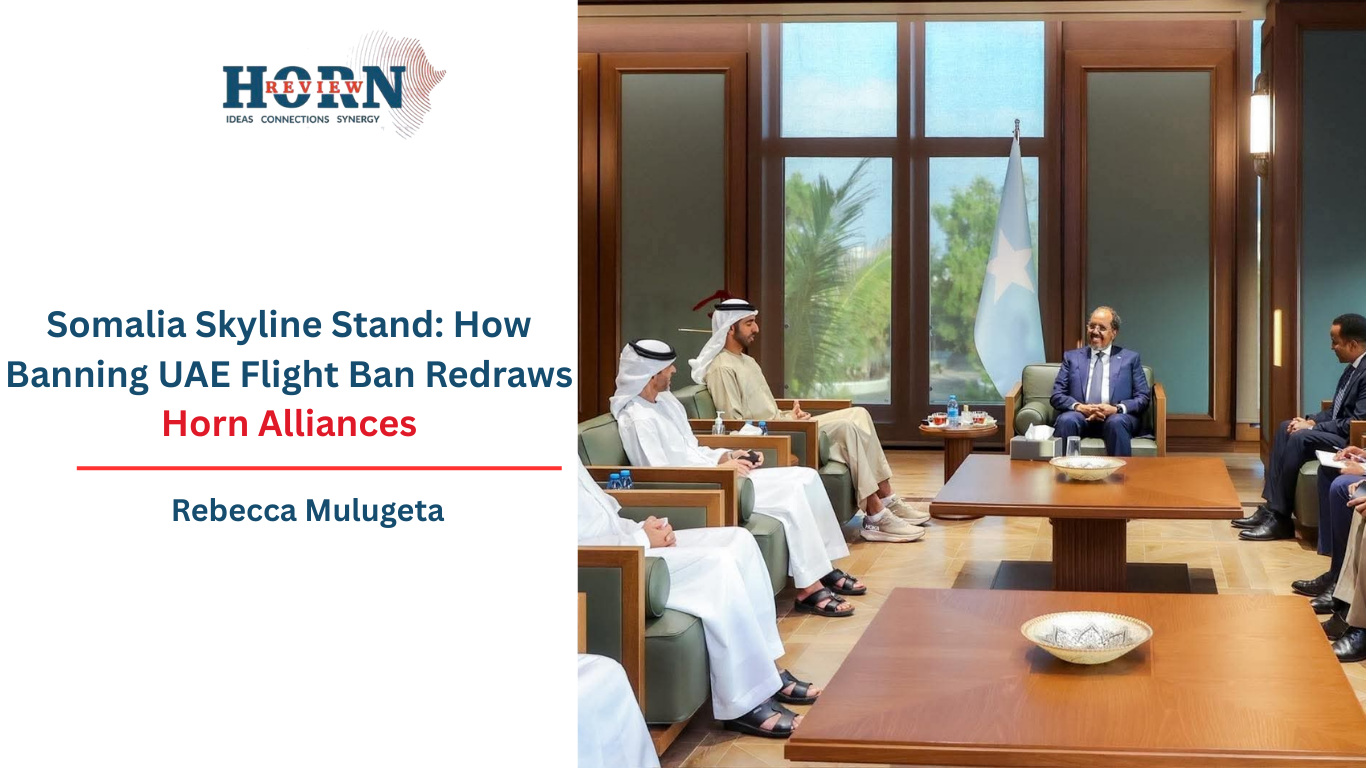
Somalia’s ban on UAE military and cargo flights using its airspace is at the very root of the emerging Horn of Africa realignment, which was set in motion by Israel’s recent recognition of Somaliland, an event which has led to a carefully orchestrated retaliation by, among others, the trifecta of Turkey, Saudi Arabia, and Egypt. This is no occasion for lofty statements and high-level summits but, rather, what you would sense in the nitty-gritty, meat-and-potatoes world of functioning ports, radars, and behind-the-scenes arms sales. Israel’s recognition, which occurred on December 26, was, in itself, the game-changer, being the first internationally recognized sovereignty to recognize Somaliland, which, in turn, paved the way for the UAE’s longer-term strategy in the region, in which it has, through Emirates, opted to recognize and support Somaliland-passport bearers while rejecting those from the Somali government, while at the same time transporting arms through Bosaso to its partners in both Yemen and Sudan’s Rapid Support Forces.
Mogadishu’s riposte, closing its skies in anger on January 8 over these unauthorized flights to carry Yemen’s rebel leader Aidarous al-Zubaidi, had far more meaning than mere retribution. It represented the sting in this new partnership, underpinned by promises of unity from Saudi, and now Turkish drones bridging this chasm, and Egyptian muscle in diplomacy, determined to strangle UAE’s influence from Berbera’s ports to Puntland’s training grounds.The flash point came quickly. Israeli Somaliland’s gesture signalled a new Abrahams Accords 2.0 for agri-tech, healthcare agreements, and talk of intel hubs surveying Red Sea threats from Houthis in Yemen.Netanyahu’s administration welcomed Somaliland’s President Iroh in quick succession, exchanging nods of ambassador recognition and humoured talk of new security agreements to shore up UAE’s vulnerable flank in its already-seized control of Berbera port in Somaliland’s breakaway region which Mogadishu insists exists, if illegitimately so in its own eyes.
billions sunk into Berbera’s DP World terminal since 2011, a logistics corridor across the city of Bosaso for the arms routes to Yemen and Sudan. radars buzzing, ten flights allowed for UAE equipment evacuation, then a choke point totally, with warnings that assets were due to be seized and the pact shut down completely. In the background, an axis gave Mogadishu cover to hold firm: Saudi cash and intelligence, Turkish leverage, and Egyptian credibility through Arab League ties. The first to act decisively was Saudi Arabia. Somali Foreign Minister Timacade’s January 5 visit to Riyadh returned with Prince Faisal bin Farhan’s public pledge of “unwavering support for Somalia’s unity and territorial integrity,” a line that echoed down the chain across Arab League channels. Next came President Hassan Sheikh Mohamud signing defense agreements, organizing arms transfers, establishing intelligence fusion centers in Mogadishu, and directing significant funding to Laasqooray port in Puntland as a federal counterweight to Berbera.
Following the Yemen cease-fire, the agenda is to stabilize the Red Sea area and prevent backdoor movements orchestrated by the UAE from prying open Iranian or Houthi access. Laasqooray is humming with activity: shipping containers offloaded from Saudi-issued ships, and Ethiopian and Djiboutian transport trucks depart south. Initial reports indicate that Berbera has reduced their charges by 20- to 30 percent, and government employment has encouraged enough locals to move outside Puntland’s orbit. Far from altruistic, it is Riyadh’s turn to move from under Abu Dhabi’s umbrella and assume responsibility for logistics from Sudan’s pipelines to Somali fish resources. Turkey is carrying the torch and expanding its sphere of influence in Somalia. Since 2011, it has committed approximately $1.5 billion to this end, constructing Africa’s largest embassy in Mogadishu, some 20,000 soldiers trained and operational, and disrupting al-Shabab supply chains via Bayraktar drones.
Their 2024 maritime pact locks in 30 percent of Somalia’s EEZ revenues for a decade, with Turkish firms running Mogadishu’s airport and port patrols stretching toward the Seychelles. Post-ban, they slide into UAE’s voids effortlessly: technicians service federal radars enforcing no-fly, drones own skies where C-130s once flew, Port Sudan yards fix Saudi ships. Last week’s Turkey-Saudi talks dressed up as arid-zone tech sharing reads like a logistics nod, letting them sync maritime routes from Aden to Massawa without formal alliances. Erdogan’s public line mirrors MBS: Somalia’s integrity isn’t negotiable. On the ground, Somali recruits drill under mixed Turkish-Saudi instructors, federal offensives retaking Puntland outposts, al-Shabaab financing choked where it overlaps Houthi smuggling.
Egypt plays the long game, its role quieter but critical. Cairo’s Red Sea patrols already shadow Houthi threats, and their GERD dam fight makes Horn fractures a non-starter. Egyptian diplomats backed Somalia’s December 29 UN Security Council push 13 of 15 members affirming Mogadishu’s sovereignty, Russia chiming in while Cairo joined OIC’s January 10 condemnation of external recognitions. No troops yet, but Egyptian naval assets align with Turkish patrols off Puntland, creating soft chokepoints that crimp UAE resupplies. For Egypt, a united Somalia is a buffer against Ethiopian-UAE on the Nile; Arab League reinforcement, driven by Cairo’s quiet push, keeps Somaliland boxed in, no follow-on recognitions despite UAE nudges toward a Trump administration eyeing Red Sea basing.Together, this trio reshapes the Horn without fanfare.
Turkish EEZ patrols lock down $500 million in annual fisheries, Saudi rigs sniff Somali gas fields, Egyptian firms eye agrotech deals. Risks flare too: UAE cash dumps stir Puntland unrest, Sudan’s RSF arms trickle through back channels, al-Shabaab hits softer secession zones. Superpowers adapt China grabs debt-free federal ports, US shifts AFRICOM drones to Mogadishu partners, Russia courts Eritrean flanks for leverage.What makes this axis stick isn’t pomp but pragmatism.
it’s overlapping deals Saudi defense pacts, Turkish maritime muscle, Egyptian naval echoes building encirclement without overreach. UAE’s $2 billion Horn investments teeter, their focus narrows to desperate plays like Ethiopia port leases or Yemen holdouts, but Laasqooray chokes leverage. Somalia centralizes faster Puntland reintegration speeds up, federal revenues jump 25 percent from EEZ and ports. Saudi builds logistics empires, Turkey eyes Sahel bases through water pacts, Egypt secures Nile buffers.
Ultimately, the shifting reality in the Horn of Africa is a direct result of the strategic intervention of Turkey and Saudi Arabia, whose primary objective is to systematically dismantle Emirati influence across the Red Sea and the Middle East. By providing Mogadishu with advanced drone technology, intelligence fusion, and the financial backing for federal infrastructure like Laasqooray Port, Ankara and Riyadh have effectively underwritten that marginalizes the UAE’s preferred strategy of sub-state fragmentation. This Turkish-Saudi axis view Abu Dhabi’s “checkbook diplomacy” and its support for autonomous regions as a direct threat to the established state-centric order; consequently, their backing of Somalia is less about traditional aid and more about a calculated trategy designed to push the UAE out of strategic maritime corridors and reassert a centralized, predictable regional hierarchy.
By Rebecca Mulugeta, Researcher, Horn Review