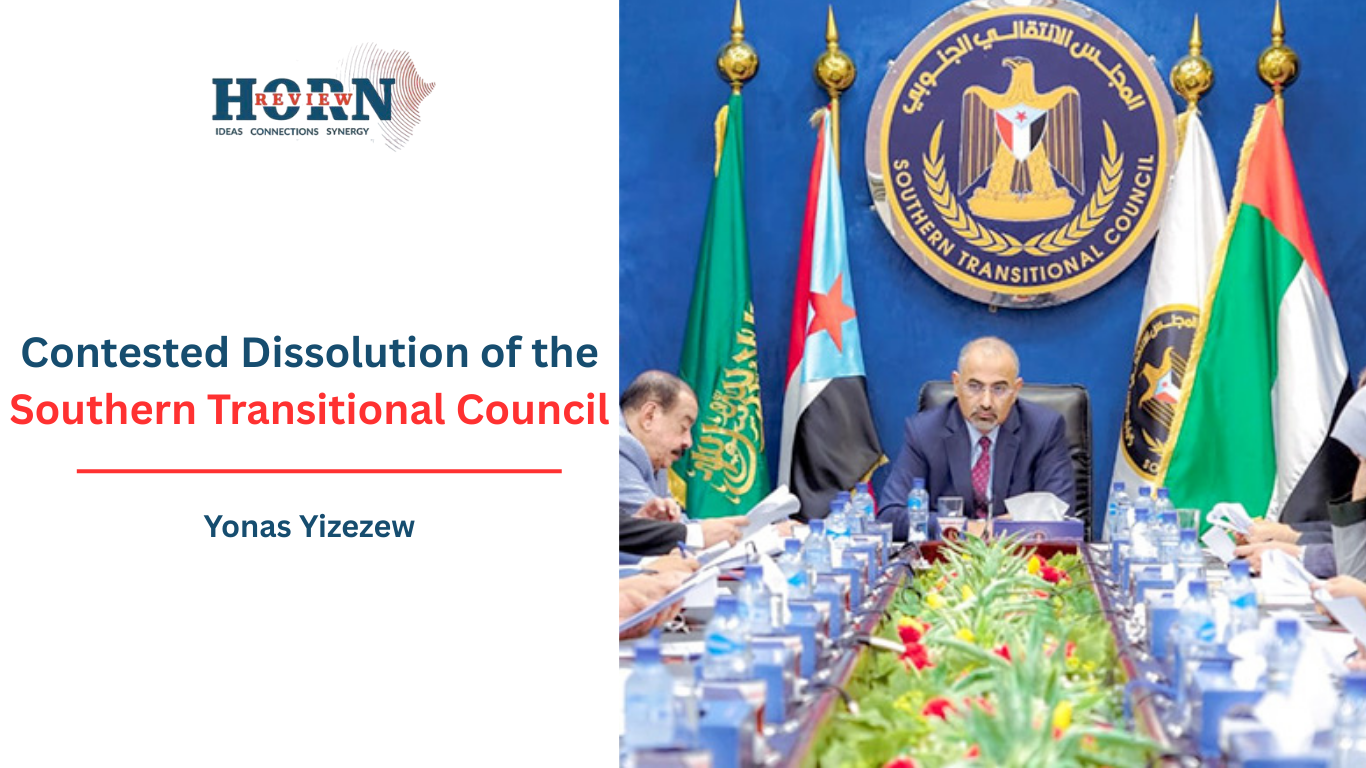
The reported dissolution of the Southern Transitional Council in Yemen marks a decisive phase in the nation’s ongoing civil war, highlighting the precarious balance of power among domestic factions and their foreign patrons. Announced by a delegation in Riyadh, this decision ostensibly aims to facilitate inclusive dialogue under Saudi auspices, yet it has sparked immediate controversy and exposed deep-seated divisions within southern separatist ranks. The move comes amid heightened tensions following the council’s aggressive expansion into eastern regions, which alienated key regional players and prompted a decisive military response from forces aligned with the internationally recognized government.
As Yemen grapples with this shift, the event demonstrates broader geopolitical realignments in the Arabian Peninsula, where rivalries between Gulf States and concerns over strategic waterways like the Gulf of Aden and Red Sea continue to shape outcomes. To understand the council’s abrupt end, one must first examine its origins and role in Yemen’s fractured landscape. Established in 2017, the council emerged as a secessionist force advocating for the independence of southern Yemen, drawing on historical grievances from the 1990 unification that many southerners viewed as a northern imposition.
Backed primarily by the United Arab Emirates, its armed wings, such as the Security Belt Forces and Giants Brigades, played a pivotal role in expelling Houthi rebels from southern territories, including the port city of Aden, which became its de facto capital. This support formed part of the broader Saudi-led coalition intervention launched in 2015 to counter the Houthis’ Iran-backed advance on Sanaa, which had ousted President Abdrabbuh Mansur Hadi. However, the council’s ambitions often clashed with the coalition’s unity, leading to intermittent skirmishes with Saudi-supported government troops. The 2019 Riyadh Agreement sought to bridge these gaps by integrating council leaders into the Presidential Leadership Council in 2022, but underlying separatist aspirations persisted, fueling periodic instability.
By late 2025, these tensions boiled over when council forces launched an offensive into the oil-rich Hadramaut and strategically vital Al-Mahra governorates, areas previously under government control but with tenuous local alliances. This territorial overreach proved to be a strategic miscalculation, as it encroached on sensitive border zones adjacent to Saudi Arabia and Oman, raising alarms about potential instability spilling across frontiers. Local tribes in these regions, historically wary of external dominance, resisted the incursion, viewing it as an imposition rather than liberation.
Saudi Arabia, which had previously tolerated Emirati influence in the south to maintain coalition cohesion against the Houthis, responded with unprecedented firmness, drawing clear boundaries and mobilizing military assets to enforce them. In early January 2026, government forces, bolstered by Saudi airstrikes and reinforcements like the National Shield units, swiftly recaptured key sites including Seiyun and Mukalla, reversing the council’s gains in a matter of days. This rapid counteroffensive not only dismantled the council’s military foothold but also led to the flight of its leader to the United Arab Emirates via Somaliland, a maneuver condemned by coalition partners as facilitated smuggling. The episode illustrates how overambitious expansion can erode even well-entrenched positions, transforming a once-formidable entity into a vulnerable target. Compounding these internal setbacks were evolving regional dynamics that amplified the stakes.
The United Arab Emirates’ deepening ties with Israel through the Abraham Accords have heightened suspicions in Riyadh and Muscat about potential encirclement strategies in critical maritime corridors. These waterways, vital for global trade, have already been disrupted by Houthi attacks since 2023, often framed as solidarity with Gaza, drawing retaliatory strikes from the United States and United Kingdom. Oman’s neutral stance in regional mediation, including backchannel talks with the Houthis, was particularly threatened by the council’s push into Al-Mahra, a governorate bordering Oman and long used for smuggling routes. There are signs that it is aligning closely with Saudi Arabia through unprecedented coordination on intelligence sharing, border reinforcement, and support for efforts to restore control over eastern Yemen without direct participation in Saudi airstrikes.
Saudi Arabia’s Crown Prince Mohammed bin Salman, pursuing Vision 2030 reforms that prioritize economic diversification and reduced conflict entanglement, viewed the council’s actions as a direct challenge to de-escalation efforts, including the 2023 Beijing-mediated détente with Iran that curbed Houthi border incursions. This context transformed the dissolution from a mere tactical retreat into a strategic necessity for stabilizing Saudi interests. The announcement itself, delivered in a televised statement from Riyadh, called for the dismantling of all institutions and offices, both domestically and abroad, to pave the way for broader southern consultations.
Saudi officials, including Defense Minister Khalid bin Salman, praised it as a courageous step toward unity and dialogue. Yet, reactions within southern circles were swift and fractious, with members based in Aden and Abu Dhabi denouncing the declaration. During an emergency meeting in Aden, the Southern Transitional Council’s National Assembly, Advisory Council, and General Secretariat declared the Riyadh dissolution decisions invalid and null. They insisted that any statements issued under coercion or during the arbitrary detention of leaders carry no legitimacy while reaffirming the Council’s mandate under President Aidarus al-Zubaidi.
The statement rejected the dissolution as an unauthorized farce, demanded the immediate release of the detained leaders, called for future southern dialogues to be held in Aden or a neutral venue under UN supervision, and condemned Saudi Arabia’s approach as a dangerous deviation that sidelines the southern people’s will and jeopardizes peace. Protests erupted in Aden and Mukalla, where demonstrators brandished South Yemeni flags and rejected any partial resolutions, affirming enduring separatist sentiments rooted in the 1994 civil war’s aftermath.
The Presidential Leadership Council’s subsequent removal of the council’s leader on treason charges further expulsion of Emirati-aligned elements, potentially consolidating Saudi dominance over Yemen’s fragmented governance. These developments connect a web of actors whose interests intersect in Yemen’s turmoil. The United Arab Emirates, pursuing its regional maritime network through strategic ports in Aden, Socotra, and the Horn of Africa, including partnerships with Somaliland, had positioned the council as a proxy for economic and military projection.
Israel’s recognition of Somaliland and joint ventures with the Emirates exacerbate Saudi concerns of encirclement, echoing earlier Gulf rifts like the 2017 Qatar blockade. Meanwhile, the Houthis, entrenched in the north with Iranian support, stand to exploit southern disarray for potential advances, though their resources remain stretched by Red Sea operations. Al-Qaeda in the Arabian Peninsula and other extremists, weakened by council campaigns in areas like Abyan, could resurge in power vacuums, threatening not only Yemen but also neighboring states and international shipping lanes.
Stabilizing Hadramaut could revive oil exports, benefiting Saudi economic goals, but unresolved separatist demands risk sparking renewed insurgency among tribal militias. The dissolution might alleviate immediate coalition fractures, yet it strains Saudi-Emirati relations, potentially fracturing the anti-Houthi front at a time when unified action is crucial. International observers, including the United Nations, have cautioned against further fragmentation, urging inclusive talks to address root causes.
The council’s dissolution, while dismantling a key separatist structure, does not resolve Yemen’s core conflicts but rather reconfigures them. It reflects the limits of proxy warfare in a theater where local agency intersects with global ambitions, from Iranian influence to Gulf rivalries. Whether this leads to genuine peace or merely a prelude to new confrontations depends on the ability of actors like Saudi Arabia, the United Arab Emirates, and the international community to forge sustainable compromises. As Yemen enters this uncertain phase, the pursuit of stability remains elusive, demanding nuanced diplomacy to prevent further security catastrophe and regional spillover.
The contested nature of the Southern Transitional Council’s reported dissolution, demonstrated by the Aden-based institutions’ forceful rejection in statement, makes clear that southern Yemen’s political future remains highly uncertain and vulnerable, with deep-rooted separatist resolve undiminished by Saudi pressure and the possibility of renewed fragmentation or conflict still very real.
By Yonas Yizezew, Researcher, Horn Review