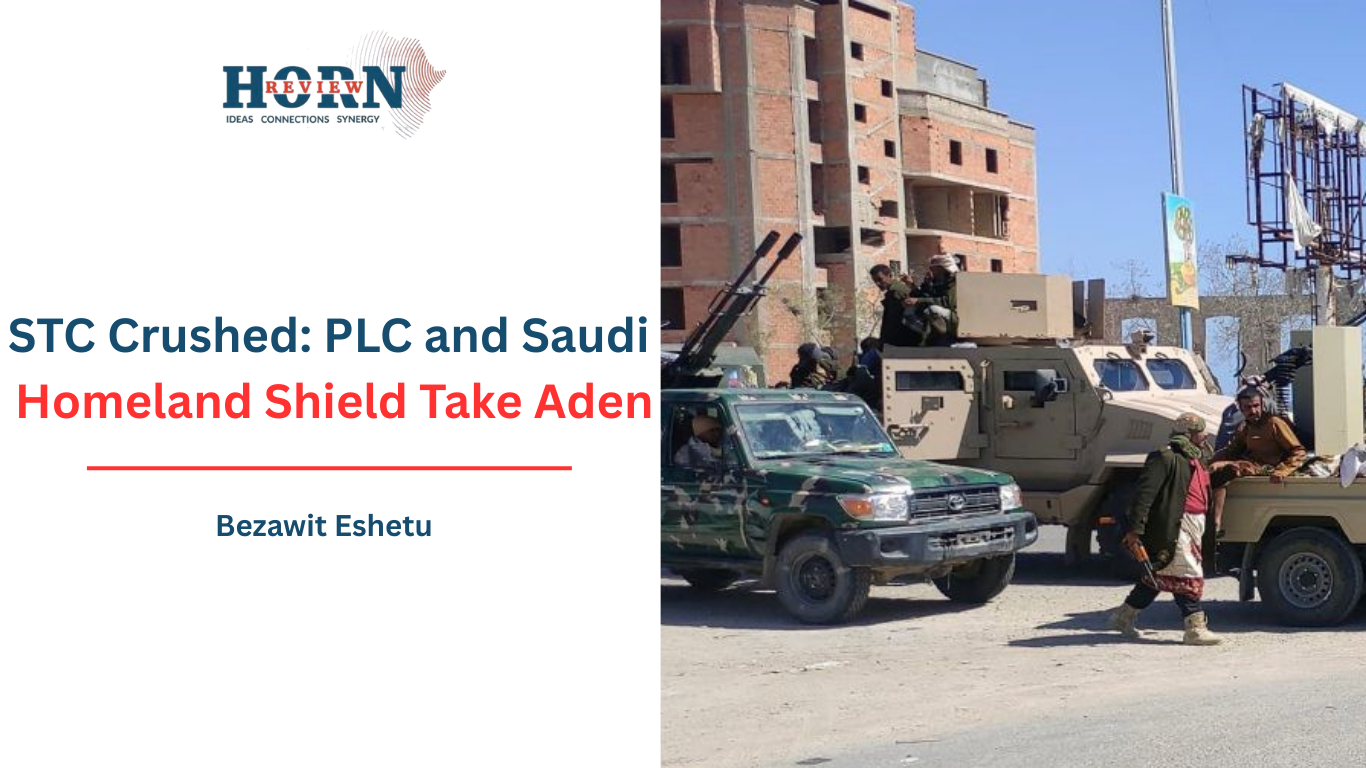
The establishment of military and administrative control by the Presidential Leadership Council (PLC) over non-Houthi territories in early January 2026 marked a profound shift in the governance of southern and eastern Yemen. By January 8, the security architecture of the temporary capital, Aden, and its surrounding governorates had undergone a comprehensive transition, moving from the command of the Southern Transitional Council (STC) to units directly overseen by the PLC.
Pro-government forces, such as the Giants Brigades, played a pivotal role in this process by securing key sites, while the raising of national flags of the Republic of Yemen at government buildings and checkpoints symbolized the restoration of unified authority. This realignment not only signaled a substantial reduction in the decade-long era of fragmented sovereignty in these areas but also highlighted the PLC’s efforts to consolidate power, even as underlying separatist grievances and tensions continued to simmer unresolved.
Building on this consolidation, the transition stemmed from a series of strategic actions that systematically eroded the STC’s influence across governorates like Hadhramaut, Al-Mahra, Abyan, and Lahj, ultimately stripping the movement of its territorial and administrative base for the first time since its inception in 2017. Recent reports have documented the swift reversal of the STC’s ill-fated “Promising Future” offensive in December 2025, culminating in the flight of its leader, Aidarous al-Zubaidi, who now faces treason charges and expulsion from the PLC.
This rapid erosion of the STC’s administrative foothold was a direct consequence of the offensive, which sought unilateral control over the oil-rich Hadhramaut and the strategically vital border province of Al-Mahra. By extending its military reach into these eastern regions, the STC leadership directly challenged Saudi Arabia’s core security priorities, as Riyadh views the stability of these governorates as vital to its national interests. Saudi Arabia’s forceful reaction, which involved targeted airstrikes on STC mobilization centers in Al-Dhalea and the quick dispatch of state-aligned forces to protect vital infrastructure, revealed a significant weakness: the STC’s control over territory relied much more on the implicit support of regional sponsors than on its own solid institutional structures.
A crucial element in this displacement was the deployment of the Homeland Shield Forces (Dara’ al-Watan), a specialized military branch established by presidential decree in 2023 as a direct institutional alternative to STC-aligned units. Unlike the Security Belt Forces, which were rooted in localized southern nationalist identity and bolstered by United Arab Emirates training, the Homeland Shield was intentionally designed as a centralized, Saudi-funded counterweight to secessionist tendencies, ensuring a more unified command structure under PLC oversight.
Recruitment for these forces was highly selective, focusing primarily on southern Salafist networks and tribal groups from the middle and eastern provinces, many of whom harbored longstanding distrust toward the Aden-based secessionist leadership. Through the provision of direct financial incentives and professional training, Riyadh cultivated unwavering loyalty among a 50,000-strong contingent that remained ideologically detached from the separatist agenda. This strategic preparation paid off during the January 2026 transition, as Homeland Shield units seamlessly assumed control of vital security positions in Aden, including the Maashiq Presidential Palace and the international airport, encountering minimal resistance from the outgoing forces and thereby solidifying the PLC’s grip on the region.
The collapse of the STC’s territorial authority in 2026 reflects the structural failures of the southern secessionist attempt during the civil war of 1994. Back then, Vice President Ali Salim al-Beidh declared the Democratic Republic of Yemen (DRY) to exit the 1990 unification agreement with the north. Similar to the current situation, the 1994 secessionists had deep internal divisions, particularly the animosities between the “Toghmah” and “Zomrah” factions after the 1986 southern civil war.
In 1994, President Ali Abdullah Saleh took advantage of these splits by integrating members of the Zomrah faction, including the future president Abdrabbuh Mansur Hadi, into the northern military effort. The 2026 transition followed a similar pattern, as the PLC and its Saudi backers effectively targeted tribal and ideological groups in the east and southern hinterlands to isolate the STC’s power base in Aden and Al-Dhalea. This indicates that the southern cause struggles to create a unified national project that goes beyond regional and tribal identities.
The role of external support has changed significantly, speeding up the STC’s retreat. While the United Arab Emirates provided critical military and political backing, the growing divide between Abu Dhabi and Riyadh ultimately reached a breaking point. The UAE’s withdrawal of its remaining counter-terrorism units in early January 2026, amid calls to focus on the unity of the anti-Houthi coalition, left the STC without its main source of weapons and air support. In 1994, the lack of formal international recognition for the DRY led to its isolation; in 2026, the withdrawal of active regional support created a similar situation. The international community’s commitment to Yemen’s territorial integrity as the only viable legal framework meant that the STC’s unilateral declarations never gained diplomatic recognition, making the group vulnerable to a return of central authority.
The Hadhramaut factor was crucial in the territorial shift, as the eastern governorates have consistently resisted the imposition of an Aden-centric administrative model. In 1994, the eastern tribes were indifferent to al-Beidh’s socialist-led secession, and in late 2025, the STC’s attempt to replace local Hadhrami authorities prompted a similar shift toward the PLC. The formation of the Saudi-sponsored National Council of Hadhramaut offered an alternative political platform for local leaders who wanted autonomy within a federalized Yemeni state rather than independence under a centralized southern republic. This local resistance, along with the removal of STC-aligned military commanders in the Second Military Region and the Al-Ghaydah Axis, ensured that the PLC could reclaim the eastern half of the country with little urban combat, effectively cutting the STC off from the financial resources needed to maintain a separate state.
The political disintegration of the STC leadership further strengthened the PLC’s control. The removal of Aidarous al-Zubaidi from the Presidential Leadership Council and the high treason charges issued by PLC chairman Rashad al-Alimi turned the movement from a governing partner into an entity operating outside the constitutional framework. This legal approach allowed the PLC to present the takeover of Aden as a restoration of law and order, rather than an act of aggression. By January 8, with al-Zubaidi reportedly gone to the UAE and other senior officials under investigation, the STC’s political structure became inactive. The inclusion of the Giants Brigades, a highly disciplined southern force that remains loyal to the PLC’s goals, as a security provider in Aden shows that the government has effectively co-opted the most capable southern military units, leaving the secessionist remnants without a unified command.
This consolidation across the south and east simplifies Yemen’s broader geopolitical landscape, establishing a clearer divide between PLC-controlled territories and the Houthi-held north. For the first time since 2014, the internationally recognized government oversees a more contiguous region, potentially fostering a unified stance in peace negotiations. Yet, heavy reliance on Saudi funding raises concerns about long-term viability, as the shift from non-state actors like the STC to institutionalized proxies such as the Homeland Shield prioritizes centralized control but risks alienating locals if issues like resource allocation and service provision remain unaddressed. The STC’s downfall underscores that territorial gains are fleeting without broad grassroots support and international legitimacy, marking a pivot toward a sovereign state model over fragmented militia.
Historical parallels, such as the post-1994 marginalization of southern grievances, warn that unresolved economic inequalities and political exclusion could fuel renewed autonomy demands. While the STC’s territorial losses represent a severe blow, the root causes of separatism, stemming from perceived neglect since the 1990 unification, persist, potentially allowing the movement to regroup if the PLC prioritizes resource extraction over development. Conversely, integrating capable southern forces like the Giants Brigades into national structures could cultivate a hybrid identity blending local allegiances with central authority, though the secessionist cause’s ultimate fate hinges on inclusive reforms.
Ultimately, the PLC’s ability to transition from military dominance to equitable governance will dictate whether this unification yields enduring stability. Regional factors, including sustained Saudi backing and possible Riyadh-Abu Dhabi rapprochement, alongside international advocacy for Yemen’s integrity, could bolster diplomatic inclusion of stakeholders and mitigate separatist impulses through federalism. While southern territorial cohesion is now a reality, true integration depends on addressing the populace’s aspirations in the coming years.
By Bezawit Eshetu, Researcher, Horn Review