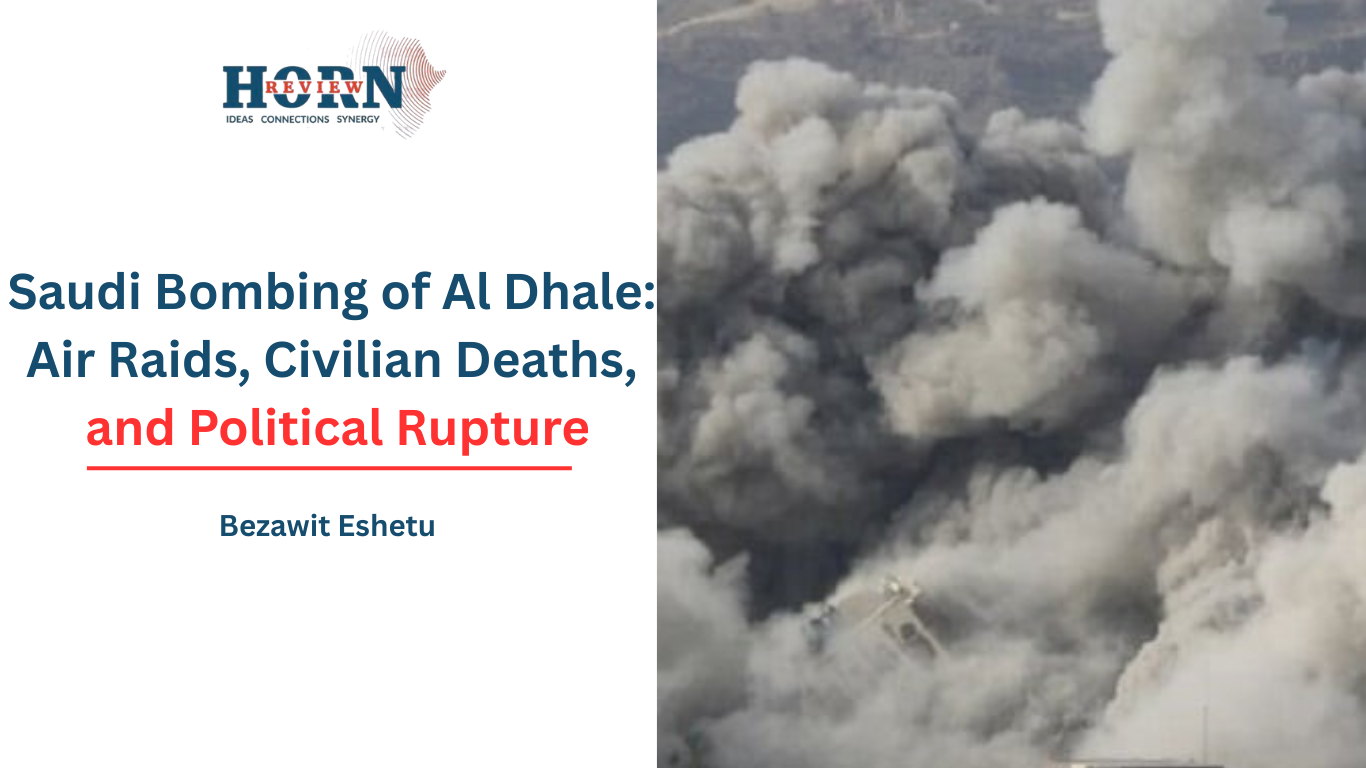
On 7 January 2026 coalition aircraft struck positions in al Dhale governorate and the strikes caused civilian casualties in local hospitals. Medical staff at al Nasr and al Tadamon recorded four civilian deaths and six wounded after multiple air operations in the province. Those strikes converted a political crisis into immediate human suffering and created a visible shock that reframed southern demands as an urgent security problem for the Saudi dominated coalition.
The kinetic action coincided with a dramatic political rupture at the centre of the anti-Houthi coalition. The Presidential Leadership Council removed Aidarous al Zubaidi from its membership and referred him to prosecutors on charges of high treason. Saudi and government statements described his failure to board a scheduled flight to Riyadh and said he left for an unknown location while Southern Transitional Council spokespeople gave different accounts of his whereabouts. The conjunction of removal and military action collapsed mediation and coercion into the same moment, effectively narrowing diplomatic options and legitimating force as a primary instrument in the short term.
Understanding the stakes requires situating the Southern Transitional Council within Yemen’s contemporary political geography. The STC emerged from southern secessionist movements rooted in the disputed results of Yemen’s 1990 unification. The council consolidated into a disciplined political and military formation in the late 2010s and seized Aden and key installations in August 2019. That takeover showed that southern actors were capable of establishing reality on the ground, while external supporters could maintain alternative institutions within the internationally recognized state. The organizational development of the STC underscores why southern leaders can convincingly assert their ability to govern locally and why their political demands enjoy lasting support in the south.
The present confrontation makes visible a deeper breakdown in Gulf coordination. Saudi Arabia prioritizes a unified Yemen as the most reliable means of securing its southern border and limiting Houthi influence. The United Arab Emirates emphasizes local security architectures, maritime control and a strong southern autonomy that protects commercial and strategic interests. That divergence produced separate patronage lines inside Yemen and gave the STC a practical option for building parallel governance structures.
When external patrons present competing end states for the same country, local actors face a choice between alignment and autonomy. In this case the STC has chosen the latter and has acted in ways that convert political aspiration into territorial control. Recent measures that disrupted travel and logistics to and from Aden sharpened the rupture in coordination between Riyadh and Abu Dhabi and signalled that the question of southern sovereignty would be decided by local force as much as by diplomacy.
That strategic divergence alters operational priorities on the battlefield. When coalition elements engage southern forces the pressure that once focused on northern Houthi lines weakens. In practical terms resources, surveillance, and adjudicatory attention shift to intra-coalition problems. The reduced pressure on Houthi positions can entrench the status quo in the north while making reconciliation more complicated because each landscape develops its own balance of power and bargaining logic. If the conflict splits into a northern clash with the Houthis and a southern struggle between the STC and government-aligned forces, any resolution will necessitate simultaneous agreements instead of a singular overarching compromise. The STC’s secessionist approach favors these parallel agreements as the preferred route to sustainable governance.
The fragmentation of authority in Yemen creates predictable security gaps that non-state violent actors can exploit. Yemen’s southern governorates have repeatedly incubated violent extremist and criminal networks when governance weakens and patronage competition intensifies. Historical patterns show that Al Qaeda in the Arabian Peninsula gains footholds where political actors divide attention and where governance and development are neglected. A southern assertion of autonomy that secures local administration and delivers services could reduce those opportunities. Conversely, coercive attempts to suppress southern political claims will likely deepen local grievance and provide openings for opportunistic violence. In that sense support for southern self-determination can be framed as a strategy to restore local order rather than as a pathway to disorder.
The legal and humanitarian consequences of the strikes in al Dhale compound the political diagnosis. Civilian harm erodes the legitimacy of actors who rely on external backing and it constrains humanitarian access. International and regional actors that require stable conditions for aid operations will treat repeated civilian casualties as a factor that shapes engagement and support. For southern constituencies the visible cost of coercion confirms long held grievances about marginalisation and the willingness of external patrons to prioritise order over justice. That dynamic amplifies local calls for a governance arrangement that the south controls and that external patrons cannot unilaterally overturn.
Seen from a southern secessionist perspective the events of early January validate the core claim that local self governance is the most reliable guarantee of civic security and social order in the region. The STC’s recent advances and its capacity to mobilise locally are evidence that southern institutions can operate independently of the north centred apparatus that southern communities perceive as extractive and exclusionary. The present crisis therefore functions as a test of two competing premises. The first premise is that a centralised state under external patronage can manage Yemen’s plurality. The second premise is that southern autonomy, whether framed as independence or as a robust federal arrangement, better aligns governance with local preferences and mitigates the resentment that fuels persistent instability. The empirical record in this period tilts toward the second premise because centralised measures have produced recurring cycles of displacement and disruption in the south.
Political theatre and military coercion will not erase the structural drivers of southern secession. Those drivers include identity shaped by historical memory of separate statehood, economic grievances deriving from uneven resource allocation, and security concerns about peripheral populations. The STC’s assertion of control is not only an act of confrontation. It is a political claim grounded in a belief that durable stability requires local sovereignty over security, administration and fiscal management. For observers who accept the secessionist argument the crucial test is whether southern institutions can transition from military mobilisation to inclusive governance that delivers services and integrates dissenting local actors. If they can, secession may produce a stable outcome. If they cannot, local governance will suffer the same failures that have plagued central authorities.
The al Dhale episode illustrates an unvarnished truth about external intervention. External patrons can shape immediate outcomes but cannot substitute for legitimate local authority. The current strikes and the political ostracism of a southern leader have made that truth more visible. The diagnosis that emerges from these events is clear. Southern secessionists claim capacity and legitimacy to govern locally and they act in response to long standing marginalisation. External attempts to suppress those claims through coercion risk deeper fragmentation and recurring violence. The logic of diagnosis therefore points to a simple conclusion. The conflict’s future will be determined as much by whether southern communities consolidate governance institutions that command local legitimacy as by the tactical choices of external patrons. The southern case is not a rhetorical posture. It is a strategic claim about who can deliver order and security on the ground.
By Bezawit Eshetu, Researcher, Horn Review