A diplomatic invitation from Saudi Arabia to Yemen’s separatist factions has opened a cautious window for abatement. Even now the response from the primary separatist group reveals a deep cleft between the pursuit of southern independence and the goal of national unity. The Southern Transitional Council’s public acceptance of the dialogue coming just days after being forced into a major military retreat is less a gesture of compromise and more a reappraisal that wave the immense difficulties facing any substantive peace process. The STC’s statement avoids any tone of defeat devising the Saudi invitation as Riyadh finally adopting the STC’s own advocated approach to dialogue. This description allows the group to step back from the brink of direct conflict with its neighbour without surrendering its core political objective.
The current standoff originates in a swift and consequential military campaign. In early December 2025, the UAE backed STC launched Operation Promising Future an offensive that saw its forces seize control of most of the territory comprising the former South Yemen including the oil rich eastern governorates of Hadramawt and al-Mahra. This move constituted the most significant military consolidation of southern separatist power in decades and directly precipitated the fracturing of the Saudi led coalition.
For Saudi Arabia the STC’s advance into Hadramawt and al-Mahra governorates that share long porous border with the kingdom crossed a clear red line framed as a direct threat to national security. Riyadh responded with decisive force with coalition airstrikes targeted STC positions and a purported UAE arms shipment while Saudi backed National Shield Forces launched a coordinated ground offensive. The speed of the counter offensive was striking within days , government forces retook the key port city of Mukalla and reversed the bulk of the STC’s recent territorial gains.
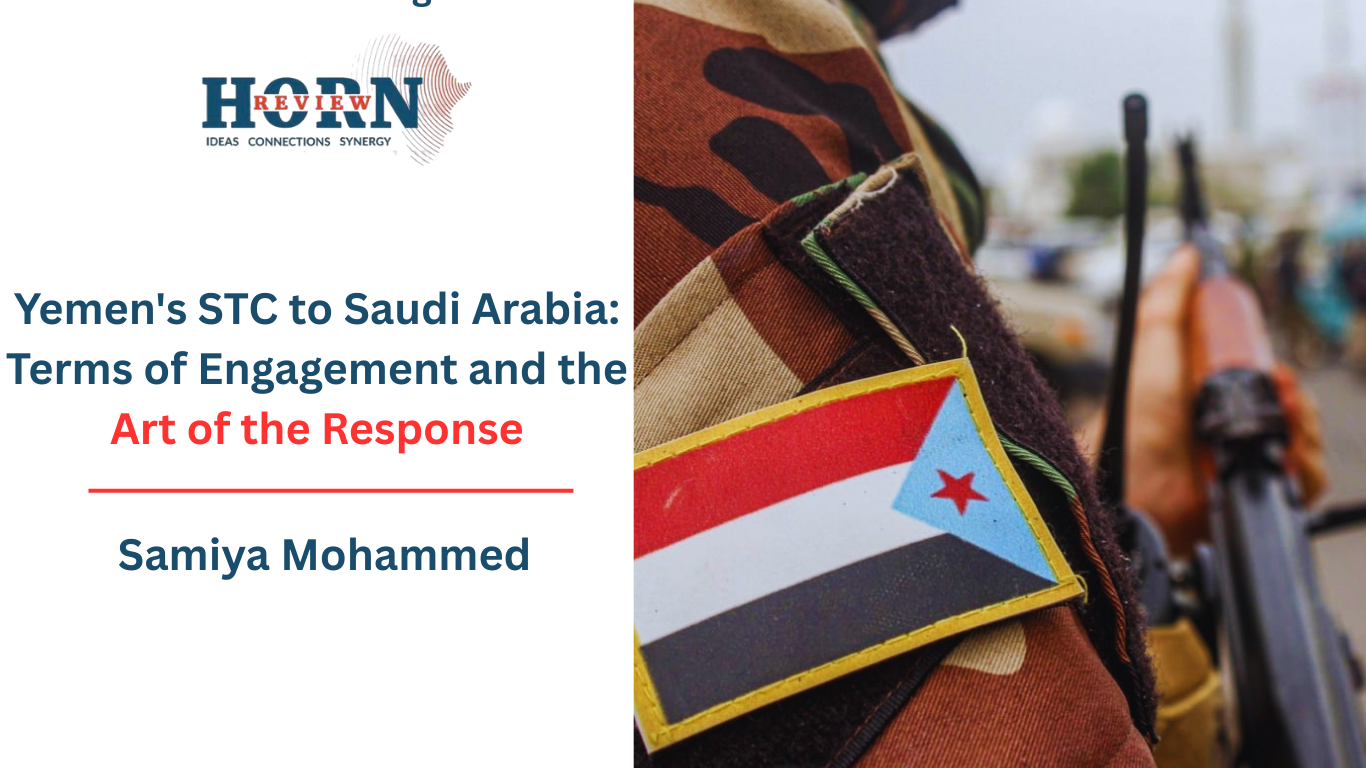
Surrounded by this military pressure, the STC made a planned political move by issuing a Constitutional Declaration for the State of South Arabia. The 30 article document posted on the STC’s official website proclaims an independent sovereign state within the borders of the former People’s Democratic Republic of Yemen with Aden as its capital. It establishes a two year transitional phase to be capped by a referendum on self-determination and outlines a complete governance structure including a president, a transitional government and a bicameral legislative body. In the announcement presented this not as an immediate unilateral secession but as a policy for dialogue warning that the declaration would take effect immediately if the call for talks was ignored or if the south came under attack.
It was against this tension of military setback but uncompromising political declaration that Saudi Arabia at the formal request of Yemen’s Presidential Leadership Council chairman Rashad al-Alimi, issued its call for a comprehensive southern dialogue in Riyadh. The STC’s acceptance statement while a welcome step away from immediate conflict is layered with conditions and narratives that expose fundamental challenges.
The STC portrays its attendance not as a concession to Saudi pressure but as Riyadh’s belated acceptance of the STC’s own peaceful dialogue focused approach. This rhetorical map out allows the group to enter talks from a position of political rather than military, strength. The statement explicitly ties its participation to its Constitutional Declaration. By doing so the STC signals that the dialogue’s acceptable outcome is already known, a pathway to an independent southern state. The Declaration is treated not as a bargaining chip but as the foundational document for negotiations.
While Saudi Arabia’s invitation embraces all southern factions the STC’s response welcomes only Southern components that are partners and signatories to the Southern National Charter. This distinction risks excluding rival southern political groups, tribal leaders, and civil society actors who do not subscribe to the STC’s separatist agenda potentially setting up exclusive and unrepresentative talks. The STC affirms its commitment to previous initiatives like the 2019 Riyadh Agreement. However, this pledge is highly selective. Critical components of that agreement, such as the integration of STC led military forces into the Yemeni national army under the central government’s Ministry of Defense were never implemented and remain a point of fierce contention. Referencing the agreement without addressing these core failures suggests a tactical move to claim the mantle of cooperation while sidestepping past obligations that contradict its separatist goals.
The unfolding crisis and the tentative move toward dialogue carry implications that goes far off southern Yemen’s borders reshaping regional alliances and the broader trajectory of the country’s decade long war. The events have brought into a view of a deep and growing divergence between Saudi Arabia and the United Arab Emirates where once close allies in the anti-Houthi coalition. The UAE’s material and political support for the STC’s separatist ambitions fundamentally conflicts with Saudi Arabia’s insistence on a unified Yemeni state as a buffer on its southern frontier. The UAE’s announced withdrawal of its remaining forces from Yemen is a significant de-escalatory step but it does not resolve the underlying competition between the two Gulf powers over Yemen’s future politics.
However the primary beneficiary of this intra coalition friction is the Iran backed Houthi movement. From their holdings in northern Yemen, the Houthis are watching as the forces that spent a decade trying to defeat them turn their weapons on each other. This schism weakens the anti-Houthi front, potentially allowing the group to solidify its gains, regroup militarily, and strengthen its negotiating position in any future nationwide peace talks. Even if outright war is temporarily averted, the dialogue faces a high risk of stalemate. The fundamental gap between the STC’s vision of independence and the Saudi backed government’s commitment to unity may be unbridgeable. Potential outcomes range from a protracted and fruitless negotiation process to a tense, frozen conflict where southern Yemen operates as a de facto state without international recognition.
The acceptance of dialogue by Yemen’s Southern Transitional Council is a necessary reprieve from the point of a new, devastating conflict within the already war ravaged country. It a pause forced by military reality and intense regional pressure. However, the substance of the STC’s response makes clear that this is not a climb down. It is a strategic pintle from the battlefield to the negotiating table with its maximalist political goals firmly intact. Success will require a degree of flexibility from the STC, the Saudi-backed Yemeni government and their respective international patrons that has been entirely absent over the past decade. The alternative is not a return to the status quo but a descent into a more intractable phase of Yemen’s tragedy where the dream of southern independence and the principle of national unity remain locked in a destruction to the continued detriment of the Yemeni people and the security of the region.
By Samiya Mohammed, Researcher, Horn Review