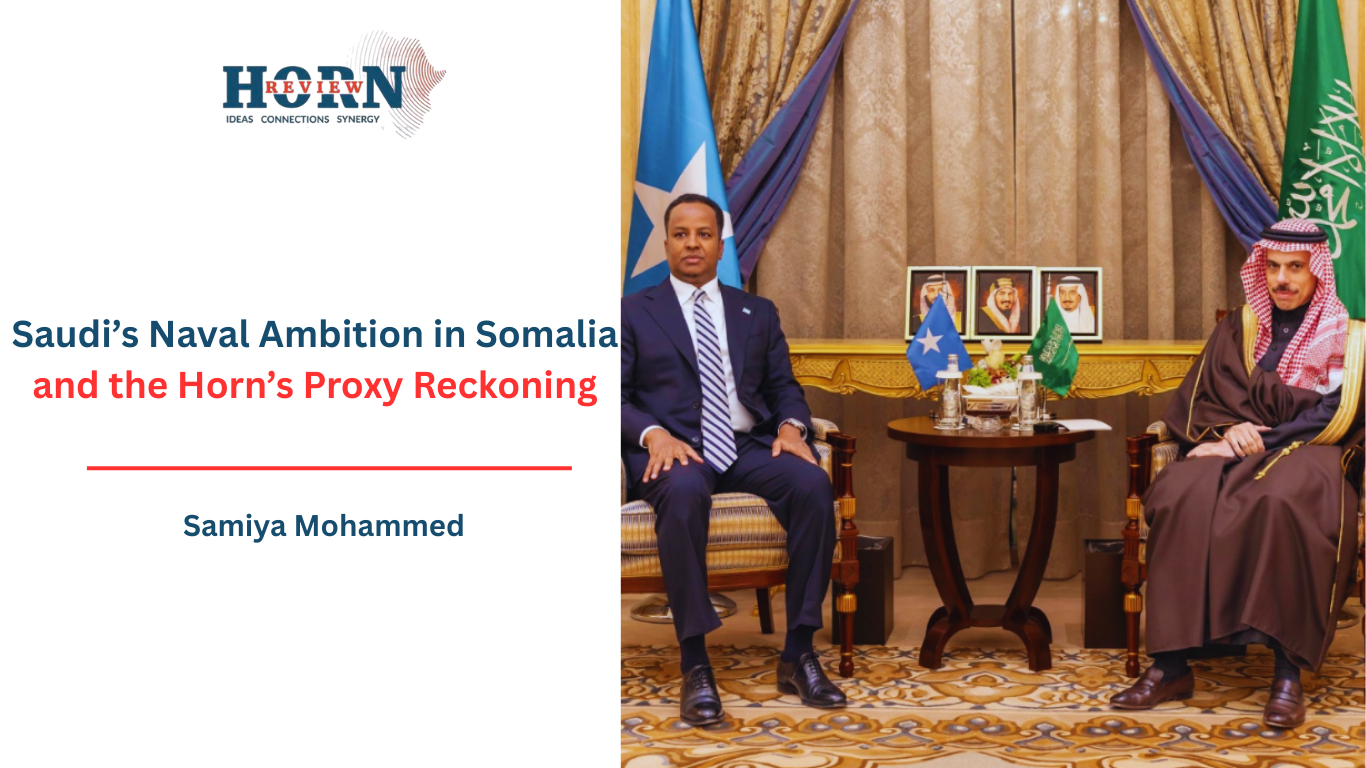
In the shifting sands of Middle Eastern geopolitics, the prospect of Saudi Arabia establishing a naval base in Somalia’s Laasqoray Port stands as a bold potential recalibration of power projection, one that could fortify the Kingdom’s defenses against Iranian-backed threats while reshaping the fragile stability of the Horn of Africa. Though not yet confirmed, this development appears increasingly likely given Riyadh’s escalating security imperatives and ongoing diplomatic engagements in the region. Positioned in the Sanaag region along the Gulf of Aden, such a base would not merely serve as a logistical outpost but as a strategic hub, extending Saudi influence across contested waters and challenging Tehran’s proxy networks.
This hypothetical action could have far-reaching effects beyond increased surveillance and interdiction, possibly starting a chain reaction of proxy escalations, ethnic realignments, and economic dependencies that would change the course of the region. Saudi Arabia could neutralize the ongoing threat posed by Houthi militants, whose drone and missile attacks have disrupted international trade routes and caused billions in economic losses, by positioning itself across from Yemen’s unstable shores. Although this expansion is a likely move for Riyadh due to strategic considerations, it would require a thorough reevaluation of how external militarization frequently plants seeds of instability, turning defensive postures into catalysts for wider conflict.
Since taking control of Yemen’s capital, Sana’a, in 2014, the Houthi threat, represented by Ansar Allah, has changed from a domestic insurgency to a sophisticated Iranian proxy that poses a direct threat to Saudi security. These weaknesses in the Kingdom’s energy infrastructure were brought to light by their 2019 attack on the Abqaiq oil facility, which momentarily cut Saudi oil production in half. By 2025, Houthi operations in the Red Sea and Gulf of Aden had intensified, focusing on commercial shipping and forcing reroutes that increased the cost of Saudi exports, which were essential for funding Vision 2030’s diversification initiatives.
If Saudi Arabia were to secure a naval base in Laasqoray, it would enable more effective monitoring of these chokepoints, supporting rapid-response operations to interrupt Iranian arms smuggling to the Houthis. This forward-leaning approach would challenge the notion that airstrikes suffice in isolation; rather, it underscores geography’s crucial role in warfare, where dominating adjacent territories can isolate adversaries and compel resource overextension. For Saudi Arabia, whose Yemen campaign has surpassed $100 billion in expenditures since 2015, this base could offer a more efficient alternative to extended ground involvements, potentially tipping the scales by encircling Houthi supply routes without further immersion in Yemen’s splintered terrain.
This strategic opportunity, however, would intersect dangerously with Somalia’s internal fragilities, especially the emerging alliance between the Houthis and Al-Shabaab, an Al-Qaeda-linked militant organization that has tormented the Horn for years. Intelligence reports from 2024 and 2025 indicate strengthening connections, with Houthis supplying drone technology, weaponry, and tactical expertise to Al-Shabaab, allowing the group to undo Somali government progress and broaden its reach. This partnership, fueled by mutual anti-Western ideologies and Iranian mediation, elevates Al-Shabaab from a regional jihadist peril to a maritime facilitator of Houthi goals.
If Saudi Arabia establishes a naval foothold at Laasqoray, the move could accelerate a dangerous spiral of proxy retaliation rather than stabilize the Horn. A Saudi presence would be read by the Houthis and their backers as direct intervention, incentivizing Tehran-aligned networks to expand operational ties with Somali militants, a trend already documented in recent reporting, and to use groups like Al-Shabaab as deniable instruments to strike ports, logistics hubs and coastal infrastructure that support Riyadh’s projection.
This dynamic not only threatens to undo fragile gains within Somalia but also exacerbates existing vulnerabilities. Al-Shabaab’s mid-2025 offensive has already reversed significant federal advances, and a foreign base would probably prompt intensified attacks, increased arms flows, and recruitment surges by reframing local grievances as resistance to foreign occupation. The outcome could include deeper erosion of Somali sovereignty in the north, heightened humanitarian pressures in already strained areas, and a regionalization of the Yemen conflict that draws in Gulf rivals, transforming the Gulf of Aden from a vital commerce corridor into a prolonged low-intensity battlefield.
Compounding these risks, Somalia’s divided society, particularly the ongoing dispute over Sanaag’s control between Puntland and Somaliland which already fosters tension. A Saudi base might alienate local factions, potentially pushing them toward Iranian interests and aligning them against perceived outsiders. This challenges the assumption that overseas bases inherently bolster host nations; instead, they often intensify divisions, positioning Somalia as a battleground where Houthi-supported Al-Shabaab exploits fractures to launch cross-border raids, endangering not just Saudi objectives but the Horn’s tenuous equilibrium.
In contrast to Saudi Arabia’s approach, the UAE’s posture in the Horn since the mid-2010s has been characterized by port deals, airfields, and training facilities aimed at securing trade routes and projecting counterterrorism capacity. This has built a dense network of local partnerships and footholds, anchoring Abu Dhabi’s influence through a forward-leaning, hub-and-partner strategy that prioritizes pragmatic local actors and infrastructure. While this provides rapid operational reach, it also entangles the UAE in local political fault lines and proxy dynamics tied to Yemen and the broader Red Sea corridor.
Riyadh’s recent moves, however, have leaned toward state-level diplomacy, large-scale logistics investments, and direct security engagement, highlighting a divergence from the UAE’s tactics. This split was evident during the December 2025 incidents in Yemen, which exposed strains between Saudi- and UAE-aligned elements and underscored their differing strategic priorities. In the Horn of Africa, these contrasting approaches fuel geopolitical competition through overlapping connectivity initiatives. For instance, Saudi logistics and regional ties could intersect with Turkey’s training presence in Mogadishu and produce a de facto axis paralleling UAE-backed networks, but deep political rivalries, separate Somali subnational deals, and the need for sustained operational integration make a long-lasting alignment far from certain.
When these engagements align, they can bolster regional security against threats like Al-Shabaab; but when misaligned, they risk generating friction, duplication, and the spillover of Middle Eastern rivalries into the Horn’s complex political landscape. Diplomatically, Saudi Arabia’s prospective action could spur realignments, hastening the Horn’s role as a microcosm of global competitions. By countering Iranian strongholds, Riyadh might converge with U.S. counterterrorism goals, attracting Western aid for anti-Al-Shabaab operations while straining ties with Iran-aligned entities.
Yet, the threat of unintended escalations looms large: Houthi reprisals via Al-Shabaab could spill into neighboring countries, broadening the discord. If Saudi Arabia proceeds with the naval base, driven by its urgent need to counter Houthi and Iranian threats, it would encapsulate the intricate challenges of strategic planning amid hybrid dangers. While the base might offer a bulwark against Houthi aggression and a resurgent Al-Shabaab, it also risks provoking further unrest that fractures the Horn, undermining the idea that regional disputes can be neatly contained.
As Saudi Arabia contemplates anchoring its naval ambitions in Somalia’s Laasqoray Port, the move encapsulates the high-stakes gamble of Middle Eastern power plays spilling into the Horn of Africa. While promising a robust counter to Iranian proxies like the Houthis and their burgeoning alliance with Al-Shabaab, it risks igniting a proxy reckoning that could fracture Somalia’s fragile sovereignty, exacerbate ethnic tensions in disputed regions like Sanaag, and transform the Gulf of Aden into a perpetual flashpoint. Diverging from the UAE’s networked approach, Riyadh’s strategy underscores a broader trend: defensive expansions often breed unintended escalations, entangling local grievances with global rivalries.
By Samiya Mohammed, Researcher, Horn Review