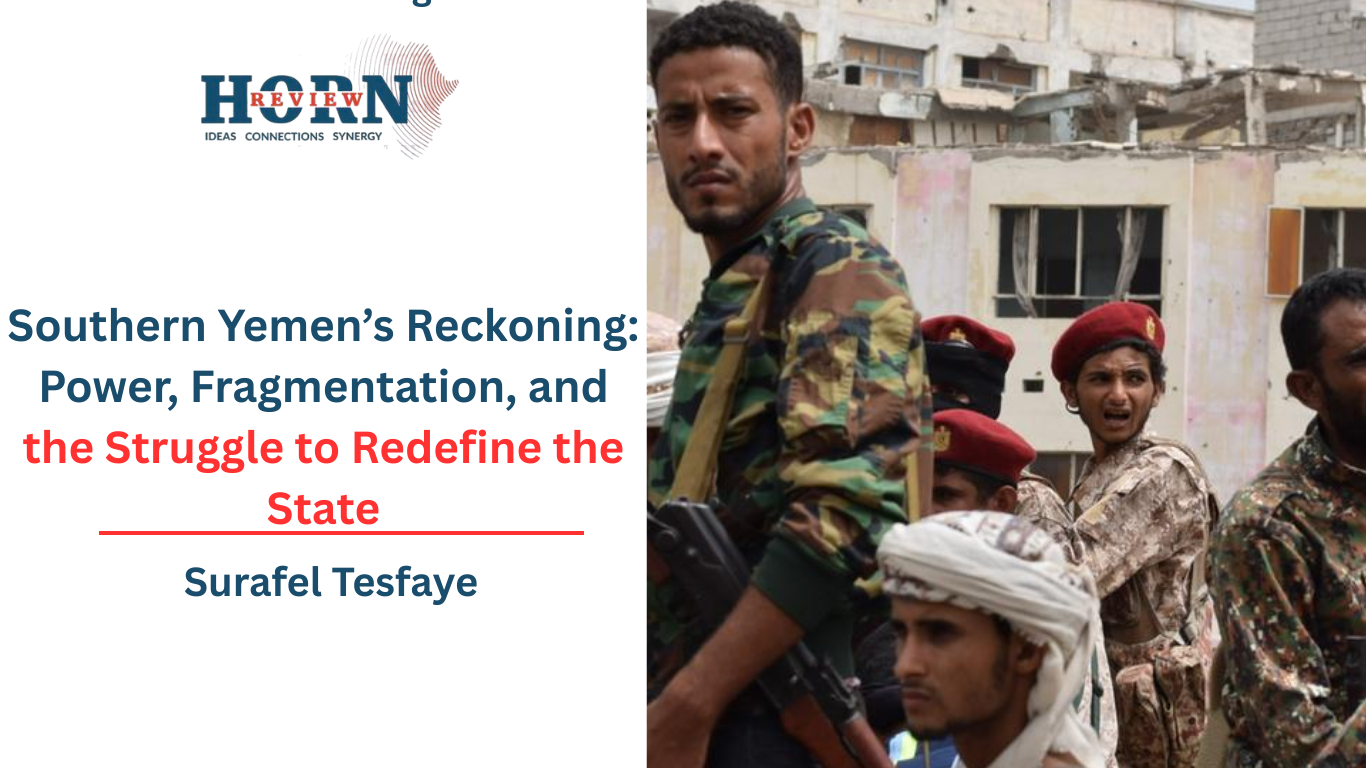
Yemen’s southern separatist movement took a bold step forward when Aidarous al-Zubaidi, the leader of the Southern Transitional Council, declared a two-year transitional period aimed at paving the way for a referendum on self-determination. This announcement, made in Aden, signals a potential shift in the country’s fractured landscape, where longstanding divisions between north and south continue to simmer. Al-Zubaidi framed the move as a responsible path toward addressing southern grievances, emphasizing the need for dialogue with northern factions, including Yemen’s internationally recognized government under Rashad al-Alimi, the chairman of the Presidential Leadership Council.
At the same time, this declaration arrives amid escalating tensions, with recent military maneuvers by southern forces raising questions about whether it’s a genuine olive branch or a strategic maneuver to consolidate control. Rashad al-Alimi, a seasoned politician from Taiz, has been at the helm of the Presidential Leadership Council since 2022, overseeing a coalition of anti-Houthi groups in a bid to restore stability. His role places him squarely in the crosshairs of Yemen’s complex power struggles, where alliances shift like desert sands.
The Southern Transitional Council, or STC, emerged in 2017 as a key player advocating for southern interests, drawing on historical resentments from the brief independence of South Yemen before unification in 1990. Backed by significant resources, the STC has built a formidable presence in Aden and surrounding areas, often clashing with government forces while positioning itself as a defender against northern dominance. Al-Zubaidi’s call for a transitional phase includes commitments to stabilize services, ensure salary payments, and manage revenues through Aden’s central bank, but critics see it as a veiled push for de facto separation.
To understand the roots of this push, one must look back to the coalition’s formation against the Houthis. When the Saudi-led intervention began in March 2015 to counter the rebels who had captured key cities like Aden, southern separatists aligned with forces loyal to then-exiled President Abd-Rabbu Mansour Hadi, fighting side by side to reclaim territory from Houthi control. This uneasy partnership helped retake Aden by July 2015, turning it into an interim capital while Sanaa remained under rebel grip.
However, the alliance frayed quickly. Tensions escalated in April 2017 when Hadi dismissed Aden’s governor, Aidarous al-Zubaidi, accusing him of disloyalty. This sparked widespread protests, leading to the STC’s creation on May 11 that year, with al-Zubaidi at its head. From the outset, the council voiced ambitions to revive the southern state that had existed independently until 1990, a move Hadi swiftly branded as illegitimate.
These early rifts foreshadowed deeper conflicts, culminating in August 2019 when STC forces seized Aden in fierce clashes often described as a nested civil war. That takeover prompted the Riyadh Agreement in November 2019, a power-sharing deal brokered by Saudi Arabia to unify anti-Houthi efforts. However, the pact’s fragility became evident in April 2020, when the STC declared a state of emergency and asserted self-administration over Aden and other southern regions, citing the government’s alleged corruption and failure to deliver essential services.
An STC representative highlighted years of deteriorating conditions in Houthi-free southern areas, where basic infrastructure and humanitarian aid had faltered despite the absence of rebel threats. Yemen’s foreign minister at the time condemned this as a blatant breach of the Riyadh accord, labeling it a return to armed rebellion and a full retreat from the agreement’s terms. Analysts observed that the deal was doomed from the start, with conflicting interpretations and goals ensuring its inevitable collapse, as each side pursued incompatible visions for Yemen’s future.
Beyond southern politics, the broader Yemen conflict adds layers of intrigue to this development. Since 2014, when Houthi rebels seized Sanaa and ousted the government, the country has been torn apart by a war that has drawn in regional powers. Saudi Arabia, leading a coalition to reinstate the recognized government, has poured billions into the effort, viewing the Houthis as a direct threat linked to Iranian influence. The Houthis, who control much of the north and west, have allegedly received arms and training from Tehran, enabling them to launch missile attacks on Saudi territory and disrupt Red Sea shipping.
Meanwhile, Al-Qaeda in the Arabian Peninsula, one of the group’s most dangerous branches, exploits the chaos in ungoverned southern spaces, launching attacks that further destabilize the region. The STC’s recent offensive in Hadramout province, where it captured vast territories, highlights how these actors intersect—southern forces have battled both Houthis and Al-Qaeda elements, but their advances have strained relations with the central government. This interplay underscores the precarious nature of the anti-Houthi front, where southern separatists, once comrades in arms with Hadi’s loyalists, now challenge the very unity they helped defend.
A critical eye reveals the intricate web of external influences shaping these events. The United Arab Emirates has provided substantial support to the STC, allegedly including military training and equipment, which has allowed southern militias to expand their footprint. This backing contrasts with Saudi Arabia’s preference for a unified Yemen under the Presidential Leadership Council, leading to a rift between the two Gulf allies who once fought side by side. Recent reports indicate that al-Alimi’s council demanded UAE forces withdraw from Yemeni soil and canceled a joint defense pact, underscoring the growing friction.
Allegedly, the UAE’s strategy focuses on securing strategic ports and countering Islamist threats, but it risks alienating Riyadh, which fears a fragmented Yemen could embolden the Houthis and their Iranian patrons. In this environment, Al-Qaeda benefits from the divisions, regrouping in areas where anti-Houthi forces are distracted by internal squabbles. The historical pattern of broken agreements, like the Riyadh pact’s unraveling, suggests that current overtures for dialogue may face similar hurdles, especially if underlying grievances over governance and resource distribution remain unaddressed. Moreover, the STC’s accusations of mismanagement echo longstanding southern complaints, where economic disparities and perceived northern favoritism fuel secessionist sentiment, complicating any path to reconciliation.
Against this backdrop, al-Zubaidi’s announcement navigates a minefield of competing interests. On one hand, it offers a structured timeline for southern aspirations, potentially reducing immediate violence by inviting northern dialogue. The emphasis on international sponsorship for the referendum could bring in neutral oversight, fostering transparency in a conflict marred by opacity. However, the transitional phase’s conditions such as immediate implementation of a southern constitution if faced with aggression suggest a readiness for confrontation.
Such signals could exacerbate the north-south divide, especially if Houthis interpret it as weakness in the anti-Houthi camp and press their advantage. Saudi Arabia’s response will be pivotal; airstrikes on southern positions have already been reported, hinting at a willingness to enforce unity by force. Iran, through its alleged Houthi proxies, might exploit the chaos to expand influence, while Al-Qaeda could launch opportunistic strikes to sow further discord. Adding to this, the coalition’s internal strains evident in the UAE’s alleged prioritization of southern autonomy over broader unity could fracture the anti-Houthi effort further, allowing extremists to gain ground in overlooked territories.
The human cost of these maneuvers cannot be overlooked. Yemen’s war has already claimed hundreds of thousands of lives through fighting, famine, and disease, with southern regions bearing a heavy burden despite relative stability in STC-held areas. Al-Zubaidi’s plan promises economic normalization, but without broad buy-in, it might lead to isolated enclaves vulnerable to blockade or attack.
Critically, the lack of inclusive talks so far bypassing direct engagement with Riyadh or Sanaa raises doubts about its viability. Is this a pragmatic step toward peace, or a calculated bid to lock in gains amid waning coalition cohesion? The STC’s military successes in Hadramout and Shabwa demonstrate capability, but sustaining an independent south would require diplomatic finesse beyond battlefield wins. The recurring theme of failed pacts, from 2019 onward, highlights a deeper issue: without addressing core issues like equitable power-sharing and service delivery, any transitional framework risks repeating past breakdowns.
Looking ahead, speculation abounds on where this leads. If dialogue materializes, the transitional phase could evolve into a federal model, easing tensions and allowing Yemen to rebuild. However, a more likely scenario involves heightened clashes between UAE-aligned southern forces and Saudi-backed government troops, potentially reigniting full-scale civil war and drawing in Houthis for opportunistic gains. Al-Qaeda might thrive in the resulting vacuum, launching attacks that complicate international efforts. Iran could ramp up support to the Houthis, turning Yemen into an even deadlier proxy battleground.
Ultimately, without U.S. or U.N. mediation to bridge the Gulf rift, this transitional push risks prolonging Yemen’s agony, leaving its people caught between aspirations for autonomy and the harsh realities of division. The history of fleeting alliances and broken deals suggests that true progress demands more than declarations it requires genuine compromise in a land scarred by endless strife.
In this sense, the STC’s declaration is less about the next two years than about forcing a reckoning with Yemen’s structural fractures. The question is no longer whether the southern issue exists, but whether it will be addressed through managed political transformation or through another cycle of conflict that deepens Yemen’s fragmentation and prolongs its war.
By Surafel Tesfaye, Researcher, Horn Review