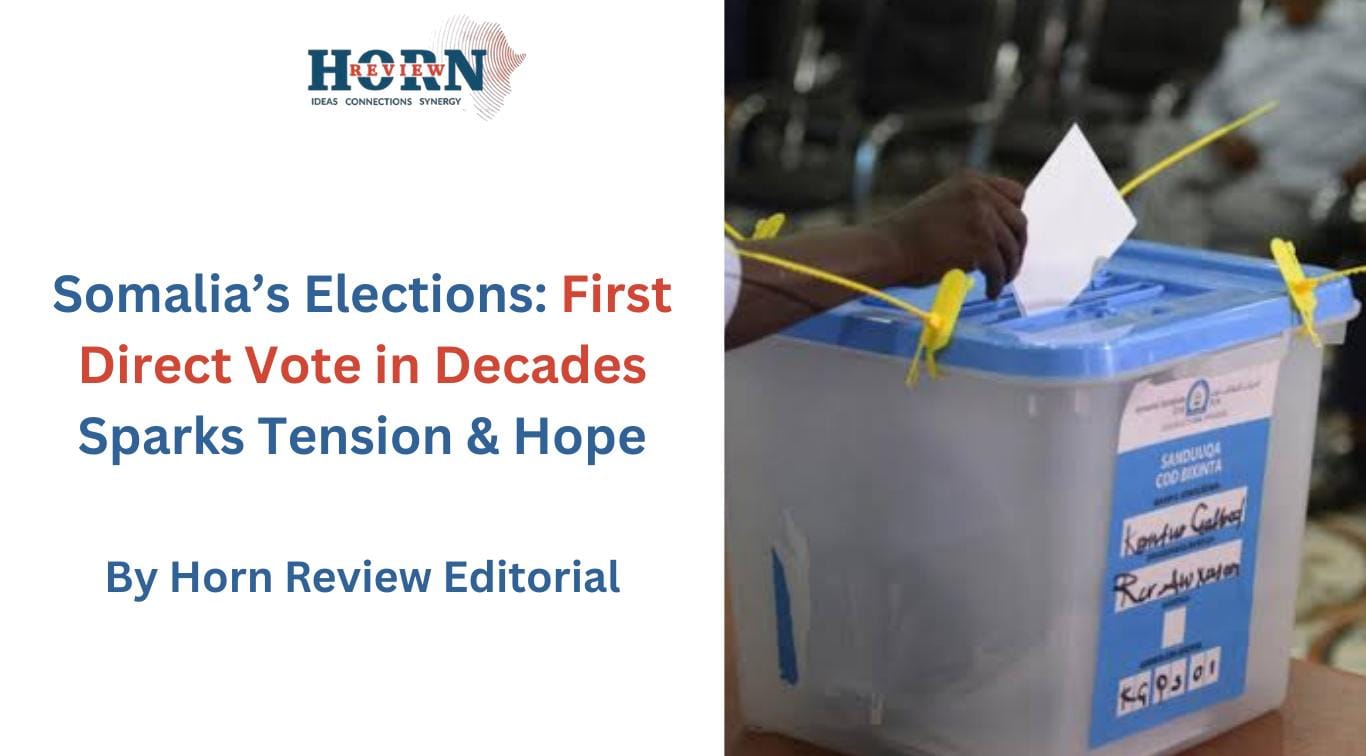
Somalia is presently navigating a critical juncture in its protracted democratization process, as the municipal elections in Mogadishu progress toward the conclusion of the voting phase and the commencement of ballot tabulation. Reports indicate that the Mogadishu Electoral Board is undertaking extensive technical procedures following the close of polling, a phase anticipated to extend into the night, potentially until approximately 1:00 a.m., after which formal vote counting is scheduled to begin. Observers have expressed concerns regarding the potential preferential structuring of these technical procedures in favor of the ruling Justice and Salvation Party (JSP), which may limit proportional representation for opposition parties, although these assertions are contested by government authorities.
These elections constitute a historic inflection point, representing the first direct, one-person, one-vote municipal election in Mogadishu since 1969, marking a substantive departure from the decades-long clan-based indirect electoral mechanisms that have predominated since the collapse of the Siad Barre regime. According to the National Independent Electoral and Boundaries Commission (NIEBC), approximately 900,000 citizens registered to vote, indicating that roughly 55% of registered voters were eligible to participate in the electoral process. There are no confirmed published figures yet about exactly how many voters collected cards or the precise turnout percentage. The electoral contest encompasses 1,604 candidates vying for 390 council seats across 523 polling stations distributed throughout the 16 districts of the Banadir region, with 1,246 male and 361 female candidates. Although 61 political organizations initially registered, only 20 ultimately submitted full and accepted candidate lists to compete in the elections, following the withdrawal or failure of other parties to meet nomination requirements.
The NIEBC Chairman, Abdikarin Ahmed Hassan, has publicly emphasized the “integrity” of the electoral process, exhorting citizens to engage substantively in the vote and reaffirming the commission’s commitment to “transparency and procedural rigor”. He observed long queues of voters at polling stations, underscoring the civic engagement dimension of the election, and reiterated the administration’s efforts to facilitate orderly and equitable participation. However, as the elections officially began today in Banadir and the Mogadishu metropolitan area, the city’s general population has reportedly not turned out in expected numbers. In the 20 districts surrounding the city, only 6,000 pre-registered candidates and an estimated 8,000 federal and municipal government employees are reportedly participating. Ordinary residents who are opposition supporters have largely stayed home, reportedly due to fear of harassment or violent attacks. Since the morning, at the city center, a minor clash occurred resulting in one arrest, but aside from this incident, no reports of violence or disturbances have been recorded at polling stations so far.
The Somali federal government situated the elections within a broader constitutional and democratic framework. The 2024 legislation reinstating universal suffrage terminated the long-standing indirect clan-based voting system, creating the legal foundation for the 2025 municipal elections and establishing a precedent for the anticipated 2026 national parliamentary and presidential elections. The administration frames these elections as instrumental in promoting political accountability, civic inclusion, and the consolidation of state authority. Security considerations have also been integral to the electoral design. Authorities mobilized in excess of 10,000 security personnel, implemented a citywide lockdown on election day, restricted vehicular movement, temporarily closed the principal airport, and placed emergency response units, including medical and fire services, on full operational alert to safeguard the electorate and election infrastructure. The authorities have underscored the criticality of these measures in sustaining public confidence and ensuring procedural integrity. The persistent insurgency of al-Shabaab has profoundly shaped the operational and perceptual contours of the election. While the group did not execute direct attacks on election day, its ongoing asymmetric operations – including suicide bombings, coordinated assaults on military installations, and threats to government infrastructure – necessitated heightened security protocols and influenced both voter behavior and logistical planning. These conditions exemplify the broader impact of non-state actors on democratic transitions in conflict-affected environments.
Opposition actors, particularly the Somalia Future Council – a coalition comprising former President Sharif Sheikh Ahmed and former Prime Ministers Hassan Ali Khaire and Mohamed Hussein Roble – have vocally repudiated the electoral process. They contend that the election lacks genuine competitiveness, is procedurally biased in favor of the ruling party, and falls short of constitutional legitimacy. These actors have asserted that they will not recognize the results, noting that the withdrawal or disqualification of other political organizations substantially curtailed contestation. Public response exhibits a complex and heterogeneous pattern. Observers documented long queues and demonstrable enthusiasm among voters, particularly women and youth, while analysts have highlighted variability in participation rates across districts. Despite this engagement, official results remain pending, with ballot counting proceeding in accordance with the technical phase of the election.
Election oversight and media engagement contributed to perceptions of transparency. The NIEBC deployed trained personnel at polling stations, while local outlets, including Shabelle Media Network, provided real-time coverage of voter registration, polling commencement, and procedural compliance. Limited observation by regional international actors supplemented local oversight efforts. The electoral process also intersects with enduring federal-regional tensions. Semi-autonomous states such as Puntland and Jubbaland have articulated objections to the framework and expressed concerns regarding centralization of authority in Mogadishu. Threats to pursue alternative electoral arrangements underscore the fragility of intergovernmental consensus and the complexities of federalism in the Somali polity.
The broader security environment remains precarious, with al-Shabaab continuing to threaten national stability through sporadic insurgent activity. Although no major incidents occurred on election day, the insurgency remains capable of undermining public confidence and political processes. International partners, including the UN and African Union, continue to advocate for inclusive, credible, and peaceful electoral procedures. As the NIEBC finalizes the technical procedures and tabulation proceeds, Somalia confronts a decisive moment in its political evolution. The perception of legitimacy surrounding these elections will profoundly shape the trajectory of democratization, influence the 2026 national electoral cycle, and affect the distribution of authority between the federal government and regional entities. The unfolding outcome has significant implications for the consolidation of democratic norms, political stability, and the broader security context in a country emerging from protracted conflict.
By Horn Review Editorial