The artillery strike on Dilling on December 19 should be read as a structural signal rather than an isolated event. The report highlights the impact of the bombardment on Rapid Support Forces operations, documenting several civilian deaths. This situation turned a local crisis into a significant political issue by revealing the intentional use of heavy indirect fire on populated areas. That pattern changes the stakes of local contests because attacks that render towns unsafe reconfigure authority, produce humanitarian dependency, and advertise which actors claim the capacity to protect or to terrorize populations.
Patterns of displacement provide a clearer metric of how battlefield tactics convert into political leverage. Field monitoring by the International Organization for Migration registers more than fifty thousand people uprooted from Kordofan between late October and mid-December 2025, a scale of movement that fragments civic networks, concentrates relief flows in ways external actors can condition, and imposes reputational costs on any ally viewed as complicit in civilian harm. Mass uprooting therefore functions as both consequence and currency within a contest where possession of terrain confers claims to governance.
The recapture and defense of garrisons illustrate how battlefield posture now reads as a form of political claim making. The contest for the Mabsouta garrison during December operations underscores this dynamic. Tactical seizure and retention of military infrastructure perform a rhetorical function: such facilities signify an ability to administer territory, to guarantee security, and to occupy administrative vacuums left by a weakened state. Control of garrisons thus operates as bargaining capital in any post-conflict settlement, while loss of these positions diminishes negotiating capacity and visibility beyond immediate battlefields. That instrumental logic reframes military operations as deliberate acts of political positioning rather than mere tactical engagements.
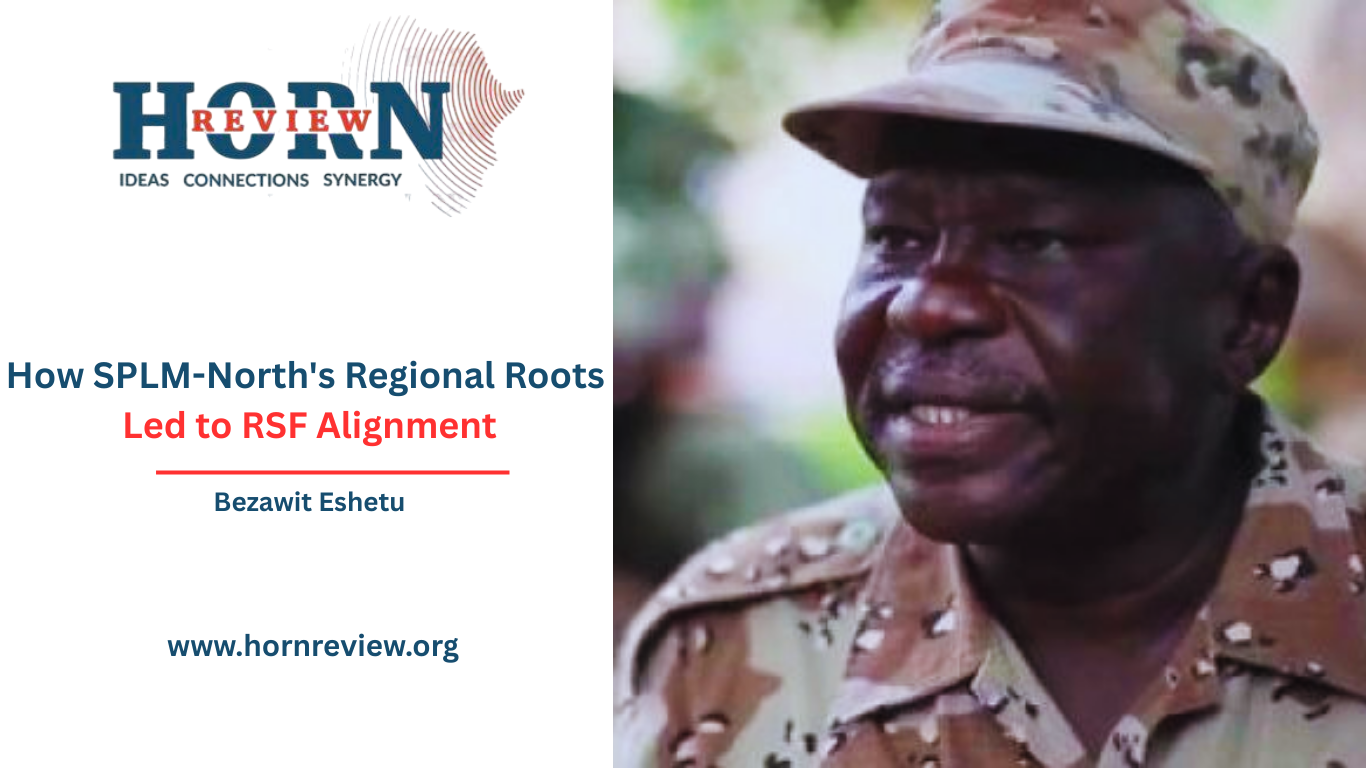
The institutional descent of the Sudan People’s Liberation Movement North is central to grasping why the movement has become consequential in the current realignment. Elements of the Sudan People’s Liberation Army that remained north of the 2011 South Sudanese border reorganized under an SPLM–North banner with explicit aims: to defend regional constituencies and to carry forward political ideas associated with John Garang, principally a secular, multiethnic conception of national politics within Sudan. That organizational decision situated legitimacy in local social contracts among Nuba, Ingessana, and allied communities by presenting the movement as a regional guardian rather than as a participant in southern state building. The institutional continuity created after 2011 thus produced a movement whose identity and claims were shaped by peripheral grievances and by resistance to political centralization.
Divergent diagnoses about how political change might be secured produced the 2017 rupture that remains determinative. Malik Agar’s Blue Nile wing embraced negotiation and institutional engagement, viewing devolved authority, political representation, and incremental inclusion as practical pathways to security and development. Abdelaziz al Hilu’s Nuba Mountains wing rejected accommodations that left Islamist legal frameworks intact, insisting instead on constitutional secularism and on a conditional right to self-determination if secularism failed to be realized. The split encoded incompatible political epistemologies: reform from within versus foundational rupture. That doctrinal divergence explains why subsequent tactical choices, including differing approaches to alliances and to the use of armed leverage, reflect coherent strategic logics rather than merely personal rivalries.
Historical patterns of marginalization and coercion explain why the Sudan Armed Forces occupy a structural position as antagonist in SPLM–North political memory. Marginalization took material, legal, and coercive forms: exclusion from patronage networks and state services, contested land policies disadvantaging peripheral groups, and a counterinsurgency range that included aerial bombardment, scorched earth operations, and practices widely perceived as collective punishment in the Two Areas after 2011. Those instruments associated the SAF with a centralizing, majoritarian political order that frequently deployed force to sustain dominance rather than to integrate plural citizenship claims. The institutional culture of the SAF therefore produced durable distrust among constituencies for whom the state had been an extractive instrument. That structural antagonism clarifies why collaboration with the SAF has been politically toxic for significant elements of the SPLM–North base.
The tactical embrace of alignment with RSF formations by Abdelaziz al Hilu’s faction reflects a calculated conversion of historical grievances into present opportunity. The February 2025 charter signed by RSF leadership and allied groups included al Hilu among its signatories and articulated a program of parallel governance under RSF sponsorship. That alignment provided expanded operational corridors and access to materiel and territorial reach that had previously been constrained. At the same time, the RSF carries substantial reputational and legal liabilities given credible allegations of mass atrocities in multiple theaters of the conflict. The bargain therefore presents a dual logic: increased bargaining leverage in the short term, coupled with embedded moral and legal risk that may erode claims to principled leadership over time. The refusal to dissolve institutional structures into a full merger with the RSF demonstrates an effort to retain identity, yet the mechanics of cooperation render disentanglement fraught.
Ethnicity and identity politics occupy both explicit and implicit roles in the conflict dynamics. The sociopolitical formation of the Nuba and Ingessana communities renders grievances intersectional: ethnic difference intersects with religious policy, land tenure, and recruitment practices that historically privileged Arabized elites. Political identity in the Two Areas has been shaped by defense of local languages, customary rights, and resistance to legal regimes perceived as imposing majoritarian norms derived from Islamist policy frameworks. That constellation of identity factors produced a political ecology in which the SPLM–North presented itself as the protector of plural citizenship and local autonomy. Ethnic markers therefore do not merely serve as mobilizing symbols; they anchor claims about differential access to state resources and to the protections of law. Scholarly fieldwork and monitoring reports record these layered grievances as persistent drivers of mobilization.
Political ideology within and across the SPLM–North wings maps onto differing priorities and rhetorical registers. The Agar wing articulates pragmatic pluralism grounded in negotiated inclusion, devolution, and the pursuit of political representation within a reconstituted Sudanese polity. The al Hilu wing emphasizes constitutional secularism, structural guarantees for regional autonomy, and a willingness to assert conditional self-determination if foundational secular reforms remain unrealized. That ideological bifurcation is consequential because it sets thresholds for acceptable compromise and defines differing tolerances for temporary alliances of convenience. The RSF alignment thus cannot be read simply as a military convenience; it is a strategy shaped by doctrinal priorities about how to pursue long term political objectives.
Prospective trajectories follow from the interaction between historical grievance, tactical opportunity, and external conditioning. If battlefield leverage is used to demand legally enforceable guarantees for secular governance and for autonomous regional structures, then the movement’s claims could be consolidated into institutional protections. Absent enforceable arrangements and credible verification, however, wartime patronage will likely supplant normative commitments and expose the movement to reputational and juridical consequences that reduce external support. The immediate political calculus therefore involves trading short term material gains against longer term credibility and the capacity to deliver durable protections for constituencies that have already paid a high price in displacement and civilian loss.
Further diagnoses of the animating hostility toward the SAF reveals persistent distrust rooted in structural patterns rather than episodic grievances. The SAF’s historical alignment with majoritarian political coalitions, recurrent use of air and heavy firepower in counterinsurgency, and the marginalization of local elites have left scars that inform strategic preferences. Collaboration with the SAF would require deep institutional guarantees and visible transformations in command culture that are not present in the current environment. In the absence of such transformations, alignment with the SAF would be perceived as political betrayal by constituencies whose recent memory associates the SAF with dispossession and violence. That perception, whether or not entirely accurate in every instance, constitutes a decisive political constraint.
The sequence of events and alignments therefore reads as a logic of constrained agency. Historical exclusion and coercion produced an existential orientation toward self-protection and regional autonomy. The 2017 doctrinal split structured differing pathways toward political security. The 2023 rupture in national command structures created openings that could be exploited by actors willing to convert territorial gains into bargaining power. The RSF alignment constitutes a tactical expedient that enlarges operational capacity while embedding substantial reputational risk. Future outcomes depend on whether political actors can translate coercive advantage into enforceable institutional arrangements that protect plural citizenship, or whether wartime patronage will hollow out normative claims and leave populations more exposed.
By Bezawit Eshetu, Researcher, Horn Review