Has Turkey Effectively Taken Over Somalia?
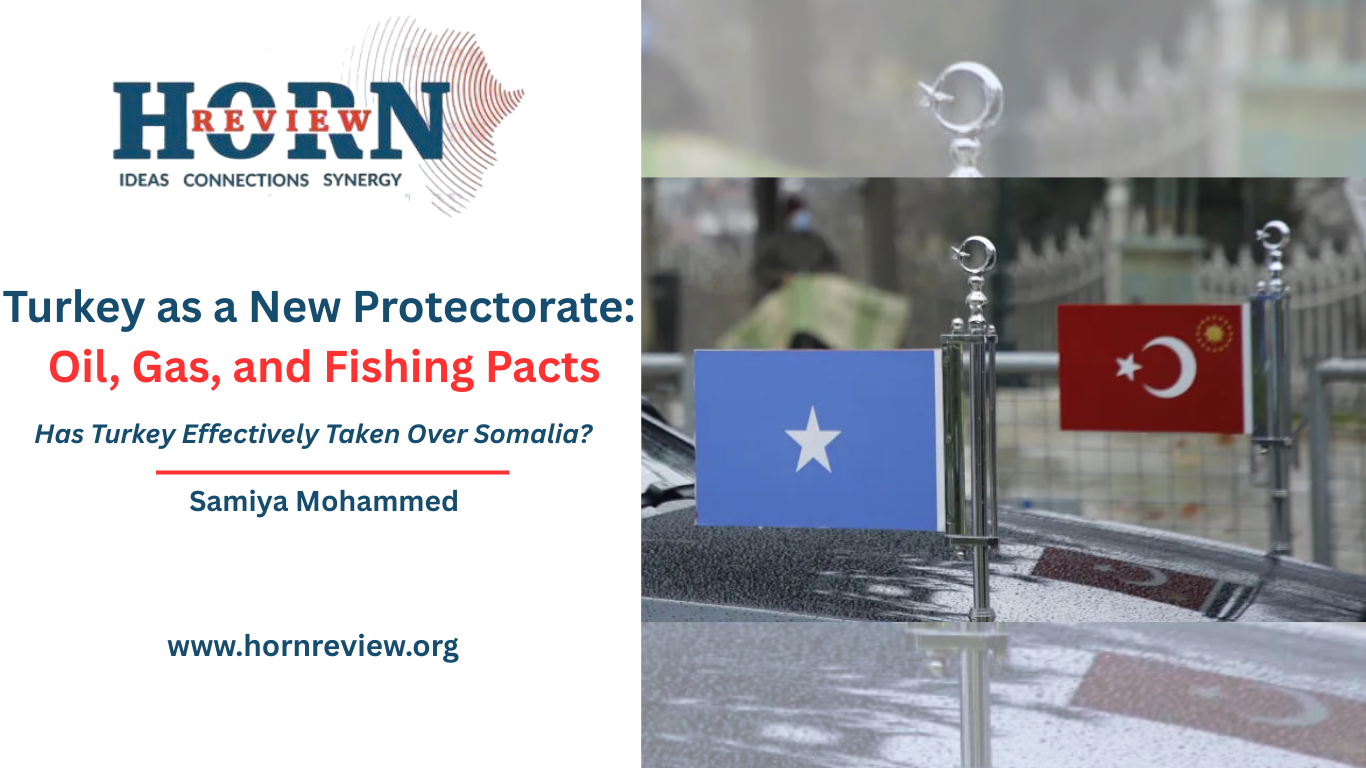
The nature of Turkey’s deep involvement in Somalia spanning military, economic, and resource sectors prompts to examine whether this complicated partnership constitutes a modern form of protectorate relationship. This engagement which began with high profile humanitarian aid over a decade ago has matured into a comprehensive strategic model that sees Turkey managing critical infrastructure, commanding security forces, and securing exclusive rights to the country’s natural resources. While seen as a mutually beneficial alliance, the concentration of control in Turkish hands particularly those linked to the state and military combined with Somalia’s institutional tenuousness raises critical questions about sovereignty, equity, and long term dependence.
The foundation of Turkey’s current role was laid during a moment of extreme vulnerability for Somalia. In 2011, during a devastating famine President Recep Tayyip Erdoğan’s visit to Mogadishu pointed the beginning of a sustained engagement that has delivered over $1 billion in aid and development assistance. This initial humanitarian impulse however has evolved into a permanent and dominant presence. Turkish companies now hold long term concessions to operate the Port of Mogadishu and Aden Adde International Airport which two of the country’s most requisite economic assets. These contracts could be criticized for lacking transparency, reducing expected government revenues, and creating trade imbalances heavily favouring Turkish imports. A review found that revenue-sharing agreements for the port and airport resulted in a big shift of income from the state to the Turkish concessionaires, with the government’s share of port revenues allegedly falling from 55% to 16% in one instance. These arrangements often concluded without parliamentary approval, have entrenched Turkish economic interests at the core of Somalia’s formal economy.
In the military and security domain, Turkey’s role has become indispensable. Camp TURKSOM, Turkey’s largest overseas military base has trained over 15,000 Somali troops since 2017 and serves as a central command and logistics. The recent clarification regarding Defense Minister Yaşar Güler’s comments that he was referencing an already-established Air Task Command in Somalia, not announcing a new one shows the existing depth of this integration. This air wing, reportedly equipped with attack helicopters and drones, operates alongside plans to further bolster the Somali Air Force with advanced T129 ATAK helicopters. A 2024 agreement also provides for a decade that Turkish naval presence to patrol Somali waters, offering protection for Turkey’s own energy exploration vessels. This security blanket addresses Somalia’s acute inability to confront threats like al-Shabab without external support which a weakness explicitly noted in a Turkish intelligence assessment. However, it also creates a dependency, intertwining Somalia’s survival with the continued presence of the Turkish armed forces.
The most striking developments however, are in the sphere of natural resource exploitation, where agreements signed in 2024 and 2025 suggest a lock on Somalia’s future wealth. In the energy sector, Turkey’s state owned petroleum company has secured rights for both offshore and onshore oil and gas exploration across vast tracts of Somali territory.
Its seismic research vessel, the Oruç Reis surveys Somali waters under the protection of the Turkish navy. The terms of the hydrocarbon agreement as reported grant Turkey sweeping operational and financial privileges. More controversially, a fisheries agreement signed in December 2025 grants extraordinary control to a Turkish military-linked entity. The pact centralizes all licensing, monitoring, and regulation of Somalia’s entire exclusive economic zone ,one of the richest fishing grounds in Africa under a newly formed joint company named SOMTURK. This company is controlled by OYAK, the Turkish Armed Forces Assistance and Pension Fund, a massive economic conglomerate with no prior fisheries management experience. The agreement was signed at a high-level ceremony attended by Turkish Defense Minister Güler and the Chief of the Turkish General Staff shows the strategic rather than purely commercial nature of the deal from Ankara’s perspective.
This comprehensive penetration has sparked significant criticism and concern. This points to the opaque nature of many contracts, which bypass parliamentary scrutiny and risk leaving the government liable. Regionally, federal member states like Puntland and Jubaland, which have their own resource and revenue disputes with Mogadishu must view these centrally negotiated Turkish deals with suspicion, fearing further marginalization. Internationally, a development traps where humanitarian and security assistance paves the way for extractive economic arrangements that primarily benefit foreign corporations and a narrow political elite in Mogadishu. Even Somalia’s fragility, including political fragmentation and weak institutions creates a high-risk environment for such large scale foreign projects.
The Turkish government and its Somali counterparts consistently describe their relationship as a mutually beneficial win-win partnership based on solidarity. They argue that Turkey, unlike traditional Western powers offers cooperation without colonial baggage and provides tangible security and investment where others hesitate. Somali officials note that the fisheries deal, for example promises job creation, revenue sharing, and the protection of marine resources from illegal foreign fishing.
Ultimately, the Turkey-Somalia model defies simple categorization. It is not a classical colonial occupation, as it operates through formal agreements with a recognized sovereign government. Yet, the totality of influence from security command and infrastructure control to the proprietary rights over future resource wealth moves beyond mere alliance. The situation reveals a criterion of modern influence where a delicate state’s acute needs for security, investment, and institutional support are met by a partner that systematically secures commanding levers over its economy, its natural endowment, and its defence apparatus in return. The long term sustainability of this model hinges on whether the benefits can be distributed more transparently and equitably to rest Somali institutions broadly, rather than deepening a reliance that risks compromising the very sovereignty those institutions are meant to embody.
By Samiya Mohammed, Researcher, Horn Review