Prisoner Releases as Tools of Regime Survival
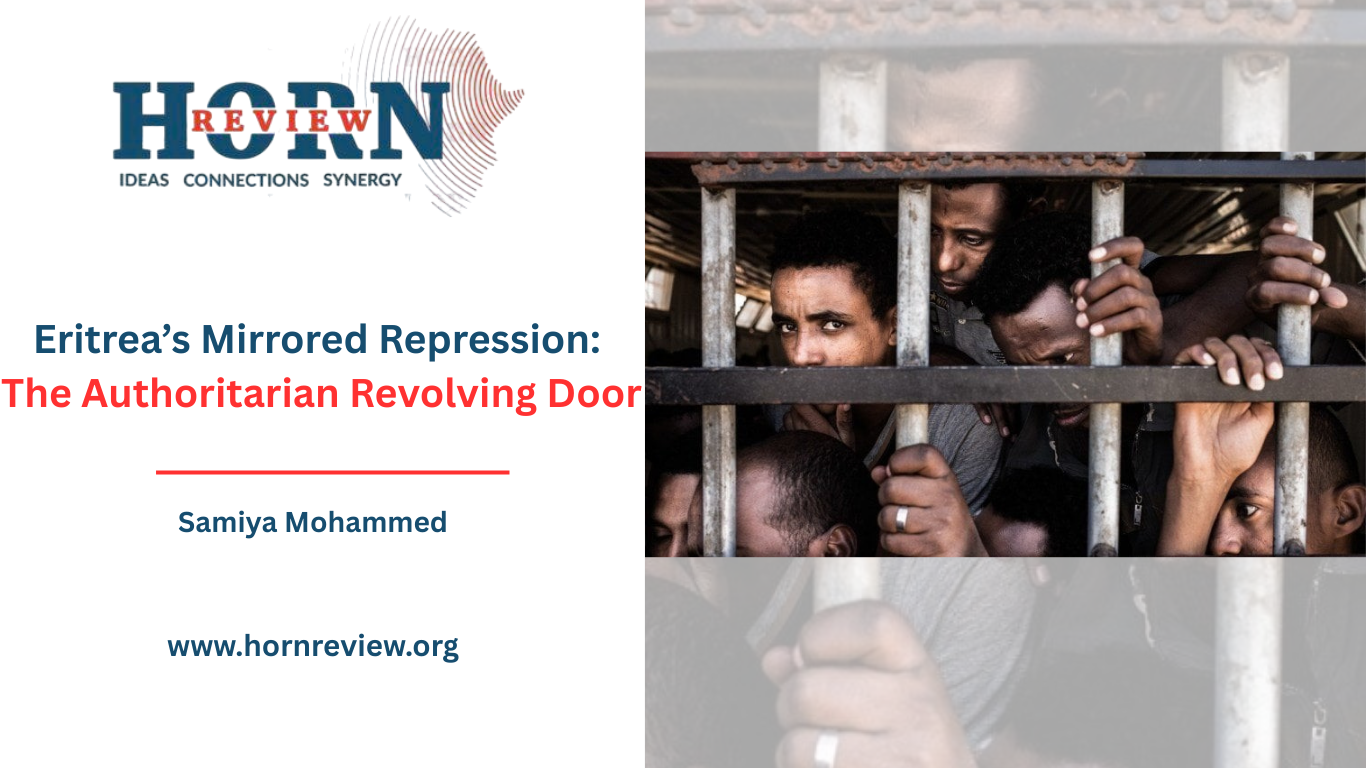
In December 2025, Eritrean authorities quietly released thirteen long term detainees after nearly eighteen years of arbitrary detention without charge or trial. While cautiously welcomed by international observers this act be regarded as a just handful among the estimated ten thousand or more individuals held in similar circumstances in one of the world’s most repressive states. This event is not an isolated gesture of reform however a familiar move in the roadmap of authoritarian governance which a tactical release designed not to dismantle the machinery of repression but to recalibrate its pressure for strategic advantage. This revolving door of repression finds clear historical parallels in the governance of Nicaragua and Venezuela, where releases have consistently served not as openings for liberalization Rather, they function as a revolving door of repression, a cycle of detention and provisional release that maintains control while managing external perceptions and internal tensions.
Eritrea’s recent release fits perfectly within this gauge. The United Nations human rights office, while describing the act as encouraging, simultaneously urged the unconditional release of all arbitrarily detained individuals including the high-profile G-11 politicians arrested in a 2001 crackdown. The gesture’s impact is deliberately limited and symbolic offering minimal concessions against a vast scope of going on persecution. The regime for over three decades has systematically eliminated political pluralism silenced independent media and utilized indefinite national service as a tool of societal control. In this context, freeing a select few detainees operates as a geopolitical pressure valve, a minor adjustment intended to soften international criticism without undertaking substantive change a tactic well honed by regimes from Managua to Caracas.
The case of Nicaragua under Daniel Ortega and Rosario Murillo offers a recent parallel in the Western Hemisphere. In February 2023, the regime unexpectedly released 222 political prisoners spiriting them from jail cells directly onto a flight to the United States in a operation dubbed Nica Welcome. The move initially appeared to be a concession born of sustained diplomatic pressure and targeted sanctions. However, its true nature was a strategic move to both regain autocratic regime stability and further delimit local engagement of government opposition. The regime’s motivation was to minimize the noise of international and domestic condemnation and eliminate a persistent source of political cost, all while consolidating its path toward a dynastic succession.
Crucially, the Nicaraguan prisoner release was not followed by an opening of civic space. Instead, it was rapidly coupled with an escalation of punitive measures. Within days, the government moved to strip not only the released prisoners but also an additional 94 critics of their Nicaraguan citizenship, branding them traitors and ordering the confiscation of their assets. This sequence revealed the core logic which the release was a tactical retreat not a strategic surrender. By exiling and disenfranchising its opponents the regime achieved a dual objective. It temporarily placated some external actors while permanently removing organized dissent from the national territory, thereby tightening its grip on the remaining population. The operation advanced , a path of violations of elementary constitutional and international norms and demonstrated the regime’s willingness to provoke a brain drain and economic disaster.
This pattern of coupling releases with renewed repression finds seen in other contexts. The phenomenon mirrors instrumental leniency, where clemency is deployed as a discretionary tool of power rather than an element of justice. Historically, prisoner releases have served political purposes, from Josef Stalin’s mass amnesty to mark the Allied victory in World War II to Idi Amin’s release of political prisoners upon seizing power in Uganda even as he began incarcerating new opponents. These acts are generally motivated by political rather than compassionate concerns allowing leaders to deflect criticism, improve their image and reinforce their power without altering the fundamental structures of control.
In Venezuela a similar revolving door strategy has been evident for years. The Maduro regime has repeatedly engaged in cycles of mass arrests during political protests followed by the selective or negotiated release of high-profile detainees during moments of intense international scrutiny or negotiation. These releases are often framed as goodwill gestures or confidence-building measures. However, they are rarely accompanied by judicial reforms or guarantees against re-arrest. Instead, they temporarily ease pressure potentially fracture opposition unity and create a facade of dialogue all while the legal and security apparatus used to target dissenters remains fully intact and operational. This tactic transforms imprisonment from a static punishment into a dynamic instrument of control where freedom itself becomes a provisional state subject to the regime’s fluctuating needs.
For the prisoners caught in this cycle the psychological toll is enduring. Their experience mirrors that of dissidents in other dictatorships like self-censorship can be a survival mechanism. The constant threat of being returned to detention enforces a pervasive silence and fear that lingers long after release. In Eritrea, where releases are so rare as to be remarkable a freed detainee re-enters a society where the ruling party’s control is total, independent thought is dangerous and the boundaries of the state itself can feel like the walls of an open air prison. Being released from Eritrean jail is meaningless, the whole country is a jail.
The international response to these actions often walks a fine line between cautious engagement and unintended legitimization. The UN’s welcome of Eritrea’s minor release, while paired with calls for broader action reflects this dilemma. Authoritarian regimes are adept at parsing such diplomatic language interpreting mild praise as sufficient to forestall more serious consequences. This action is complicated by broader geopolitical rivalries where regimes like those in Nicaragua, Venezuela, or Eritrea can leverage their strategic positioning to offset Western criticism. The practice of hostage diplomacy as seen with Iran, Russia, and North Korea, further commercializes detention, turning prisoners into bargaining chips for economic or political concessions.
Ultimately, for aging autocrats like Isaias Afwerki or Daniel Ortega, these calibrated releases also intersect with pressing questions of legacy and succession. A carefully managed prisoner release can be crafted as a narrative of magnanimity or national reconciliation for both domestic and external audiences. It can serve to stabilize a pre-arranged transfer of power within a family or party by temporarily lowering the temperature of dissent. However, as the Nicaraguan case shows, any such liberalizing gesture is likely to be immediately contradicted by harder actions to reassert dominance, ensuring that the fundamental calculus of power remains unchanged. The goal is to orchestrate the appearance of change where none exists.
Distinguishing between genuine reform and tactical moves requires looking beyond the singular event of a release. The critical indicators are structural: Are independent institutions, starting with the judiciary, being established or strengthened? Are laws guaranteeing fundamental freedoms being enacted and enforced? Is there a clear, irreversible process to dismantle the apparatus of arbitrary detention? In the cases of Eritrea, Nicaragua, and Venezuela, the answer to these questions remains decisively negative. The planning of repression, the laws, security institutions, and party structures that enable arbitrary detention remains untouched by the sporadic release of a handful of its victims. In dictatorship, prisons become more than detention centers, they are archives of resistance and the oral history of tyranny. The selective opening of these archives through releases is a controlled leak, meant to manage the story of the regime itself. True transformation occurs only when these archives are thrown open entirely, when the stories of all prisoners are heard, and when the systems built to silence them are dismantled. Until then, the revolving door will continue to turn, with each release carefully measured to sustain the very power that necessitated the detention in the first place.
By Samiya Mohammed, Researcher, Horn Review