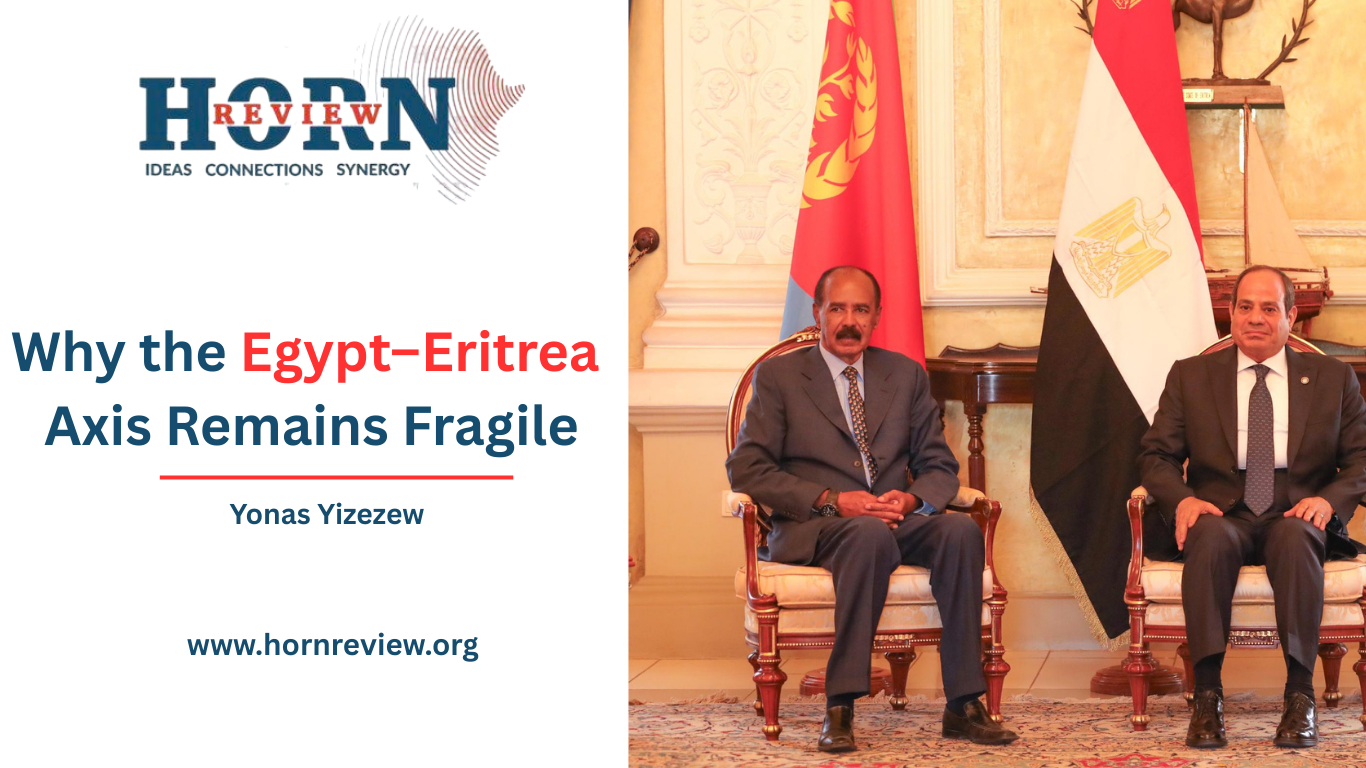
Throughout history, Cairo’s engagement with Eritrea has been instrumental rather than integrative, shaped by shifting regional calculations and a search for levers to manage Ethiopian influence in the Horn. Even before Eritrea formally separated from Ethiopia, Egyptian policymakers regarded developments at the Nile’s sources through a strategic prism that privileged downstream control. That logic was made explicit in the 1990s when President Isaias Afwerki, during a public session, highlighted that Egypt viewed Eritrea through the frame of Nile politics and intended to use the new state to pressure Ethiopia. The remark captured the essence of a relationship that was never rooted in deep affinity or complementary state building but in the instrumental utility of Asmara as a nearby strategic asset.
From independence in 1993, contacts between Asmara and Cairo were episodic and narrowly focused. They lacked the historical, economic, cultural, or institutional depth that characterized Egypt’s ties with Sudan or its more sustained relationships with Gulf partners. Over the next decades, exchanges remained thin and symbolic, not the foundation of a multilayered alliance built on trade, investment, or social links.
The alignment was re-energized in the contemporary era by two decisive Ethiopian moves: the operationalization of the Grand Ethiopian Renaissance Dam and Addis Ababa’s renewed push for sovereign maritime access. The dam’s progressive filling and eventual inauguration fundamentally altered Cairo’s threat calculus. What for decades had been a near uncontested downstream position on the Nile was now contested by a large upstream hydropower project that Ethiopia framed as sovereign development. The political path Egypt chose was to shift from negotiation and juridical contestation toward a search for compensatory levers of influence and containment. The dam’s operationalization crystallized that shift and hardened a policy orientation in Cairo that sought external partners able to complicate Ethiopian maneuvers.
At the same time, Addis Ababa’s explicit pursuit of maritime options, exemplified by the Memorandum of Understanding with Somaliland and other initiatives to secure Red Sea access, intensified anxieties in both Cairo and Asmara. For Egypt, Ethiopian maritime reach introduced the possibility of combining water leverage with new strategic access to the Red Sea. For Eritrea, its regional value derives in part from its long Red Sea coastline and control over key ports, an advantage it seeks to preserve by constraining Ethiopia’s access to the sea. Were Ethiopia to secure coastal access, Eritrea’s exclusive geographic leverage would diminish, and Ethiopian presence along the coast would recalibrate security and power relations across the Red Sea littoral. Ethiopia’s port understandings therefore provided Cairo with an additional rationale to cultivate coastal partners able to constrain or complicate Addis Ababa’s ambitions.
Within this framework, Eritrea’s intrinsic assets are consistently subordinated to Egypt’s principal objective of constraining Ethiopia. Asmara’s value to Cairo derives from its coastline, its proximity to northern Ethiopia, and its history of proxy engagements in Sudan and the wider Horn. Egypt’s engagement has emphasized security and containment rather than development cooperation. Empirical indicators underline the instrumental character of the relationship. Bilateral trade volumes are negligible, no major Egyptian investments or industrial programs have been established, and there has been no sustained effort to institutionalize economic or people to people ties.
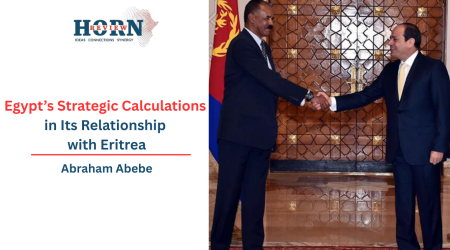
In fact, Egypt has repeatedly returned Eritrean nationals, including documented cases of mass and forcible expulsions of asylum seekers. Human rights organizations and UN experts describe this as a securitized and episodic approach that treats Eritrea as a source of risk rather than as a partner in protection. High level visits and security frameworks since 2023 have been explicitly framed around Red Sea governance and resistance to Ethiopian maritime reach, reinforcing the idea that the partnership is a tactical alignment born of contingency rather than a durable strategic partnership.
The relationship is therefore defined more by what it opposes than by what it seeks to build. Both capitals share a negative core centered on a single target: Ethiopia. Eritrea’s post-independence foreign policy was shaped by a legacy of mistrust and militarized posture toward neighbors, with the 1998 to 2000 border war converting a recent comrade in struggle into a principal adversary. Egypt, in turn constructed Ethiopia as the primary upstream challenge to its historical control of Nile waters. That converging threat perception produced cooperation but not integration. This distinguishes the Egypt-Eritrea tie from Cairo’s more layered relations with Sudan or Arab states where identity, trade, water politics, and security intertwine to create denser relationships.
Both regimes practice reactive and instrumental foreign policies. Eritrea has routinely used alliances as tactical hedges, supporting insurgents in Sudan, clashing with Djibouti, and shifting alignments as perceived threats changed. The aim has been deterrence and leverage rather than long term integration. Egypt’s outreach to Asmara fits the same logic of reaction. After failing to reverse the GERD trajectory through diplomacy, Cairo moved toward containment, seeking coastal partners that could narrow Ethiopia’s space in the Horn and along the Red Sea. That posture produced cooperation frameworks and security language, but not the overlapping economic projects that normally cement strategic partnerships.
Egypt and Eritrea responded to the issue of Ethiopian Red Sea access with caution and alignment, resisting initiatives that would normalize an Ethiopian naval presence on the Red Sea. Yet this shared opposition is an unstable glue. The axis depends on Addis Ababa remaining a clear and present adversary. Should Ethiopia recalibrate its posture, secure widely recognized port access, or reduce tensions with either party, the instrumentality that binds Cairo and Asmara would quickly lose force. In the absence of joint development schemes, institutional frameworks, robust trade, or meaningful social links, there is little to anchor the relationship beyond the immediate crisis.
The asymmetry of power and interests further magnifies this fragility. Egypt is a diversified regional actor with a large economy and a broad foreign policy footprint from Libya to the Gulf. It can distribute attention and hedges across multiple partners. Eritrea by contrast is small, economically isolated, and heavily militarized. Its armed forces rely on mass conscription and its technological capacity is limited. That imbalance reduces Asmara’s bargaining power and transforms it from a partner into a function within a larger strategy. Cairo leverages Eritrea’s coastline and proximity to project a sense of encirclement while keeping Eritrea peripheral to its longer term calculations where Sudan and Somalia more often occupy central positions.
Eritrea’s internal doctrine and regional behavior compound this narrowness. Longstanding suspicion toward regional integration, and a securitized domestic order leave little room for deep economic or institutional alignment. The recent decision to withdraw from the IGAD underlines Asmara’s distrust of multilateral frameworks and reduces the channels through which a more sustained partnership could evolve.
At the level of political psychology, both capitals treat the relationship instrumentally. Each side understands the provisional nature of the tie. Egypt is aware of Eritrea’s record of abrupt diplomatic shifts, as the brief 2018 opening with Ethiopia demonstrated. Eritrea is aware that Cairo largely overlooked it for years and turned with urgency only when other options to influence Addis Ababa narrowed. That mutual awareness produces caution and a reluctance to formalize cooperation in ways that would close exit options. Joint communiqués emphasize shared positions on Ethiopia and Red Sea security but they stop short of binding treaties or deep institutional commitments.
These elements define a relationship that is structurally distinct from most of Egypt’s other regional ties and from Eritrea’s past alignments. It is born from necessity rather than choice, defined by opposition rather than vision, and sustained by convenience rather than commitment. Egypt would have little reason to cultivate Eritrea deeply if there were no Ethiopian challenge on the Nile and the Red Sea. Eritrea would attract far less attention from Cairo if it were not uniquely positioned to complicate Addis Ababa’s strategic options. That instrumentality gives the axis its sharpness and its vulnerability. The very features that make this threat driven alignment effective in the short term also make it one of the most fragile configurations in the evolving politics of the Horn of Africa.
By Yonas Yizezew, Researcher, Horn Review





Comment (1)
Excellent analysis on the fragility of the Eritrean-Egyptian alignment against Ethiopia. But I think both countries are shortsighted and follow a counterproductive policy against Ethiopia. I feel both countries will benefit if they engage positively with Ethiopia. Ethiopia could provide a natural and large hinterland to Eritrea. Egypt, on the other hand, can achieve its water security if it engages positively with Ethiopia rather than act negatively. I would be happy if you/Horn Review produce such kinds of piece.