Ethiopia’s claim to secure skies presents less as a neutral legal technicality than as a contested political instrument: territorial sovereignty over airspace is constantly mediated by regional power relations, leverage, and the control of littoral logistics. The loss of Assab after Eritrea’s secession did more than alter a coastline; it unraveled an operational fabric. Nearby fuel supplies, spare-parts pipelines, and diverson fields transformed the exercise of airspace sovereignty from a legal prerogative into a function of external access and political goodwill. Consequently, when routings lengthen and contingency options recede, the gap between having rights on paper and being able to exercise them widens into strategic vulnerability.
At the center of this equation is Ethiopian Airlines. This carrier is not merely a commercial operator but an axis of Ethiopia’s global relations; it connects Addis Ababa to scores of international markets, carries millions of passengers annually, and sustains cargo and humanitarian flows that reach across continents. In 2024/25, the group reported roughly $7.6 billion in revenue and transported about 19.1 million passengers, operating a modern fleet that exceeds 150 aircraft and serving well over a hundred international destinations. These figures illustrate why the airline matters to the state. Its network serves as a diplomatic and economic platform binding Ethiopia to partners and clients worldwide. Its standing, repeatedly recognized by industry awards including Skytrax’s designation as Best Airline in Africa for consecutive years, underscores its role as one of the continent’s premier carriers. For a national system of such scale and reputation, proximate littoral logistics are not merely an abstract convenience; they are a concrete precondition for guaranteeing reliable connections, protecting trade corridors, and defending the humanitarian reach that the airline makes possible.
Understanding the depth of this reliance requires a look at the history of Assab and why its loss cut so deeply. Under federation and then annexation in 1952 and 1962, Assab became deeply integrated into Ethiopian economic life, hosting port infrastructure developed with foreign assistance. By the mid-1960s, it contained refinery capacity that fed the Addis supply chain. During the Derg years, the federal center undertook administrative and security measures that effectively detached Assab from the surrounding Eritrean hinterland, routing the lion’s share of Ethiopia’s southern and central trade through the port. These administrative arrangements created an entrenched pattern of dependence that could not simply be unwound by a legal shift; institutional and logistical networks had been retooled around Assab long before 1993.
From an Ethiopian institutional perspective, the transitional chaos that accompanied the end of the Derg and the way rival armed actors reshaped governance during the liberation years complicates neat narratives of uncontested and uninterrupted civil administration. Many in Addis view the immediate post-secession settlement as a contested seam, an outcome whose legitimacy is questioned by wartime dislocation, overlapping administrative claims, and deep economic entanglement preceding secession. Conversely, others assert that international recognition in 1993 crystallized Eritrea’s sovereignty, leading to clear legal titles thereafter. Both positions are part of current political discourse, explaining why Assab remains not merely an economic asset but a symbol of unresolved spatial and institutional history.
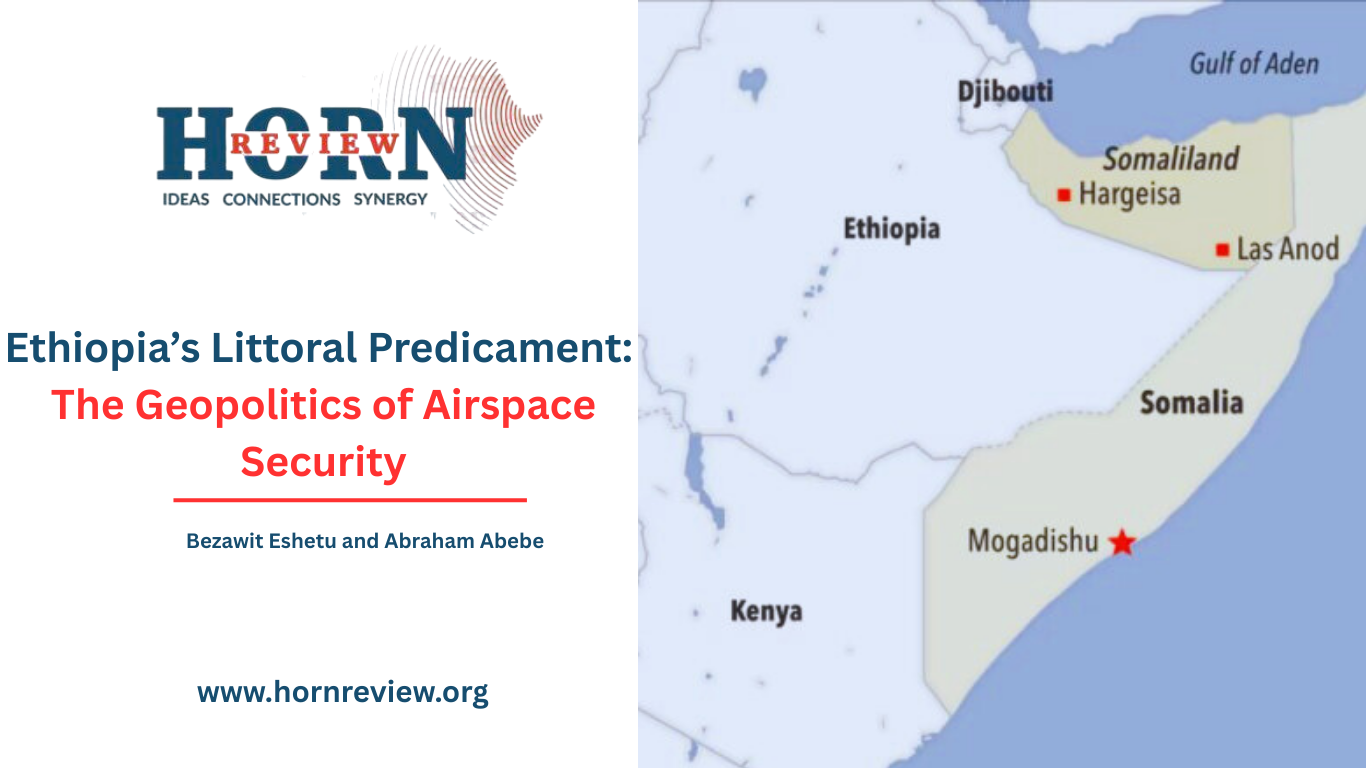
Djibouti currently occupies the central artery of Ethiopia’s transit calculus, with its outward stability masking a concentration risk. Hosting multiple foreign military bases and serving as the overwhelmingly dominant gateway for Ethiopian sea traffic, Djibouti has proved commercially advantageous and operationally necessary for Addis Ababa. However, this reliance on a single partner also concentrates leverage, as domestic politics and international patrons can swiftly reset access dynamics. The presence of foreign bases including American, Chinese, French, Japanese, and others has internationalized Djibouti’s economy and its decision calculus. For a landlocked state that must import fuel and spares, this dependence becomes exposure in operational form.
Additionally, Somalia’s fragmentation, especially the tension between Mogadishu and the self-governing but unrecognized Somaliland, creates episodic and often abrupt friction for Ethiopian air operations. The January 2024 denial of an Ethiopian Airlines flight bound for Hargeisa illustrated how quickly permissions can be withheld and how political disputes translate into immediate operational penalties. Beyond high-profile denials, asymmetric security risks including Al-Shabaab activity generate NOTAMs and corridor advisories. These force planners to carry extra fuel, avoid direct routings, and accept reduced schedule reliability across the Horn, transforming a neighbor’s sociopolitical instability into daily operating costs for Ethiopian Airlines.
Eritrea sits at the locus of Ethiopia’s most emotionally charged and strategically consequential grievance. Assab’s practical value, including proximity to diversion fields, shorter sea-air links, fuel, and parts, would be indisputable. However, the political reality is that any arrangement with Asmara is freighted by three decades of bitter conflict, expulsions, and reciprocal distrust. Recent suspensions of flights and cycles of recrimination demonstrate how access can be quickly politicized. When port and overflight permissions become instruments of leverage, a proximate littoral asset can transform into a recurring vulnerability rather than a reliable safeguard. This tension between the operational appeal of Assab and the risk of access being withheld as a diplomatic lever lies at the core of why the port is seen as both a strategic prize and a potential focal point for renewed confrontation.
Sudan’s descent into internecine conflict since 2023 starkly exemplifies how swiftly a neighbor’s instability can eliminate entire flight-information regions. Widespread closures and the suspension of normal air-navigation services removed western diversion lanes once part of regional contingency planning, forcing longer routings and shrinking margins for emergency landings. The practical effect for Ethiopia is immediate and compounding: more fuel burn, fewer safe alternates, and slower humanitarian corridors arriving precisely when needs spike. Sudan’s example illustrates that airspace resilience depends as much on the stability of neighbors as on sovereign claim-making.
Across the southern approaches, Kenya’s nodes Mombasa and Nairobi offer comparatively steady capacity, though they are not immune to episodic shocks. Terror incidents, tense elections, or local communal violence can trigger temporary advisories or constrained operating windows. For a carrier with continental commitments, even short disruptions cascade into crew costs, schedule slippage, and altered freight economics. Meanwhile, the Red Sea theater and the Yemeni conflict have introduced external dimensions to maritime-air fragility. Attacks in the Bab al-Mandeb since late 2023 have driven up insurance and rerouting costs, compressed predictable transshipment rhythms, and increased operational premiums on nearby secure littorals that could shorten multimodal chains. These maritime shocks feed directly into the arithmetic of aviation resilience.
If the narrative to this point has a through line, it is this: law without proximate logistics is brittle. The Chicago Convention confers territorial rights over the skies, and maritime norms affirm the transit interests of landlocked states; however, legal entitlements become operationally meaningful only when backed by accessible infrastructure, redundancy, and credibly enforceable arrangements. Ethiopia’s history with Assab, its industrial links, administrative entanglements under successive regimes, and the messy moment of separation has turned a formerly proximate advantage into a strategic deficiency. Competing historical readings, Ethiopia’s account of entrenched economic ties and contested transitional arrangements on one hand, and the international legal finality of Eritrea’s recognized statehood on the other, shape political rhetoric, but neither negates the operational fact: without nearer ports, diversion fields, and multimodal buffers, airspace sovereignty remains a fragile shell.
Ethiopia’s aspiration, therefore, is less an act of territorial revisionism than an attempt to convert a formal legal status into the operational depth that a modern state requires to make its airspace meaningful in daily practice. This aspiration is evident in economic and humanitarian terms, keeping export chains competitive, reducing war-risk surcharges, and shortening the time between crises and relief, as well as in strategic terms: a proximate littoral lowers logistical friction, expands options for surveillance and staging, and strengthens the state’s capacity to act without seeking permission at every turn. Framed this way, the case for restoring proximate maritime and diversion capacity is not merely a claim about history; it is an argument about the conditions under which sovereign airspace becomes a lived capability rather than an aspirational legal line on a map.
Divergent readings of the past, sharp differences in diplomatic posture, and the cumulative wear of regional shocks indicate that Ethiopia’s skies will be tested repeatedly. The issue is not an absence of legal rhetoric but a shortage of proximate, reliable logistics—ports, fuel, parts, and diversion fields—that translate entitlement into endurance. To ensure that sovereignty in the air becomes more than doctrine, the measure of success will be operational: shorter, safer routings; predictable supply chains; and an aviation network resilient to the political weather of neighboring states. This is the practical horizon informing Ethiopia’s insistence that Assab and similar littoral capacities be understood as strategic necessities rather than nostalgic claims.
By Bezawit Eshetu and Abraham Abebe, Researchers, Horn Review