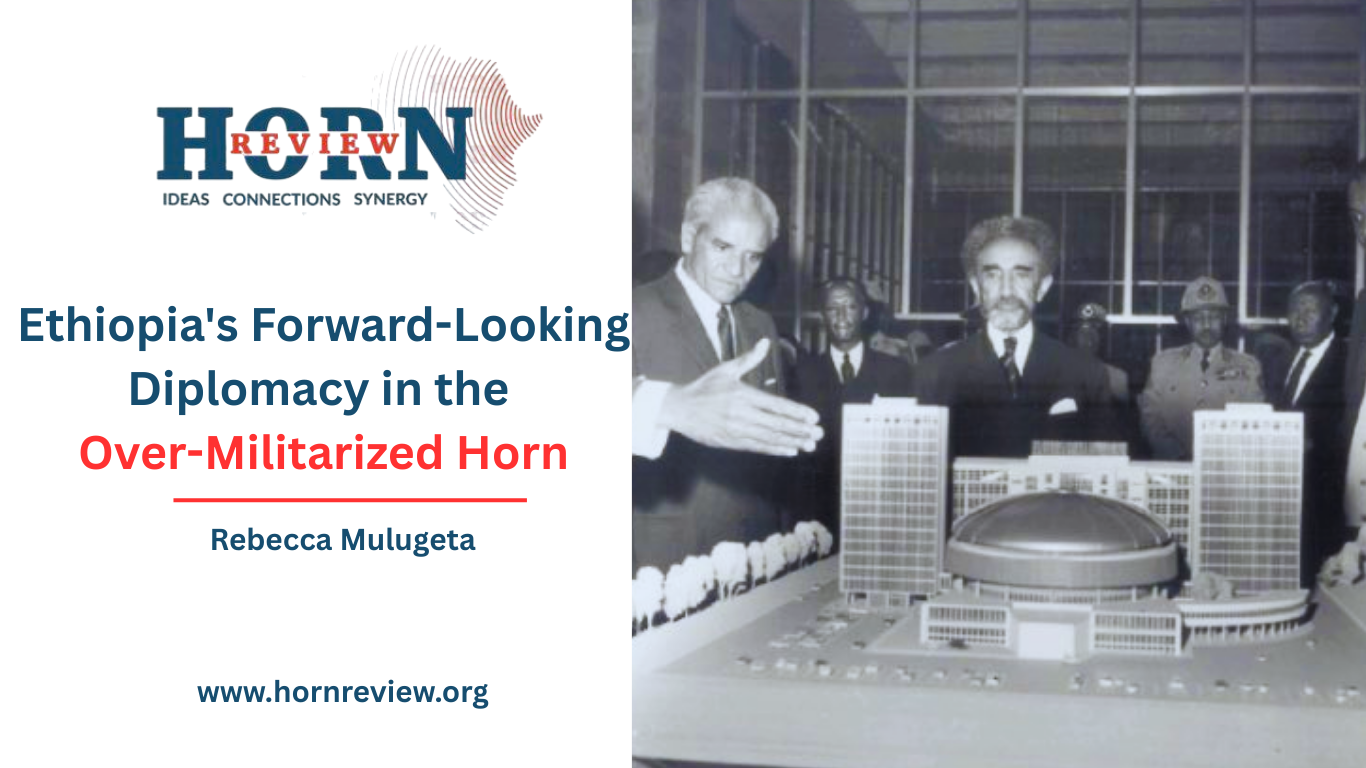
The fact that Ethiopia represents a crucial diplomatic center has not occurred overnight but has been a long-term strategic focus since the imperial period that has been informed by its historical commitment to resisting the excesses of foreign intervention and fighting for African sovereignty. The fragmentation of the states represented by the persistent military violence in the face of the escalating Al-Shabab insurgency and the political challenge sweeping across Sudan in the wake of a fragmenting Somalia finds Egypt’s assertion of its character as the “guardian of the horn of Africa” ever more shallow in its impulse to maintain a grip upon the strategic posture of Ethiopia than in any permanent commitment to assuring the stability of the region upon whose behalf it purports to assume the responsibility to maintain its governance and strategic security and stability upon its shoulders & in whose stead finds the countries and peoples they purportedly guard plunged ever deeper into instability and conflict.
The election of Ethiopia to the United Nations Human Rights Council and the notable visit of the President of India to Addis Ababa mark historical events in the foreign policy rise of Ethiopia. Apart from the notable wins, the events mark the rising profile of Ethiopia in the region as a multilateralism and economic partnerships-driven actor. The events mark the efforts of Ethiopia amidst the long-standing tensions and narratives to frame the country as a selfish actor, especially in the construction of the Grand Ethiopian Renaissance Dam against Egypt’s interests. Nonetheless, the foreign policy of Ethiopia is increasingly exhibiting qualities of patience and long-term thinking that lie beyond the security corridor.
Among the narratives Egypt employs concerning the Nile dispute is its appearance as the caregiver and protector of the horn of Africa region in general. Egypt has stressed its religiously near to 13 years of dialogue and negotiation with Ethiopia regarding the GERD and its stance in the deal, but in spite of that, its current policy has been trending towards an unconditional and military threat offer that focuses more on the application of force in order to turn the Ethiopian and other Nile riparians’ policy into a form of cooperation that bypasses Egypt’s protective and confining actions.
This clash underlines deeper weaknesses in Egypt’s role in the region. Egypt presents itself as a guardian, yet what is happening in Somalia tells a tougher story: Somalia is torn apart by political fragmentation, the growing wave of militant violence under Al-Shabab’s continuous insurgency, and territorial disputes as regions like Jubaland want independence. When Ethiopia supported the peace efforts in Somalia, Egypt criticized what it termed as a militarization; it framed the move as one of aggression rather than support. Sudan, previously a strong emblem of close Arab-African ties, has been torn apart by political chaos, war, and disintegrating institutions. Through all of these crises, Egypt’s influence seems to be largely reactive and selective, focused on countering Ethiopia and not on the necessary regional stability. Its engagement has been limited to containing Ethiopia rather than acting as a real regional guardian.
Eritrean diplomacy remains deeply militaristic, arms-and-readiness-based, with a bias toward tightening regional security tensions. The country talks and acts just as if war comes first: trumpeting aggressive military talk, maintaining armed forces on high alert, and clinging to proxy clashes. In contrast to Ethiopia’s reach-out-and-build-coalitions approach, Eritrea relies on the use of force and intimidation to achieve its influence at the expense of shedding off potential partners, therefore fanning mutual distrust. Because of this, Eritrea finds itself sidelined from constructive diplomatic efforts.
Ethiopia’s diplomacy has to follow a complex path, weaving multiple strands rather than chase one battle or one bitter dispute. It tries to push forward national development while weaving stronger regional ties and broader international partnerships. This puts the country in sharp contrast with Eritrea’s fortress-like isolation and Egypt’s harder-edged, sometimes exclusive posture. Its election to the UN Human Rights Council underlines growing recognition by the world of Ethiopia’s steady push to defend rights and pursue a balanced, constructive diplomacy that pushes back against portrayals which have cast the country as a destabilizing disruptor.
A plan to visit by the Indian President to Ethiopia underlines a simple fact: Ethiopia’s diplomacy is starting to pay off in real, tangible dividends-economically and geopolitically. India is becoming one of Ethiopia’s most important partners in the world, investing capital in roads and rail, factories, and power projects that help seal Ethiopia’s status as a continental economic hub. This developing partnership reflects a change in the way the world perceives Ethiopia-not just as a security-oriented state but as an emerging market and a gateway to Africa’s wider growth. By positioning itself as a crossroads between Africa and Asia, Ethiopia increases its strategic relevance and expands cooperation beyond regional tensions or rivalries.
The various fragilities of Somalia make for a critical case in which the diplomatic maturity of Ethiopia shines. With other neighbors grappling with a rising Al-Shabab insurgency, weakening political institutions, and secessionist pushes in Jubaland and Puntland, Turkish internal intelligence frames those dynamics as an enduring obstacle-yet Al-Shabab is deeply active and growing. It is in this highly unstable landscape that Ethiopia can act as a stabilizing hub, pursuing peacebuilding through both diplomatic channels and security measures, supporting governance reforms, and preventing further fragmentation driven from the outside in form of AUSSOM, In contrast to Egypt’s loud rhetoric but less tangible engagement, which undermines Cairo’s claim to be guardian of the Horn, Addis Ababa can function as a peace anchor.
Sudan’s disintegration into political violence and civil conflict creates yet another void in regional stability. Egypt’s traditional historical ties to Sudan have not translated into effective mediation or meaningful assistance in navigating the crisis. Instead, Egypt’s interventionist policies have largely been oriented around protecting narrow security corridors or countering Ethiopia’s influence. Ethiopia maintains a markedly different posture by cultivating dialogue-oriented engagement. At its core, Ethiopia’s diplomatic success rests on a foundational commitment to multilateralism and inclusivity. It is not confined to war-centered diplomacy like Eritrea or Egypt’s containment blueprint that views Ethiopia as a threat to be neutralized. The country focused on a vision that integrates economic development, political stability, and regional security, leveraging its geographic centrality and the strength of its diplomatic corps to build a diverse network of alliances. This hub status is not merely symbolic; it also enables Ethiopia to tap into financial investment, technical partnerships, and political clout that reinforce its national priorities while contributing to regional peace.
The impact of Ethiopia’s evolving diplomacy extends to practical economic dimensions as well. Sustainable power is built not just through coercive means, but by creating frameworks where shared prosperity can take root. This approach has positive spillover effects that foster stability across trade corridors, supply chains, and markets critical to the Horn and wider East Africa.
Power in this turbulent region increasingly derives from the ability to weave together diverse interests, uphold sovereign integrity, and foster cooperation even among competing actors. Ethiopia’s example shifts the paradigm from militarized rivalry to diplomatic sophistication, countering the region’s longstanding cycles of conflict. By positioning itself as a diplomatic hub and economic magnet, Ethiopia embodies a new form of statecraft that commands influence without intimidation, engagement without exclusion, and progress without destabilization.
Looking at Egypt’s self-described role as protector of the Horn, the disconnects between its words and what is actually going on in the region become impossible to ignore. Egypt talks a big game about safeguarding regional security, yet countries like Somalia and Sudan, among others in the area, are sliding into deeper crises. Its strategy seems focused narrowly on checking Ethiopia’s rise rather than building broad-based regional unity, signaling defensiveness. It is amplified by a naval buildup and a web of military alliances that could raise, not dampen, tensions. Meanwhile, Ethiopia appears oriented toward cooperation, multilateral dispute resolution, and economic partnerships-the very kind of leadership the Horn urgently needs.
What is happening in Ethiopia is a real, genuine diplomatic revival; it rebalances powers in one of the most delicate regions of the world. The election to the UN Human Rights Council and the forthcoming visit by the Indian President both symbolic in their nature signal much more, namely, a versatile, multilevel approach to diplomacy. Ethiopia resists or pushes against the notion of unilateralism and has shown resilience in the face of containment while leveraging its strategic position to pursue a vision centered on sustainable peace and development. While Egypt’s grip on regional leadership falters amidst Somalia’s challenges and Sudan’s upheaval, and while Eritrea is fixated on hard-line posturing and less on diplomacy, Ethiopia impresses as the true guardian of the Horn’s future a future defined not by militarized rivalry, but rather inclusive dialogue, forward-looking leadership, and economic integration.
By Rebecca Mulugeta, Researcher, Horn Review