
6
Dec
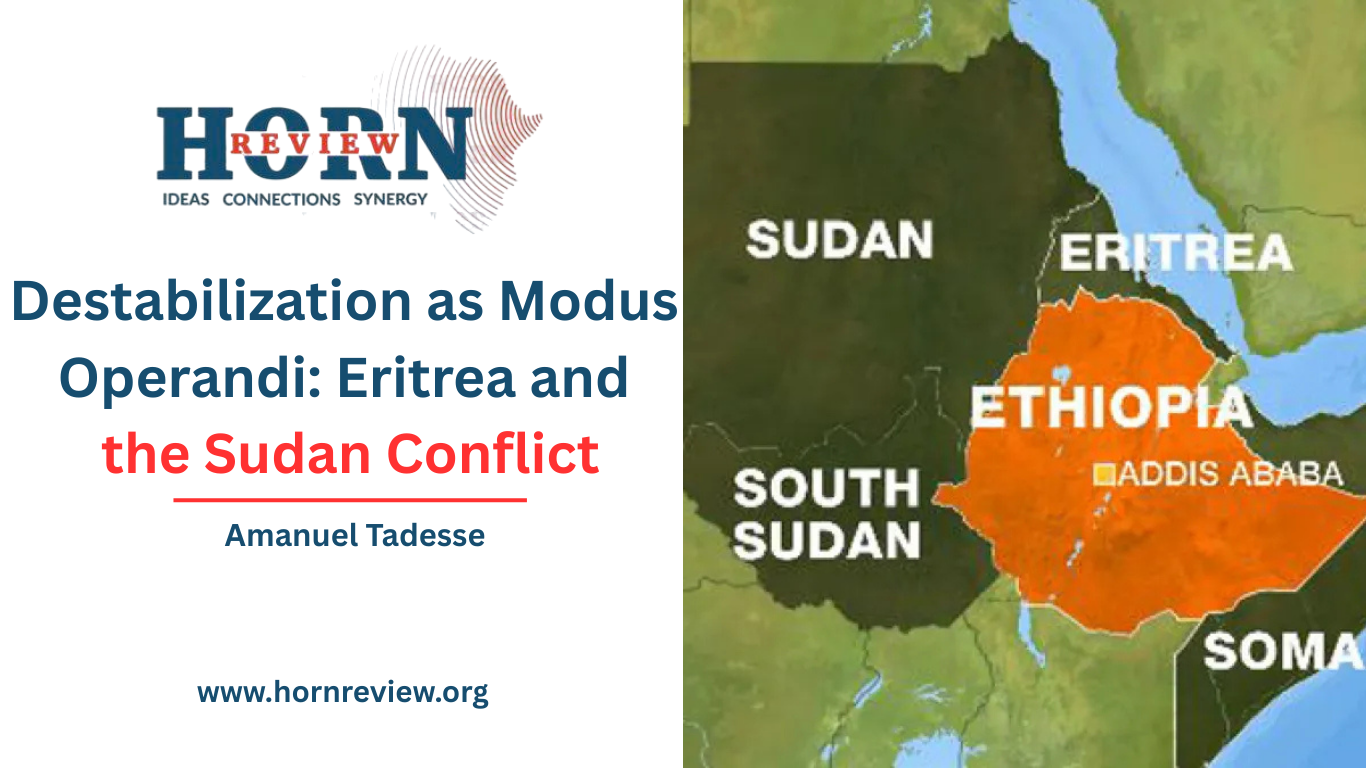
Destabilization as Modus Operandi: Eritrea and the Sudan Conflict
Since its independence in 1991, Eritrea has consistently emerged as one of the most disruptive state actors in the Horn of Africa. Its foreign policy is not built in constructive diplomacy but on persistent interference in the regional conflicts and security affairs of its neighbors. Rather than responding episodically to emerging crises, the regime in Asmara follows a long-standing strategic doctrine characterized by proxy warfare, clandestine military assistance, involvement in transnational organized crime, provision of safe havens for non-state armed groups, and engagement in transnational subversive networks.
From Yemen to Ethiopia, Djibouti to Sudan, and South Sudan to Somalia, President Isaias Afwerki’s regime has treated regional instability as geo-political capital. Eritrea’s role in Sudan’s catastrophic civil war exemplifies this entrenched modus operandi. In the ongoing conflict between the Sudan Armed Forces (SAF), led by General Abdel Fattah al-Burhan, and the Rapid Support Forces (RSF), led by General Mohammed Hamdan Dagalo (Hemedti), Asmara has portrayed itself to the region and the international community as a stabilizing actor and neutral interlocutor capable of facilitating dialogue between the warring parties. However, this self-portrayal stands in stark contrast to the reality on the ground and the long-established political mindset of Isaias. Eritrea has neither a credible track record of meaningful regional mediation nor a genuine intent to support a peaceful conflict resolution. In its place, its consistently exploits regional crises to advance its own political and regional security interests.
Against this backdrop, the Eritrean regime has involved itself in the ongoing Sudanese conflict, not as a neutral mediator but as a partisan actor exacerbating tensions and undermining regional stability. By aligning with one of the warring factions and limiting the space for Sudanese-led dialogue and resolution, Asmara has further complicated an already fragile situation. Given the realities, it is crucial to probe Eritrea’s role in the Sudan conflict as a reflection of its broader foreign policy modus operandi and to assess the implications of this involvement for the region, and Sudan in particular.
The Nature of Eritrea-Sudan Relations
Eritrea and Sudan share extensive geographic borders and deep historical, social, economic, and political linkages. Despite these ties, their bilateral relations have rarely been marked by durable strategic cooperation. Instead, they have been characterized by mutual suspicion, fluctuating tactical alliances, border disputes, interference in each other’s internal affairs, competitions for influence, and asymmetric security calculations.
The modus operandi of Eritrea’s foreign policy under Isaias has consistently prioritized confrontation over cooperation. This pattern is evident in the Ethio-Eritrea War (1998-2000), the 2018 conflict with Djibouti over Ras Doumeira, recurrent Yemen clashes with Yemen over the Hanish Islands, Eritrea’s alignment with the Saudi-Coalition in Yemen, and long-term support for Sudanese armed and opposition groups. In this regard, Scholar Venkataraman argues that Eritrea’s regional behavior reflects strategic calculation rather than ideological or cooperative intent, while M. Plaut contends that its alliances are largely opportunistic, aimed at maximizing leverage and influence in regional conflicts. In line with this established pattern, Eritrea’s alignment with the SAF after the outbreak of the current conflict should be understood not as an indication of peacebuilding intent, but as continuation of its modus operandi: shaping conflict dynamics and outcomes to preserve its leverage, obstruct peace processes, undermine diplomatic initiatives, and even among those who supported Eritrea’s struggle for power and independence prior to 1991.
Eritrea’s Modus Operandi in the Sudan Conflict
The ongoing intra-state conflict in Sudan has escalated into a full-scale war driven by power struggles and the collapse of the planned peaceful political transition under the Transitional Sovereignty Council, established on 21 August 2019. At the center of the crisis are deep-seated disputes between the SAF and RSF over the integration of the RSF militia into the national army, as well as competing political and economic interests, particularly control over lucrative gold mining sectors. These tensions intensified following the ousting of former President Omar al-Bahir in 2019 and were further aggravated by the October 2021 military coup, which dismantled the fragile civilian-military power-sharing arrangement led by Prime Minister Abdalla Hamdock. Since the violent confrontation between the SAF and RSF erupted on 15 April 2023, the failed transitions of 2019 and 2021 have culminated in an all-out struggle for supremacy within the Sovereignty Council.
The war has plunged Sudan into a disastrous political turmoil with catastrophic humanitarian consequences. According to the UN-OCHA, since April 2023, the conflict has displaced approximately 12.5 million Sudanese, killed over 500,000 people, and left an estimated 30.4 million civilians in urgent need of life-saving humanitarian assistance (UN Office for the Coordination of Humanitarian Affairs, 2025).
Moreover, the conflict has triggered the proliferation of new armed actors, resulting in a highly fragmented battlespace divided among the SAF, RSF, Abdelaziz al-Hilu’s SPLM-North at times aligned with RSF, Malik Agar’s faction of the SPLM-N aligned with SAF, and factions associated with Yasir Arman and others. This fractured security landscape significantly heightens the risk of long-term state disintegration and cross-border spillover effect. As widely reported by international media and monitoring groups, the war has escalated due to the financial, military, and diplomatic support provided by numerous actors. Egypt, Iran, Qatar, Libya, Saudi Arabia, the UAE, and Eritrea have all been linked to involvement on either side of the conflict (UNSC, 2025; Small Arms Survey, 2024).
This section emphasizes, in particular, the clandestine and multidimensional involvement of Eritrea, which has deliberately leveraged Sudan’s instability to advance its geopolitical strategies in the region. Eritrea’s role in the ongoing conflict demonstrates an extension of its established modus operandi through the following six tactics;
First, Eritrea has provided all sorts of support to SAF while maintaining a tactical posture against RSF. Various credible evidence from UN Monitoring groups and independent intelligence reports indicates that Asmara has politically and militarily aligned with SAF. This support reportedly includes military training, logistical assistance, and facilitation of drone operations using the Asmara and Massawa airfields, and arms transshipment, including anti-aircraft systems, barrel bombs, spare parts, and ammunition through Eritrean territory. It is also hosting SAF aligned armed fronts in camps located in the Gash-Barka Zone in Western Eritrea. Groups receiving training and support include the Sudan Liberation Movement under Minni Arko Minnawi, the Popular Front for Liberation and Justice in Eastern Sudan led by al-Amin Daoud, and the Eastern Sudan Liberation Force commanded by Ibrahim Dunia, a prominent figure in Kassala State.
Second, Eritrea has reportedly deployed military personnel clandestinely inside Sudan. Conflict monitoring organizations have documented the presence of approximately 5,000 Eritrean soldiers positioned near strategic bridges along the Atbara River and in support of SAF operations in Kassala and Gedaref (Conflict Arms Research, 2025). This mirrors Asmara’s repeated use of proxy and shadow forces in the regional conflicts.
Third, Eritrea is actively exploiting ethnic dynamics in Eastern Sudan to assert influence and secure strategic depth. It has trained and mobilized Beja, Beni Amer, and Rashaida communities, empowering tribal militias aligned with SAF and fueling inter-communal militarization. Among the scholars such as Young warns that such intervention risks transforming the Sudanese war into a protracted ethnic-territorial conflict that will severely complicate future reconciliation efforts.
Fourth, Eritrea plays a central role in arms trafficking, smuggling, and sanctions evasion networks. Since the outbreak, Eritrean territory has become a key transit route for weapons destined for Port Sudan and SAF-aligned forces. Reports identify shipments arriving from Turkey and Iran, including Bayraktar TB2 and Mojaer-6 drones transiting through Asmara Airport or Eritrean ports before onward delivery to Port Sudan (Small Arms Survey, 2024). These actions undermine international embargoes and significantly increase the lethality of the conflict, in violation of the UN Convention against Transnational organized Crime (UNTOC).
Fifth, Eritrea has employed divisive diplomacy and covert political maneuvering to undermine Sudan’s internal cohesion and shape post-war governance in alignment with geopolitical interests, particularly those shared with Egypt. Since 2023, President Isaias and al-Burhan have engaged in repeated shuttle diplomacy involving high-level visits to Asmara, Khartoum, and Port Sudan. Many of these engagements occurred behind closed doors and included SAF-aligned actors, suggesting objectives of strengthening bilateral political-military ties rather than supporting inclusive negotiations. Such covert diplomacy appears designed to fragment Sudan’s political landscape rather than facilitate a Sudanese-owned peace process.
Sixth, the Asmara regime has exploited the conflict to suppress Eritrean opposition groups and refugee communities in Sudan. The PFDJ elite uses the instability to monitor, infiltrate, and neutralize diaspora-based opposition structures historically based in Sudan, including through intimidation and kidnappings of Eritrean refugees fleeing persecution, further consolidating domestic regime security (Human Rights Watch, 2024).
From these, we can understand that these patterns indicate that Eritrea’s intervention in Sudan is not incidental but rather a deliberate foreign policy strategy anchored in power projection through destabilization and fragmentation of neighboring states. Eritrea seeks to eliminate perceived political threats and capitalize on regional crises to expand its geopolitical influence. As Alex de Waal argues, the war in Sudan has changed into a regionalized proxy conflict in which Eritrea is one of the most consequential yet least transparent actors. These actions undermine Sudan-owned peace efforts, escalate the conflict, and generate profound consequences for both Sudan and the wider Horn of Africa.
Eritrea’s Involvement in the Sudan Conflict and Its Implication for Regional Stability, Sudanese Peace Initiatives, and Ethiopia’s Interest
Eritrea has not demonstrated a credible record as a neutral peace-mediating state. Instead, it has gained a reputation for fostering instability and political fragmentation across the Horn of Africa. Its involvement in the Sudan conflict once again reflects this pattern. Rather than acting as a genuine peace broker, Eritrea’s actions exhibit a destructive and self-interested security strategy that has produced detrimental repercussions for Sudan, neighboring states, and broader regional stability. The recent unfolding alliance between the SAF and the Eritrean regime poses a significant risk to peace and security in the Horn of Africa. This axis threatens to undermine ongoing peace efforts in Sudan and directly and indirectly jeopardize Ethiopia’s national interests.
Notably, Sudan is increasingly being used as a corridor for mobilizing and regrouping remnants of anti-Ethiopian armed groups, including factions of the TPLF, OLA/Shene, and Fano Militia. This aligns with Eritrea’s long-standing asymmetric strategy aimed at weakening Ethiopia by exploiting instability in neighboring states. These groups reportedly receive logistical support, operational coordination, and political cover from Asmara.
Moreover, Eritrea’s actions contribute to the escalation and prolongation of conflict in Sudan, which in turn drives increased refugee flows into Ethiopia and aggravates cross-border insecurity. The Red Sea strategic context further adds a significant geopolitical layer to these tensions, particularly following Isaias’s recent visit to Port Sudan, during which the issue was reportedly raised. Eritrea’s leadership appears determined to obstruct Ethiopia’s legitimate efforts to regain sovereign maritime access. Isaias’s recent unpublicized discussion with al-Burhan regarding serious concerns about Eritrea’s intentions to counter Ethiopia’s strategic maritime ambitions. Ethiopia’s legitimate quest to secure access to the sea will not be hindered by clandestine measures designed to undermine its national interests.
Several mediation efforts have been undertaken by international and regional actors to resolve the Sudanese conflict. Among these initiatives, the Jeddah Agreement, facilitated by the U.S and Saudi Arabia in May 2023, called for a permanent ceasefire, protection of civilians, and unhindered humanitarian access; however, it ultimately failed to secure durable commitments from the warring parties. More recently, the Humanitarian Truce Initiative proposed in November 2025 by the U.S, the UAE, Saudi Arabia, and Egypt has similarly struggled to ensure compliance or long-term sustainability, and the London Conference on Sudan was convened in April 2025. While several external factors have contributed to the failure of ongoing peace efforts, Eritrea has emerged as one of the most significant spoilers undermining the peace process. The unrestrained interference of Isaias in Sudan’s internal affairs continues to frustrate diplomatic initiatives and exacerbate the crisis.
Ethiopia has consistently positioned itself as an anchor state for peace and stability in the Horn of Africa. Its foreign policy approach reflects a principled, regionally grounded, and rules-based diplomacy aimed at supporting a peaceful resolution to the war in Sudan. Ethiopia firmly believes that the conflict in Sudan cannot be resolved through externally imposed solutions; rather, it requires a Sudanese-led mediation process reinforced by the collective engagement of regional mechanisms, particularly the AU and IGAD. This position strongly aligns with Ethiopia’s established doctrine of “African solutions to African problems.” Ethiopia’s concrete actions further demonstrate its commitment and solidarity. On 14 February 2025, in cooperation with the UN, UAE, Kenya, and IGAD, Ethiopia co-hosted the High-Level Humanitarian Conference for the People of Sudan in Addis Ababa. During the conference, Ethiopia pledged financial assistance amounting to USD 15 million to provide direct support to humanitarian operations in Sudan. Beyond diplomatic efforts, Ethiopia continues to shoulder a significant humanitarian responsibility by hosting more than 49,000 Sudanese refugees in Bambasi, Sherkole, and Tsore camps constituting approximately 5% of all refugees hosted in the country (RRS, 2023). These efforts reaffirm Ethiopia’s role as a responsible regional actor advocating for a Sudanese-owned political process and a coordinated multilateral strategy to stabilize Sudan and the wider Horn of Africa.
In conclusion, Eritrea is systematically undermining Sudanese-owned peace processes and directly contributing to conflict escalation and destabilization through its persistent involvement. Therefore, resolving the conflict in Sudan requires more than bilateral engagement with the warring parties. Ethiopia should remain vigilant and uphold its constructive regional leadership in safeguarding national interests while supporting sustainable peace and security in Sudan and the wider Horn of Africa. This approach must involve a coordinated regional and international effort to constrain Eritrea’s destabilizing actions, prevent external spoilers from undermining the peace process, and promote credible, inclusive, and Sudanese-owned negotiations led by regional mechanisms, particularly the AU and IGAD.
By Amanuel Tadesse, International Law & Foreign Relations Expert

RELATED
Posts
4
Mar
Revisiting the Scheme to Recast the Red Sea as an Arab Lake
The "Red Sea Arab Lake" Doctrine, also described as the...
4
Mar
Sudan's Allegation & Ethiopia’s Strategic Crossroads
The relationship between Addis Ababa and Khartoum, already tense due...
4
Mar
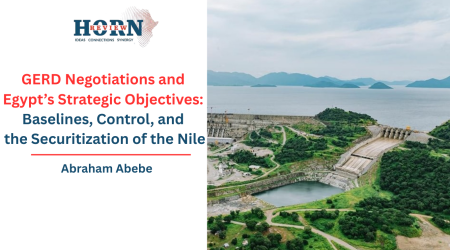
GERD Negotiations and Egypt’s Strategic Objectives: Baselines, Control, and the Securitization of the Nile
Since the launch of the Grand Ethiopian Renaissance Dam (GERD),...
4
Mar
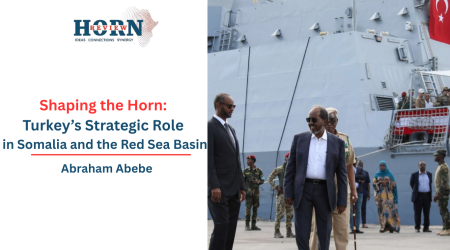
Shaping the Horn: Turkey’s Strategic Role in Somalia and the Red Sea Basin
Since establishing the TURKSOM military training mission in Somalia...
4
Mar
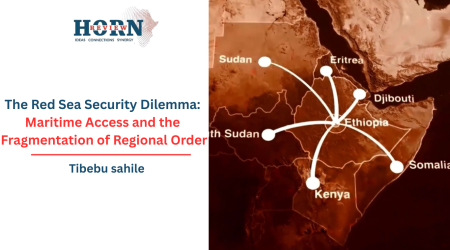
The Red Sea Security Dilemma: Maritime Access and the Fragmentation of Regional Order
In recent years, the Red Sea has shifted from a...
4
Mar
The Fallacy of Power: Sudan’s Warring Factions and the AU’s Path to Legitimate Governance
Sudan’s ongoing war is not a confrontation between a legitimate...
4
Mar
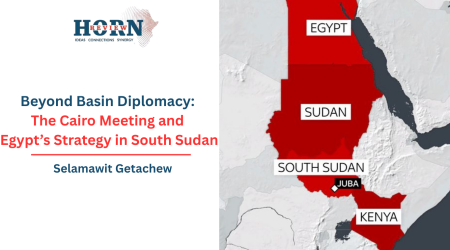
Beyond Basin Diplomacy: The Cairo Meeting and Egypt’s Strategy in South Sudan
The February 2026 Cairo meeting between Egyptian Foreign Minister...
4
Mar
Egypt’s Strained Financing for Kenya’s Dam
Egypt's move into Kenyan water projects with that $100...
4
Mar
The Quad & Sudan's Mediator Paradox
Sudan's unraveling reveals a deeper truth than any body count...