
By Bereket Diriba
Since Prime Minister Abiy Ahmed’s rise in 2018, urban renewal in Ethiopia has increasingly functioned as more than an aesthetic or infrastructural endeavor. It has evolved into a spatial instrument of transitional justice – one that addresses historical marginalization, fosters social cohesion, and reimagines civic identity. Across cities, and particularly in Addis Ababa, redevelopment projects operate as forms of material, symbolic, and environmental reparation, embedding processes of recognition and reconciliation into the physical landscape.
Transitional justice is traditionally understood as a set of legal and political mechanisms deployed by societies emerging from periods of repression or conflict. However, as scholars such as Ruti Teitel argue, it also encompasses symbolic and structural modes of repair. In this expanded framework, urban space becomes a site of justice-making. Streets, parks, museums, and institutions cease to be neutral backdrops and instead serve as instruments of inclusion, recognition, and civic reconstruction.
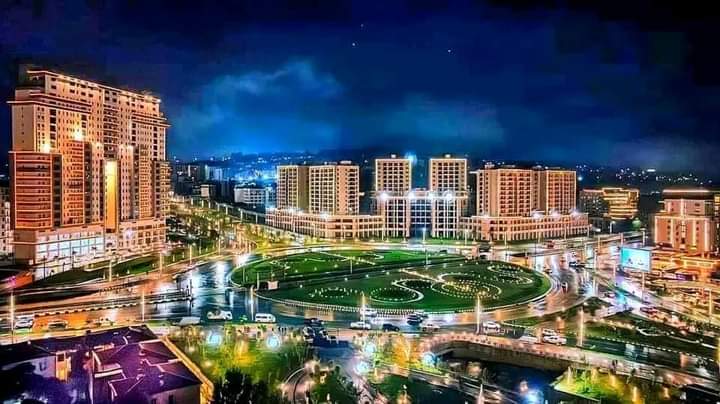
This paradigm has been especially visible in post-2018 urban policy, which elevated city development to a strategic priority. Across the country, formerly neglected towns and neighborhoods have undergone visible transformation. New roads, walkways, public facilities, and green spaces have reshaped lived environments. These interventions are not merely cosmetic: they reframe the role of cities as engines of dignity, belonging, and collective progress. At the center of this transformation lies Addis Ababa, the symbolic and functional heart of the nation, where rapid renovation has generated new public landmarks that both reflect and reconstitute Ethiopian identity.
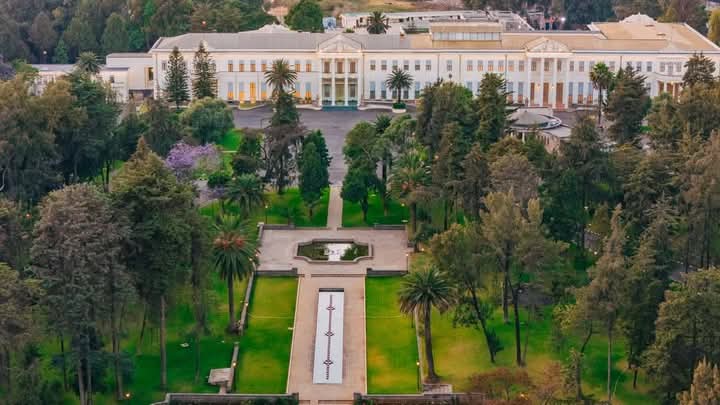
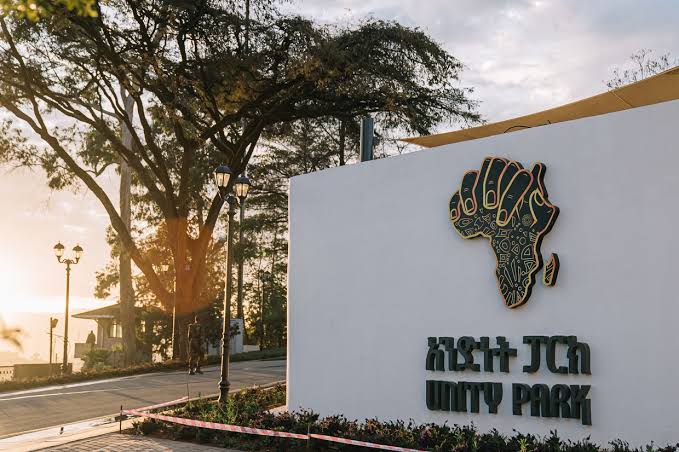
Unity Park exemplifies the symbolic power of this shift. Once a restricted and contested compound, it has been reimagined as a civic commons. In the Habermasian sense of the public sphere, the park offers a space where citizens encounter one another as equals. Its museums, sculpture gardens, zoological and botanical elements, and performance spaces narrate Ethiopia’s diverse historical trajectories and cultural traditions. Through this multisensory experience, Unity Park performs symbolic reparation: it opens an exclusive past to an inclusive present, projecting a more plural and equitable vision of national belonging.
Similarly, the Adwa Victory Memorial Museum transforms historical memory into a unifying civic narrative. By commemorating the 1896 victory over Italian colonial forces as a collective national achievement, the museum weaves together the contributions of multiple regions and communities. In doing so, it reflects the insights of Maurice Halbwachs, Benedict Anderson, and Anthony D. Smith, who emphasize the role of shared memory and imagined community in nation-building. The museum functions not only as an educational institution, but also as an architect of solidarity – reminding citizens of a shared history of resistance and resilience.
Other public spaces, such as Friendship Square, extend this work at the everyday level. These areas enable routine intergroup contact, facilitating encounters among citizens of different ethnic, religious, and linguistic backgrounds. In doing so, they echo Gordon Allport’s contact hypothesis, suggesting that sustained, cooperative interaction in shared settings can reduce prejudice and foster mutual understanding.
From the perspective of the capabilities approach articulated by Amartya Sen and Martha Nussbaum, these urban transformations can also be understood as expansions of human freedom. Access to safe walkways, clean environments, recreational amenities, and accessible cultural institutions enhances the capacity of individuals to participate fully in social, cultural, and economic life. Newly accessible and revitalized public spaces have likewise expanded opportunities for youth engagement, women’s entrepreneurship, and intergenerational exchange, reinforcing inclusion across both social and generational lines.
The 132-kilometer urban corridor project in Addis Ababa further illustrates Henri Lefebvre and Edward Soja’s concept of spatial justice. By improving accessibility, mobility, and environmental quality across previously fragmented districts, the corridor redistributes opportunity in spatial form. It stitches together neighborhoods long divided by neglect, creating new channels for movement, commerce, and social interaction that are in themselves acts of redress.
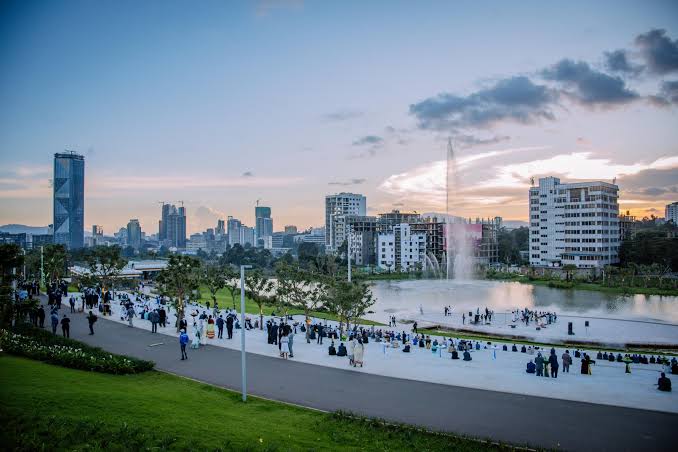
In a complementary vein, the Beautifying Sheger project embeds environmental justice within the urban renaissance. River restoration, flood mitigation, green corridors, and ecological rehabilitation not only improve the city’s resilience to climate change, but also restore to the public a natural heritage that had long been degraded. Environmental renewal thus becomes inseparable from civic renewal, linking ecological stewardship to collective well-being.
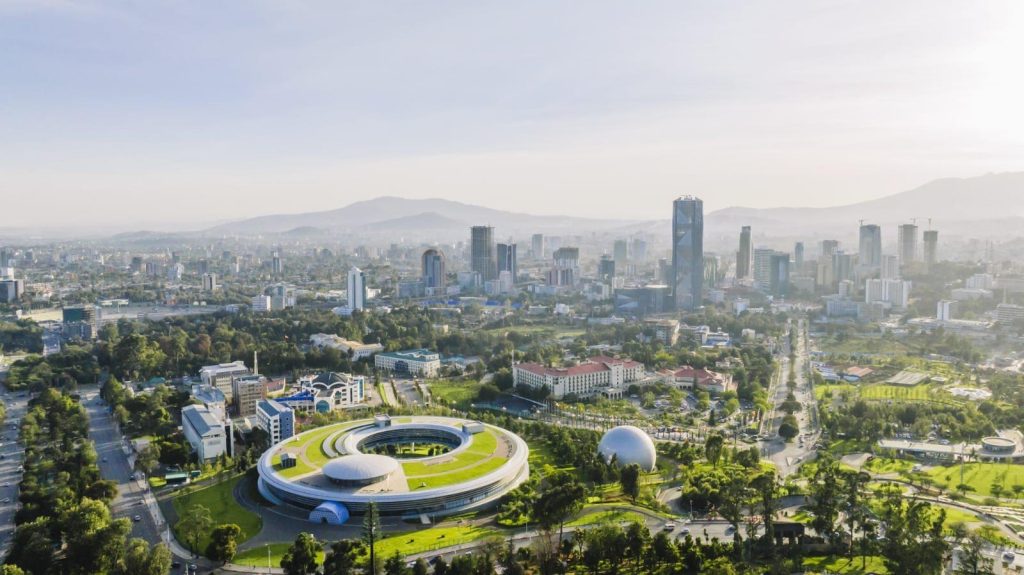
Institutions such as the Addis Ababa Science Museum and projects such as Entoto Park extend this vision toward the future.
They anchor national development in innovation, education, and ecological consciousness while inviting citizens to imagine themselves as stakeholders in a shared modernity. These spaces communicate that progress is not only technological or economic, but also cultural, environmental, and communal.
Crucially, this model of renewal has been shaped through locally grounded vision and nationally defined priorities, rather than through externally imposed templates. In this way, Ethiopia’s experience affirms the principle that dignity-centered development must emerge from within the historical consciousness, cultural imagination, and sovereign agency of the society itself.
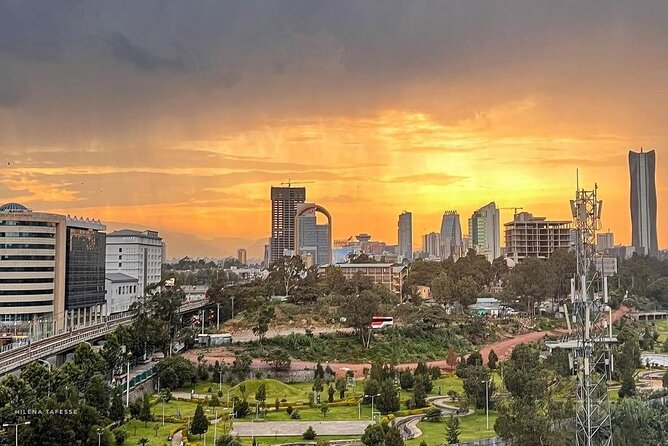
These developments reveal a triadic architecture of transformation: the material rebuilding of infrastructure; the symbolic reclamation of space and narrative; and the memorial reactivation of a shared past. Urban renewal in Addis Ababa thus becomes not simply a technocratic project, but a moral and civic enterprise – one that seeks to transform landscapes as a means of transforming relationships.
In an international context increasingly shaped by post-conflict reconstruction, rapid urbanization, and contested memory, Ethiopia’s approach offers a distinctive and relevant case study. It suggests that cities in the Global South can serve not only as sites of growth, but as arenas of healing, reconciliation, and identity reconstruction. As such, Addis Ababa’s evolving urban landscape may speak beyond its borders, offering insight to societies worldwide seeking to align development with dignity, memory with modernity, and renewal with justice.
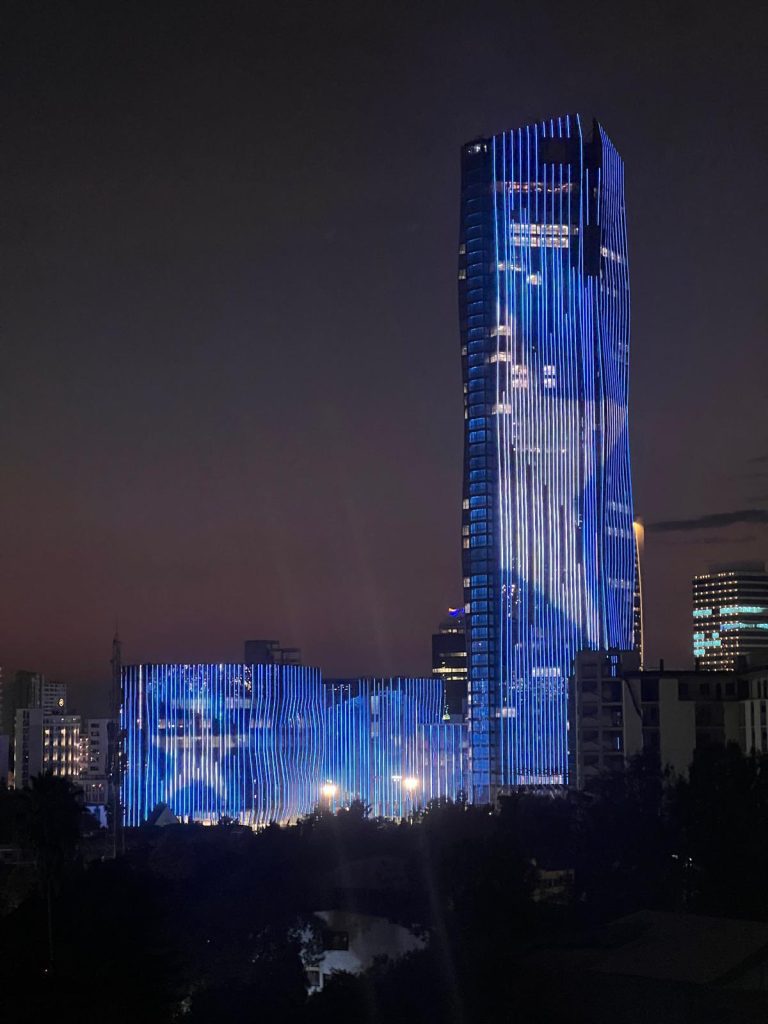
Urban renewal, when guided by memory, inclusion, and equity, becomes a corridor of consensus. In the case of Addis Ababa, it is a pathway through which a society reclaims its past, reimagines its present, and negotiates its collective future. It demonstrates that justice need not reside solely in courtrooms or commissions, but can also be paved into streets, planted in parks, and built into the very spaces where everyday life unfolds.
Authors Bio:
Bereket Diriba is the Deputy Permanent Representative of the Federal Democratic Republic of Ethiopia to the African Union and the United Nations Economic Commission for Africa. Previously, he served as Deputy Executive Director of Ethiopia’s Institute of Foreign Affairs, where he engaged in diplomatic training, regional cooperation, and policy outreach. A scholar-practitioner in peacebuilding, transitional justice, and international relations, he has written and spoken on Ethiopia’s domestic and regional challenges. He holds MSc in Politics of Conflict, Rights and Justice from SOAS, University of London.

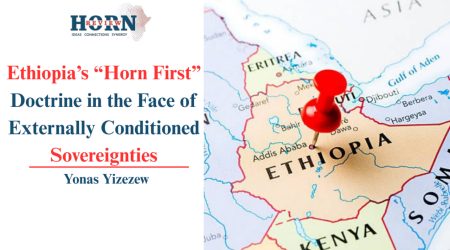
Ethiopia’s “Horn First” Doctrine in the Face of Externally Conditioned Sovereignties
The geopolitical landscape of the Horn of Africa is shifting...
Why Ethiopia Should Treat the Sahel as an Immediate Neighbor
Ethiopia’s foreign policy has long been guided by a map...
Pre-War Equilibrium: Why Ethiopia Holds Time and Eritrea Is Racing Against It
The contemporary dynamics of interstate relations between Ethiopia and Eritrea...
Air Power and the Politics of Defence Dependence: Ethiopia's Strategic Imperative
In 2020, former Malaysian Prime Minister Mahathir Mohamad, in discussing...

Structural Obstacles in Nile Basin Negotiations
The hydropolitics of the Nile Basin have long represented an...
Gulf Experiences and Strategic Choices for the Horn of Africa
Within the volatile architecture of modern international relations, few...
Interpreting Abiy Ahmed’s Visit to the United Arab Emirates
The visit by Abiy Ahmed to the United Arab Emirates...
Restraint vs. Escalatory Provocation: Ethiopia’s Diplomatic Posture in the Face of Eritrean Militarization
Ethiopia, as a pivotal geopolitical anchor state for peace and...