
28
Nov
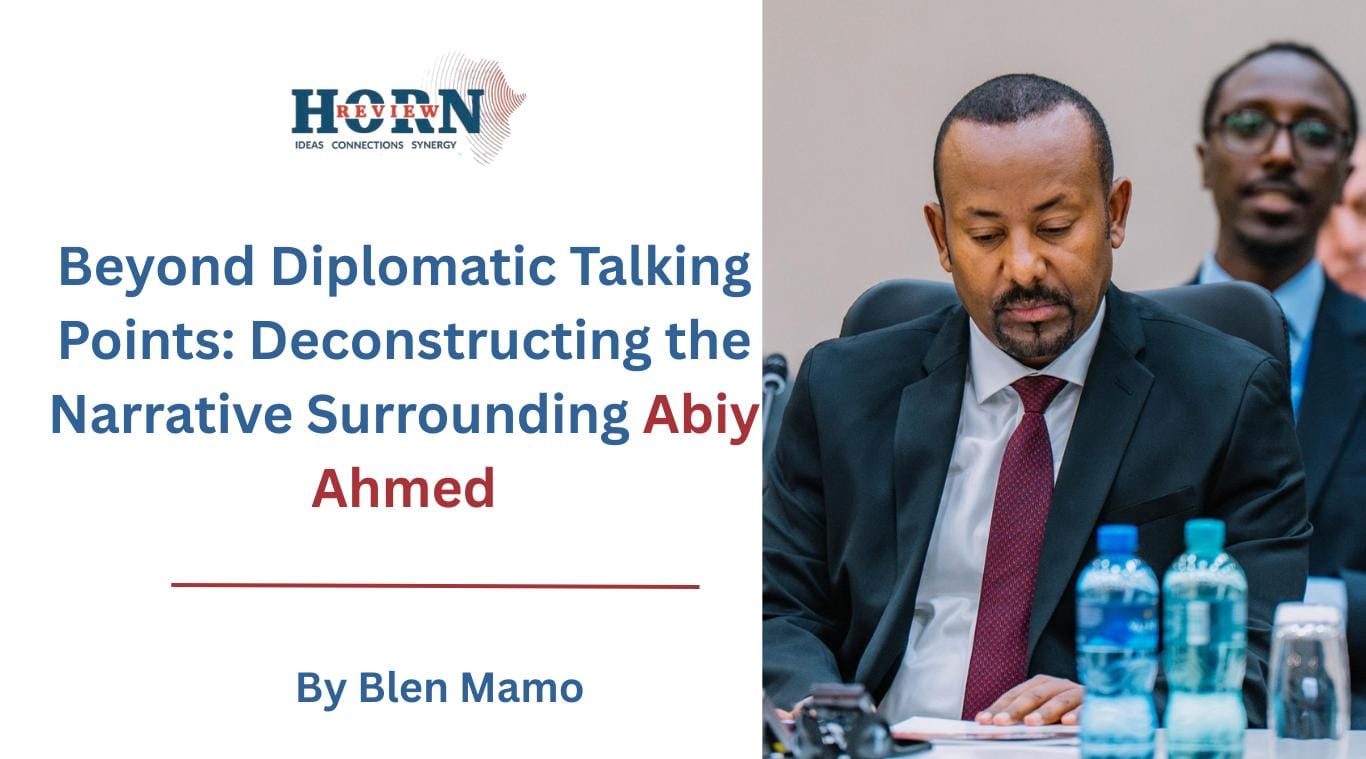
Beyond Diplomatic Talking Points: Deconstructing the Narrative Surrounding Abiy Ahmed
By Blen Mamo
Ethiopia, under the premiership of Abiy Ahmed, as with his predecessors, occupies a singularly consequential position within the Horn of Africa – a region historically mediated by external influence, punctuated by internal fissures, and characterized by intricate matrices of power and contestation. Interpretations of Abiy’s leadership often oscillate between guarded commendation for his reformist impulses and suspicion of alleged imperialist tendencies or warmongering proclivities.
Yet such assessments frequently betray analytical superficiality, being predicated upon selective reporting, partisan narratives, and enduring historical biases, rather than a rigorous, evidence-based appraisal of Ethiopia’s internal dynamics, strategic imperatives, and regional ambitions. A nuanced, theoretically informed interrogation reveals that apprehension is less about expansionist designs and more about Ethiopia’s assertion of strategic autonomy within a context historically conditioned by structural constraints.
From a realist vantage, Ethiopia constitutes a strategically salient actor navigating the exigencies imposed by both geography and historical precedent. Over the past several decades, external actors have relied upon Ethiopia maintaining a cooperative, yet non-dominant, regional posture. Abiy’s policies – including the consolidation of federal authority, military modernization, pursuit of maritime access, and assertive regional diplomacy – signal a state willing and able to engage in autonomous strategic calculation. The quest for Red Sea access is emblematic of this recalibration: landlocked since Eritrea’s secession in 1993, Ethiopia’s historical deprivation of maritime outlets curtailed its economic agency, constrained regional leverage, and circumscribed its capacity for strategic projection. Engagement with port infrastructure, trade corridors, and regional logistics reflects a rational pursuit of sovereignty and developmental imperatives, rather than a resuscitation of imperial ambition.
Building upon this assertion of strategic autonomy, Abiy’s domestic consolidation has frequently been mischaracterized in discourse as authoritarian or expansionist. Ethiopia’s multi-ethnic federal architecture, beset by chronic fragmentation and localized contestation, necessitates robust federal coordination to preserve institutional coherence. Compared to the EPRDF era, regional states today exercise greater autonomy and enjoy enhanced representation in federal decision-making, reflecting a more balanced distribution of power that accommodates local interests within the national framework. Regions such as Afar, Benishangul-Gumuz, Gambela, Harari, Somali, and the Southern Nations, Nationalities, and Peoples’ Region now participate more inclusively and equitably in the country’s power structures, in contrast to the EPRDF period, during which their representation was largely symbolic both within party mechanisms and federal governance arrangements.
Federal interventions in Tigray, Oromia, and Amhara were primarily defensive, aimed at reasserting constitutional authority and sustaining national cohesion rather than imposing hegemony. Similarly, initiatives regarding maritime access and regional economic integration constitute instruments of pragmatic development and strategic security. Domestic power consolidation and regional engagement, therefore, are best understood as deliberate exercises in rational statecraft designed to bolster national resilience and institutional functionality.
Claims that Abiy embodies imperialist or warmongering tendencies are further complicated by the interpretive frameworks applied to the Tigray conflict. While egregious violations undeniably occurred, they unfolded within the context of a defensive military campaign responding to an armed insurrection. International jurisprudence differentiates acts undertaken in the exigencies of armed conflict from genocidal intent; the defense of a legitimate government against insurgent forces does not, in itself, constitute genocide, and no conclusive evidence has emerged to substantiate such a charge so far.
Accordingly, labeling Abiy as a militaristic or imperialist mischaracterizes both the empirical record and the normative contours of the conflict. Allegations of imperial revival similarly derive from partisan narratives promulgated by the Tigray People’s Liberation Front and allied ethnonationalist factions within the Ethiopian state, amplified through selective reportage, portraying federal consolidation and defensive measures as aggressive and expansionist.
Abiy’s domestic reforms further illuminate the dissonance between perception and reality. Politically, his administration has expanded civic space, promoted media pluralism, released political prisoners, and nurtured civil society participation, reflecting measured liberalization aligned with accountability and citizen engagement while preserving central authority. Economically, Abiy pursues a hybrid model combining market liberalization, incentivization of private investment, and gradual privatization of strategic sectors, balanced by state oversight of critical infrastructure. This synthesis of reformist liberalization and strategic developmentalism positions Ethiopia as a cooperative and internationally integrated actor, distinct from conventional authoritarian or expansionist typologies.
Strategic apprehension also reflects a limited appreciation of Ethiopia’s indispensable role in regional equilibrium. Its contributions to trade facilitation, counterterrorism, migration management, and security coordination underscore a centrality that is functional, stabilizing, and not easily replicated. Misinterpretation of federal consolidation, assertive diplomacy, or maritime ambition as hegemonic risks undermining these contributions. Viewed through a lens of strategic rationality, Ethiopia’s foreign and economic policies are coherent extensions of state-building imperatives, oriented toward sovereignty, developmental resilience, and regional integration, rather than imperial projection.
A comparative lens further clarifies Abiy’s distinctiveness. Departing from the authoritarian centralization and ethnically fractious governance of his predecessors, Abiy integrates liberalizing political reforms with pragmatic economic policy, signaling an outward-facing orientation while retaining the capacity to act decisively when national cohesion is threatened. Militarily, Ethiopia has exercised the utmost restraint, refraining from hostilities with neighboring states even amidst sustained provocations; its posture has remained principally defensive, aimed at safeguarding federal authority and territorial integrity in response to Sudanese incursions in al-Fashaga (2021–22), tensions arising from Ethiopia-Somaliland agreements (2024), and persistent Eritrean subversive activities extending patterns preceding 2018.
Now therefore, appreciating the subtlety of Ethiopia’s trajectory demands an interpretive lens that accounts for the above internal federal dynamics, historical deprivation, and geopolitical exigencies, alongside the complex interplay of domestic reform and regional engagement. Only through such a lens can Ethiopia’s strategic autonomy be properly understood, and only through such understanding can external actors engage the Horn of Africa in a manner that is both analytically rigorous and conducive to mutually beneficial outcomes, with the understanding that Abiy Ahmed’s Ethiopia exemplifies a state navigating structural constraints through a blend of reformist governance, pragmatic economic policy, and strategic regional integration. Misperceptions – of imperial revival, warmongering, or genocidal intent – obscure these coherent rationality of these national and regional strategies.
However, a broader structural and geopolitical considerations also inform the measured caution surrounding Ethiopia’s increasingly assertive agency. Abiy’s entire project towards strategic autonomy marks a decisive shift from the historically subordinate regional posture upon which many external actors had long relied to preserve predictability and influence. An Ethiopia capable of autonomously shaping regional economic corridors, security architectures, and maritime linkages unsettles entrenched geostrategic expectations, introducing a degree of uncertainty into established assumptions about intervention, mediation, and leverage in the Horn of Africa. These dynamics are further amplified by interpretive frames that construe Ethiopia’s increasingly assertive diplomacy, and the relative novelty of its governance coalesce, as indicators of strategic unpredictability. The result is not overt opposition, but a posture of calibrated reservation – a form of strategic caution that reflects both prudence and unease toward a regional order in which Ethiopia is increasingly inclined to articulate, and pursue, its own terms.
Given both the empirically demonstrable logic of Ethiopia’s strategic posture and the residual apprehensions that shape external interpretations, a multi-layered engagement strategy becomes essential to reconcile perception with reality. Ethiopia must articulate a coherent explanatory framework that situates its domestic decentralization, economic reorientation, and maritime ambitions within the broader logics of developmental sovereignty, defensive necessity, and regional stabilization, rather than allowing these initiatives to be misread through inherited tropes of expansionism or imperial revivalism. Central to this effort is the explicit framing of port development, regional connectivity, and trade corridors as integrative, security oriented and economically rational undertakings, rather than hegemonic aspirations. By foregrounding the structural drivers of its policies and demonstrating the alignment between national imperatives and regional prosperity, Ethiopia can reconstitute the interpretive environment within which its actions are evaluated.
Calibrated regional and bilateral diplomacy constitutes the second pillar of such an approach. Ethiopia should continue to embed itself in multilateral forums, conflict-resolution mechanisms, and regional development initiatives, thereby signaling that its assertiveness is a stabilizing force rather than a disruptive one. Equally significant is targeted engagement with states that have historically harbored concerns about Ethiopia’s rise, facilitated through high-level diplomatic dialogues, collaborative research platforms, and structured confidence-building measures that underscore transparency, strategic restraint, and a commitment to shared regional interests. Sustained coordination across executive, ministerial, and parliamentary channels – combined with joint fact-finding missions and the monitored implementation of bilateral and multilateral agreements – can further institutionalize clarity and predictability. Through the synthesis of narrative precision, demonstrable cooperation, strategic leverage, and trust-building diplomacy, Ethiopia, under Abiy Ahmed’s leadership, can reshape the conceptual framework within which its agency is interpreted, cultivating a durable basis for engagement grounded in sovereignty, stability, and mutual benefit.
By Blen Mamo (@_PoliticsAddict)
About the Author
Blen Mamo is the Executive Director of Horn Review, an independent research and publication think-tank focused on politics, diplomacy and security in the Horn of Africa. She is also an Associate Researcher at the Ethiopian Institute of Foreign Affairs, Executive Editor of Horn Review publications, and Executive Producer of the Strategic Dialogue Podcast Series Co-Produced by the Horn Review & the Institute of Foreign Affairs. She holds an LLB, and MSc in International Security & Global Governance from the University of London.

RELATED
Posts


26
Mar
Ethiopia’s “Horn First” Doctrine in the Face of Externally Conditioned Sovereignties
The geopolitical landscape of the Horn of Africa is shifting...

23
Mar
Why Ethiopia Should Treat the Sahel as an Immediate Neighbor
Ethiopia’s foreign policy has long been guided by a map...

19
Mar
Pre-War Equilibrium: Why Ethiopia Holds Time and Eritrea Is Racing Against It
The contemporary dynamics of interstate relations between Ethiopia and Eritrea...
18
Mar
Air Power and the Politics of Defence Dependence: Ethiopia's Strategic Imperative
In 2020, former Malaysian Prime Minister Mahathir Mohamad, in discussing...

13
Mar
Structural Obstacles in Nile Basin Negotiations
The hydropolitics of the Nile Basin have long represented an...
13
Mar
Gulf Experiences and Strategic Choices for the Horn of Africa
Within the volatile architecture of modern international relations, few...
12
Mar
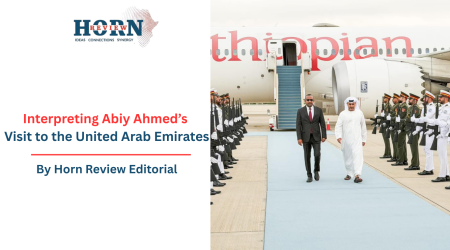
Interpreting Abiy Ahmed’s Visit to the United Arab Emirates
The visit by Abiy Ahmed to the United Arab Emirates...
28
Feb
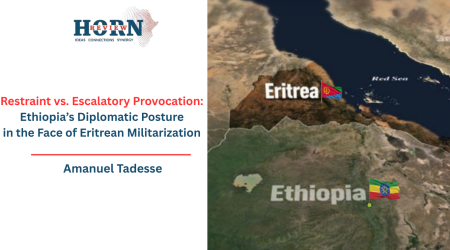
Restraint vs. Escalatory Provocation: Ethiopia’s Diplomatic Posture in the Face of Eritrean Militarization
Ethiopia, as a pivotal geopolitical anchor state for peace and...