The Soviet Union’s engagement with Sudan’s decolonization and early statehood combined ideological projection, diplomatic advocacy, and targeted material support with strategic precision. This comprehensive statecraft assisted Sudan’s move toward independence and positioned Moscow as an influential geopolitical actor shaping post-colonial governance and alignments.
By disseminating Marxist-Leninist ideas through local networks, amplifying anti-colonial arguments in international forums, and later supplying developmental and security assistance, the USSR sought to expand its influence in African decolonization while minimizing the risk of direct confrontation with Western powers such as Britain or influential regional actors like Egypt. That posture allowed Moscow to act as an indirect catalyst of Sudanese nationalism, aligning strands of political aspiration with socialist paradigms while preserving diplomatic flexibility for future bilateral engagement.
Before 1956, Soviet policy toward Sudan emphasized indirect engagement rather than overt intervention and prioritized long-term leverage over immediate display of force. Moscow avoided deploying mass aid or large advisory contingents and instead invested in transnational communist networks and allied organizations, notably channels connected to the Sudanese Communist Party (SCP). This choice reflected a broader Soviet strategy in the Global South, which aimed to cultivate sympathetic political currents and intellectual allies to gain strategic footholds without precipitating immediate Cold War escalation. By favoring the export of ideas over hardware, the USSR shaped local political calculations while maintaining deniability and minimizing the appearance of external coercion.
Founded in 1946 and linked to Egyptian and regional communist currents, the SCP became the principal conduit for Soviet ideological influence in Sudan by adapting Marxist-Leninist tenets to the country’s heterogeneous social fabric. It operationalized doctrine within the urban intelligentsia, organized labor, and agrarian communities, building trade unions, student associations, and professional bodies that translated abstract critique into political pressure on colonial governance. These mobilizations embedded Soviet-inflected critiques of imperialism in Sudanese nationalist rhetoric and framed independence as not only political sovereignty but also a platform for redistributive and state-led economic reform.
The SCP’s tactics in the late 1940s and early 1950s illustrate how soft power functioned as a low-cost yet politically consequential instrument. Strikes among railway workers, teachers, and laborers in the Gezira cotton scheme disrupted colonial economic extraction while emphasizing the class dimensions of anti-colonial struggle. By linking everyday labor grievances to structural critiques of colonial capitalism, the SCP reframed nationalist demands as intertwined with social justice and advanced Soviet strategic interests by undermining Western economic dominance through indigenous political agency.
These grassroots campaigns required little direct Soviet financing or manpower in their formative stage and relied primarily on ideational networks, activist organization, and existing socio-economic discontents. Such tactics reflected Moscow’s strategic calculus of seeding political affinity and institutional footholds that could be mobilized without triggering geopolitical blowback. The result was a political environment in which socialist ideas shaped debates over state formation and development policy in the early post-colonial period.
On the diplomatic front, the Soviet Union leveraged multilateral platforms, especially the United Nations, to amplify anti-colonial rhetoric and champion self-determination. This normative advocacy dovetailed with Sudanese nationalist claims and exerted moral and political pressure on colonial authorities. By casting itself as a defender of decolonization, Moscow cultivated legitimacy among Sudanese elites and intellectuals who sought alternatives to Western tutelage, thereby enhancing the USSR’s appeal as a post-independence partner.
The SCP’s expansion in the early 1950s, reportedly drawing several thousand members and accruing influence in labor and some military circles, was reinforced by transnational intellectual exchanges. Sudanese students exposed to Marxist literature in Cairo and Eastern Europe transmitted those currents back to Khartoum and Omdurman, enriching local ideological repertoires. Underground publications and party literature sustained critiques of colonial economic structures, explicitly targeting the Gezira scheme as symptomatic of British capitalist hegemony, and reframed sovereignty demands to include economic redistribution and state-directed development initiatives.
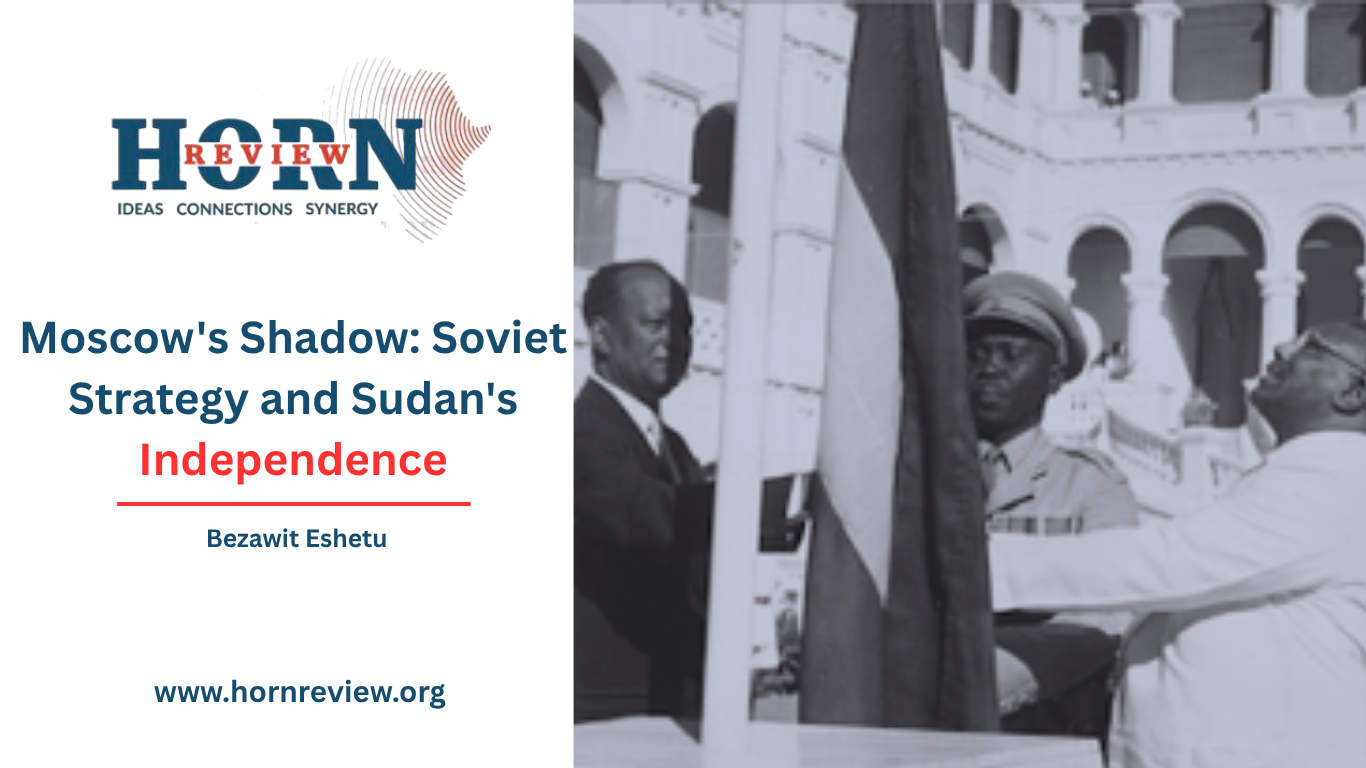
As negotiations over the Anglo-Egyptian condominium progressed, Moscow exercised tactical restraint to avoid alienating stakeholders. The Soviet Union refrained from direct interference in the negotiation processes that culminated in Sudanese independence on January 1, 1956. That decision rested on clear realpolitik: preserve access to the emerging state, avoid provoking Britain, Egypt, or Western blocs, and secure the ability to engage the sovereign Sudanese government on favorable terms once independence arrived.
Contemporary Western intelligence and diplomatic assessments registered concern that the SCP might serve as an instrument of Soviet influence, and those assessments underscored how Moscow’s low-profile ideological investments were perceived as geopolitically consequential. The shift from pre-independence intellectual groundwork to post-colonial engagement revealed a coherent Soviet approach: cultivate sympathetic actors and institutions prior to sovereignty, then leverage those connections for policy influence as the state apparatus matured. This continuity was evident in the SCP’s pivotal role in the 1964 October Revolution, where it helped organize strikes and protests that toppled the Abbud military regime, restoring civilian rule and demonstrating the enduring impact of early ideological seeds.
In the post-independence era, Soviet policy shifted from persuasion to pragmatic cooperation. From the late 1950s onward, the USSR extended scholarships, technical training, and economic exchanges that privileged state-led development models over liberal-market templates. These initiatives addressed Sudan’s skills deficit while promoting socialist-inflected development design. Trade with the Eastern Bloc often took the form of barter arrangements, with cotton and gum Arabic exchanged for machinery and consumer goods, thus deepening economic interdependence and diversifying Sudan’s external partnerships away from exclusive reliance on Western markets. Overall, Soviet economic aid remained modest in scale compared to other recipients, but it was high-profile and totaled over $100 million in credits by the early 1970s.
The 1969 coup that brought Jaafar Nimeiry to power marked an inflection point because his early program of nationalizations and centralized planning resonated with socialist idioms and opened avenues for expanded Soviet assistance. Initially, Nimeiry formed a coalition with the SCP, which provided ideological support and helped draft policies, strengthening the regime’s leftist orientation until ideological clashes emerged by late 1970. Nimeiry’s November 1969 visit to Moscow consolidated credits, technical agreements, and personnel exchanges. Soviet engineers and advisers participated in infrastructure and capacity-building projects while thousands of Sudanese professionals received training in Soviet institutions, creating institutional linkages and dependencies that oriented segments of Sudan’s development trajectory toward Eastern Bloc models.
Military assistance became an increasingly conspicuous pillar of bilateral ties beginning modestly in 1960, with a major armaments agreement in 1967. The USSR emerged as a principal supplier of armaments and doctrinal training, delivering T-54 and T-55 tanks, BM-21 multiple-rocket launchers, artillery, and armored vehicles. Advisory contingents expanded to several hundred by the early 1970s, though numbers fluctuated. The professionalization and enlargement of Sudan’s armed forces—from about 18,000 in 1966 to nearly 50,000 by 1972—were justified domestically as responses to internal insurgency, the protracted North-South conflict (1955 to 1972), and external tensions. Soviet advisers introduced Eastern Bloc doctrines into training and logistics, shaping military capacity and counterinsurgency approaches and extending Moscow’s influence into Sudan’s security architecture.
Nonetheless, this security engagement carried political costs and revealed the limits of Soviet strategy. Dependency on Soviet materiel and counsel created domestic tensions and vulnerabilities. The pro-Soviet coup attempt of 1971, associated with Major Hashem al-Atta, prompted Nimeiry to expel advisers, purge communist influence, and temporarily rupture relations with Moscow. However, ties thawed by 1972, with resumed military assistance including about 90 advisers. Regional geopolitics further constrained Soviet leverage. Moscow’s initial support for Somalia in the 1977-1978 Ogaden War shifted decisively to Ethiopia, conflicting with Sudan’s backing of Somalia through arms transit and basing facilities, which nudged Khartoum toward Western and Arab patrons in key policy domains. These flashpoints highlighted the structural tension between Soviet ambitions for durable influence and the contingent realities of domestic politics and regional alignments.
A comparative lens explains why Sudan’s trajectory diverged from other African cases where Soviet or Cuban involvement produced deeply entrenched clientelistic alliances, such as Ethiopia under Mengistu or Angola under the MPLA. Sudan’s fragmented political landscape, ethnic cleavages, and the strategic choices of leaders like Nimeiry limited Moscow’s capacity to secure unambiguous hegemony. While SCP influence, Soviet-trained cadres, and material ties left enduring ideological and institutional imprints, those legacies coexisted with persistent non-alignment and recurrent realignment, demonstrating that initial ideological infiltration plus selective material support could be moderated or reversed by local agency and evolving geopolitical pressures.
In sum, the Soviet Union’s role in Sudan’s decolonization and early post-colonial state-building was consequential yet constrained. Pre-independence ideological networks fostered political mobilization and framed sovereignty in social and economic terms. Diplomatic advocacy at multilateral forums amplified those pressures. Targeted post-independence assistance in education, trade, and military domains consolidated ties during pivotal junctures such as Nimeiry’s rule. However, events such as the 1971 coup attempt and regional conflicts demonstrated the limits of Moscow’s reach, since local political dynamics, leadership choices, and broader Cold War rivalries ultimately mediated and at times constrained the Soviet imprint on Sudan’s political economy and institutional development.
By Bezawit Eshetu, Researcher, Horn Review