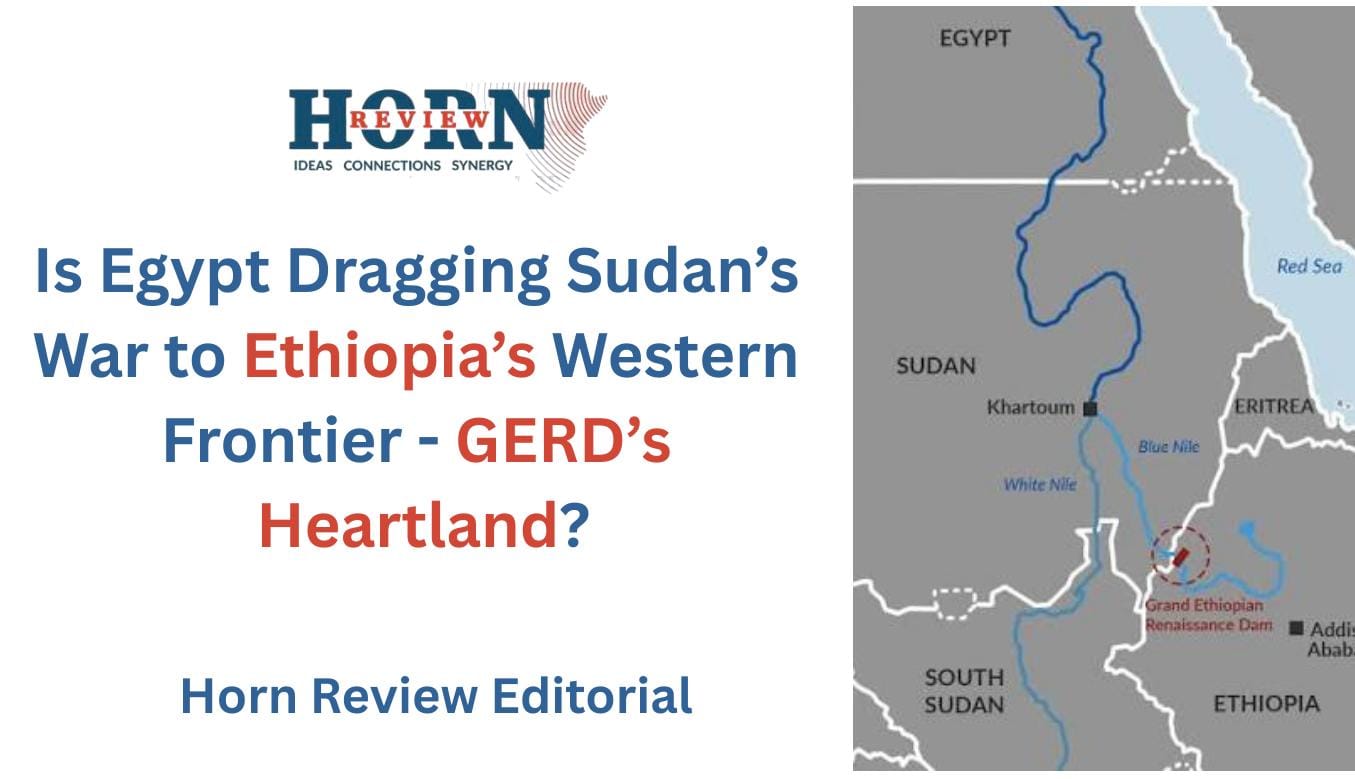
The Sudanese conflict has created one of the most fragile geopolitical theaters in Africa, and within it, narratives have emerged suggesting that Egypt may be leveraging instability to reposition itself closer to Ethiopia’s western frontier, particularly Benishangul-Gumuz, where the GERD stands as the most strategic infrastructure project in the Horn of Africa. From the perspective of this argument, Cairo’s rhetoric, including statements from Egyptian leadership, is interpreted not only as diplomatic posturing but as preparation for a more confrontational and broader geopolitical maneuver designed to pressure Ethiopia from multiple fronts after years of stalled negotiations over the Nile waters. Whether or not this is Cairo’s intention, examining the logic, motivations, and feasibility of such a strategy is essential in understanding current regional anxieties.
Recently, unsubstantiated allegations have surfaced claiming that the Rapid Support Forces (RSF) maintain bases in Ethiopia’s western frontier. These claims have been circulated and amplified by Egyptian voices, elements within Sudan’s SAF, and Eritrean PFDJ operatives. While these reports are strategically convenient for those promoting pressure narratives, there is no independent verification of RSF operating from Ethiopian territory, while SAF’s military camps in Eritrea and use of its airbases, including the involvement of Eritrean soldiers have been widely reported and verified by independent researchers. It has to be cautioned that the allegations against Ethiopia may be intentionally crafted to justify regional interventions or to create the perception of a cross-border threat that does not yet exist, and of course to drag the war to Ethiopia’s western frontier.
Historically, the RSF has maintained influence over parts of Sudan’s Blue Nile State and Darfur borderlands with Ethiopia since at least late 2023, leveraging weak state presence. Control in these areas, however, is fluid; while RSF has entrenched positions in several towns along the western frontier, the Sudanese Armed Forces (SAF) have recently launched counter-offensives in Blue Nile and Kordofan, reclaiming strategic locations. Local reports indicate that RSF still holds some peripheral settlements near the border, including areas in northern Blue Nile, but the precise boundaries of control shift with every military engagement. This ongoing instability creates a vacuum that outside actors, including Egypt, might perceive as an opportunity for influence.
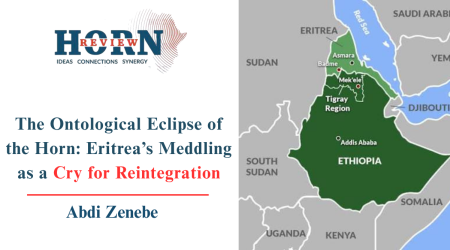
Benishangul-Gumuz is particularly sensitive because it represents the geographic vulnerability Ethiopia rarely acknowledges. It is far from Ethiopia’s central highlands power base, connected by a limited transport network, ethnically diverse and bordering Sudan – a country now deeply unstable. The idea that Egypt might attempt to acquire influence in Sudanese military or paramilitary structures in Blue Nile or surrounding border regions aligns with a longer history in regional power politics, where states rarely act directly but instead shape outcomes through proxies, alliances, and material or diplomatic support. And Egypt’s recently increasing diplomatic intensity, harsher tones, and renewed security framing of GERD fit into a long standing pattern: diplomatic escalation often precedes strategic positioning.
However, a strategy that implies Egypt would attempt to physically shift conflict pressure toward Ethiopian territory faces enormous practical and political constraints. First, it would require Sudanese factions to align with Egyptian objectives at a time when most Sudanese military actors are fighting existential wars of their own. Their primary concerns are holding territory, resources, and legitimacy inside Sudan, executing Cairo’s regional agenda, while may still be on the table, is not on top of thier list. Second, Ethiopia is not a passive actor. Whatever internal divisions it has, the Ethiopian state remains militarily capable, with hardened experience from various internal and regional conflict, and deeply nationalistic when it comes to territorial sovereignty and, most importantly GERD. Any perception of Egyptian-backed destabilization on its western border would almost certainly trigger a forceful Ethiopian response. Such dynamics would risk transforming a civil war into a regional war, something many international powers, including the United States, would and should aggressively resist.
The notion that Eritrean and TPLF forces could intersect with Egyptian strategy brings the geopolitical stakes even higher. Eritrea, whose ruling elite emerged from the EPLF, has long been closely aligned with Cairo’s strategic priorities on the Nile Question. Eritrea is not, and has never been a neutral player but an extension of Egyptian strategic depth, a regime whose security posture often aligns with Egyptian geopolitical interests more than its own national priorities or regional stability. This makes Eritrea not merely a concerned neighbor, but potentially an active participant in any policy meant to pressure Ethiopia, including – but not limited to the war in Sudan.
The TPLF dimension adds another volatile layer. Despite reports of TPLF militia Army 70’s active jnvolvement in combat in Sudan alongside Eritrean and SAF forces, its recent tactical recalibration with the Eritrean regime after years of hostility, any suggestion of coordinated northern pressure against Ethiopia under an Egyptian-influenced strategy sits on fragile ground. TPLF today is weakened politically, internally divided, and lacking broad popular legitimacy even inside Tigray. Its military capacity is reduced compared to 2020, its elite fragmented, and its influence constrained by Ethiopia’s evolving power structures. A joint Eritrean–TPLF convergence under Egyptian strategic influence remains theoretically alarming, but practically fragile and dependent on unstable elite calculations rather than durable alliances.
Meanwhile, Sudan’s leadership publicly reinforces a narrative of existential confrontation. As Sudan’s Sovereign Council head recently declared: “We are fighting an existential battle, we are confident of victory, and we will soon expel rebellion and traitors from our land. We will build a state of citizenship that includes everyone, and illusions of division will never materialize.”
Such rhetoric further militarizes the region’s psychology. In conflict zones, perception often becomes strategy. When leaders speak in terms of existential survival, suspicion becomes policy and propaganda becomes a weapon. Egypt will likely continue intensifying diplomatic and psychological pressure. Sudan’s ongoing collapse will continue generating insecurity along Ethiopia’s western frontier, whether by design, opportunity, or chaos. The Horn of Africa remains structurally fragile, shaped by overlapping wars, political volatility, economic crises, and unresolved historical grievances. In such an ecosystem, mistrust does not merely describe reality; it shapes it.
That said, despite the claims Egypt is deliberately engineering a west-to-north military encirclement of Ethiopia remaining analytically interpretive – what is undeniable is the convergence of destabilizing realities: Egypt’s unresolved Nile anxiety, Ethiopia’s strategic vulnerability in Benishangul-Gumuz, Eritrea’s regime alignment with Egyptian interests, Sudan’s chaotic battleground dynamics, and TPLF’s fractured internal posture. Combined with RSF’s historical presence in the western Sudanese borderlands, SAF counter-offensives, and increasingly Egyptian-aligned narratives, the perception of Ethiopia’s western frontier being placed under strategic pressure suggests a coordinated master plan.
Whether the region escalates toward confrontation or pulls back toward compromise will depend on decisions yet to be made. Escalatory rhetoric, proxy temptations, and zero-sum calculations dramatically increase the risk of miscalculation. However difficult, only diplomacy prevents Sudan’s war from mutating into a multi-state confrontation that could destabilize the Horn for an entire generation.
By Horn Review Editorial