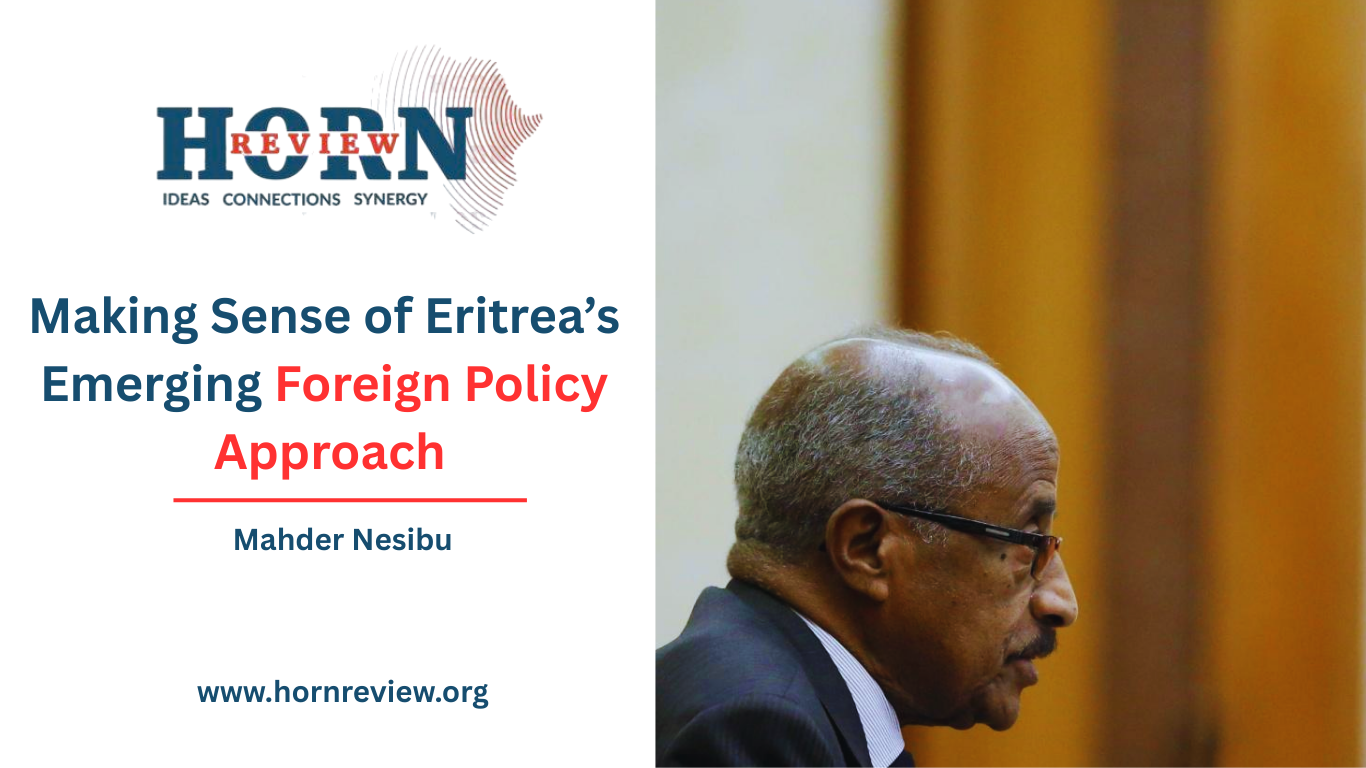
Since the formal conclusion of the prolonged “no war-no peace” period with Ethiopia, Eritrea has entered a new phase in its foreign policy and geopolitical positioning. This shift has unfolded amid broader global transformations, where multipolarity has increasingly become the reality where the influence of Western powers has waned and alternative centres of authority – most notably Moscow and Beijing – have asserted themselves with renewed confidence. China, in particular, now presents both economic and military weight comparable to that of the United States, while Russia re-emerges as a strategic counterbalance in multiple regions. Eritrea’s unexpected return from isolation has coincided with a global environment in which attention to the Red Sea corridor has intensified, not primarily from the West but from Middle Eastern powers, whose growing maritime interests reflect the shifting calculus of regional influence.
The rapprochement between Addis Ababa and Asmara marked a formal turning point in Eritrea’s return to diplomacy. Ethiopia’s leadership transition facilitated the removal of sanctions and opened channels for Eritrea to re-engage with multilateral institutions. Yet, as the country sought to reposition itself internationally, familiar patterns in its external behaviour resurfaced, shaped by both structural limitations and the worldview cultivated since secession. To comprehend Eritrea’s current approach to foreign relations, it is necessary to examine its interactions with immediate neighbours, regional actors, and broader global powers.
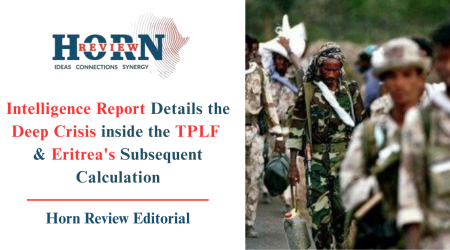
The relationship with Ethiopia has sharply deteriorated in recent years. Strategic mistrust once again defines the atmosphere between the two capitals, and Eritrea’s conduct continues to follow a doctrine that views Ethiopia as a permanent and existential threat. This perception has historically led Asmara to operate through intermediaries within Ethiopia’s political and security landscape. Proxy mobilization remains a central instrument through which Eritrea seeks to weaken Ethiopia’s military strength and exploit internal fissures. The current cycle of Eritrean engagement, understood through the arrangement of “Tsimdo,” exemplifies the persistence of these older tactics. By identifying and supporting armed actors in tension with the Ethiopian state, Asmara attempts to compensate for its own limited capabilities while subtly working to shift the balance of power in its favour.
A similar, though contextually distinct, logic underpins Eritrea’s posture toward Sudan. Sudan’s political landscape is layered and fluid, encompassing numerous armed groups and shifting alliances across ethnic, regional, and ideological lines. Eritrea has long leveraged its extensive borderlands to organize, support, and influence actors within Sudan, which can be understood as a deliberate extension of its regional manoeuvring. The current alignment with the Sudanese Armed Forces represents the latest expression of this pattern. Eritrean-backed elements now operate under the SAF’s broader command structure, enabling Asmara to maintain leverage in a conflict whose outcomes bear significant implications for regional stability, trade corridors, and the wider balance of influence across the Horn of Africa and the Red Sea corridor. Eritrea’s engagement demonstrates a preference for embedding itself within its neighbours’ political frameworks, exercising influence indirectly where direct confrontation would be risky.
Eritrea’s relationship with Egypt constitutes another central pillar of its geopolitical positioning. Cairo’s protracted dispute with Ethiopia over Nile waters has heightened its interest in allies along Ethiopia’s borders, and Eritrea occupies a strategic position within this calculation. The relationship is informed by the historical rivalry between Egypt and Ethiopia, reinforced by Eritrea’s own adversarial stance toward its larger neighbour. For Cairo, Asmara serves as a convenient partner through which to counter Ethiopian assertiveness, not only along the Nile but increasingly in the Red Sea corridor. From Eritrea’s perspective, Egypt offers a patron capable of supporting its regional posture, with the alignment over Sudan serving as a further reinforcement of this partnership.
The Red Sea and the broader Middle East comprise another arena in which Eritrea seeks both influence and strategic cover. Eritrea’s coastline remains its most valuable geopolitical asset, drawing intensified interest from Gulf monarchies. The United Arab Emirates, for example, has pursued expansive engagement in the Horn of Africa, once maintaining a significant military presence in Assab, utilized during its operations in Yemen. The role of Abu Dhabi in facilitating the Ethiopia–Eritrea rapprochement was also notable. The dynamics, however, have given way to open hostility from Asmara, driven in part by the UAE’s continued partnership with Addis Ababa. In contrast, Eritrea’s relationship with Saudi Arabia has followed a quieter but steadier trajectory. Riyadh’s posture in the Horn is more cautious, yet engagement persists, reflected in recent reports of interest in Assab and overlapping alignment on matters relating to Sudan.
Eritrea operates within a complex web of Gulf interests, exploiting rivalries where possible to advance its regional agenda.
Eritrea also leverages broader Middle Eastern rivalries for its own strategic calculations. A growing orientation toward Iran, coupled with a distancing from Israel, reflects a recalibration informed by regional dynamics. Previously, Eritrea had hosted an Israeli presence in the Dahlak Islands, while Tehran cultivated longstanding ties with Asmara. Today, the Eritrean–Iranian alignment appears more pronounced, manifest in official rhetoric, reports of arms transfers, and coordinated positioning in Sudan’s conflict. Public criticism of Israel from Asmara, alongside commentary in Israeli media, underscores the signalling inherent in these shifts, while also revealing Eritrea’s attentiveness to broader regional contestations.
Beyond the region, Eritrea has sought to recalibrate relations with major powers and multilateral institutions. President Isaias Afwerki has articulated an effort to engage the United States differently, anticipating opportunities presented by Donald Trump’s Presidency. In practice, however, U.S. policy has remained restrained, as part of its broader strategy to reduce and reorient the direction of engagement. European actors have exhibited modestly increased engagement, most notably Italy, whose agreements with Asmara reflect pragmatic cooperation. Similarly, Eritrea’s interaction with the United Nations has entered a phase of selective participation following the lifting of sanctions, signalling incremental normalization without full reintegration into the broader framework of global governance.
Relations with Russia and China follow a distinct trajectory, reflecting a combination of several considerations. Eritrea places considerable emphasis on ties with both powers, with high-level exchanges reinforcing this orientation. China’s longstanding role in Eritrea’s mining sector provides a tangible basis for engagement, while Russia’s interest centres more on strategic positioning and political alignment. Together, these relationships illustrate Eritrea’s reading of global change, where Western influence is perceived as waning and alternative centres of power present practical leverage for a state seeking to maintain regional relevance despite material constraints.
The underlying drivers of Eritrea’s foreign policy remain closely tied to the worldview of President Isaias Afwerki. Eritrea’s approach since secession has been shaped by militarized activism and an insistence on regional entanglement. Although the period of enforced isolation slowed its engagement, it did not alter the foundational logic guiding its external behaviour. The persistent use of proxy relationships, the focus on Ethiopia’s vulnerabilities, and the reliance on geopolitical leverage all stem from a doctrine that prioritizes indirect influence, defensive vigilance, and regional manoeuvring. Eritrea’s limited material capacity amplifies reliance on such tactics, while its Red Sea coastline provides both an instrument of leverage and a locus of external interest, enabling strategic calculation in an environment marked by both opportunity and contention.
This approach reflects a mixture of enduring strategic anxieties and an interpretation of a world that is increasingly fragmented. Regional rivalries, global shifts, and domestic decision-making structures interact to produce a posture that is active yet constrained, bold yet circumscribed by structural limitations. Within this landscape, Asmara continues to pursue a stance designed to manage perceived threats, cultivate advantageous arrangements, and maintain relevance in a region undergoing rapid transformation.
By Mahder Nesibu, Researcher, Horn Review