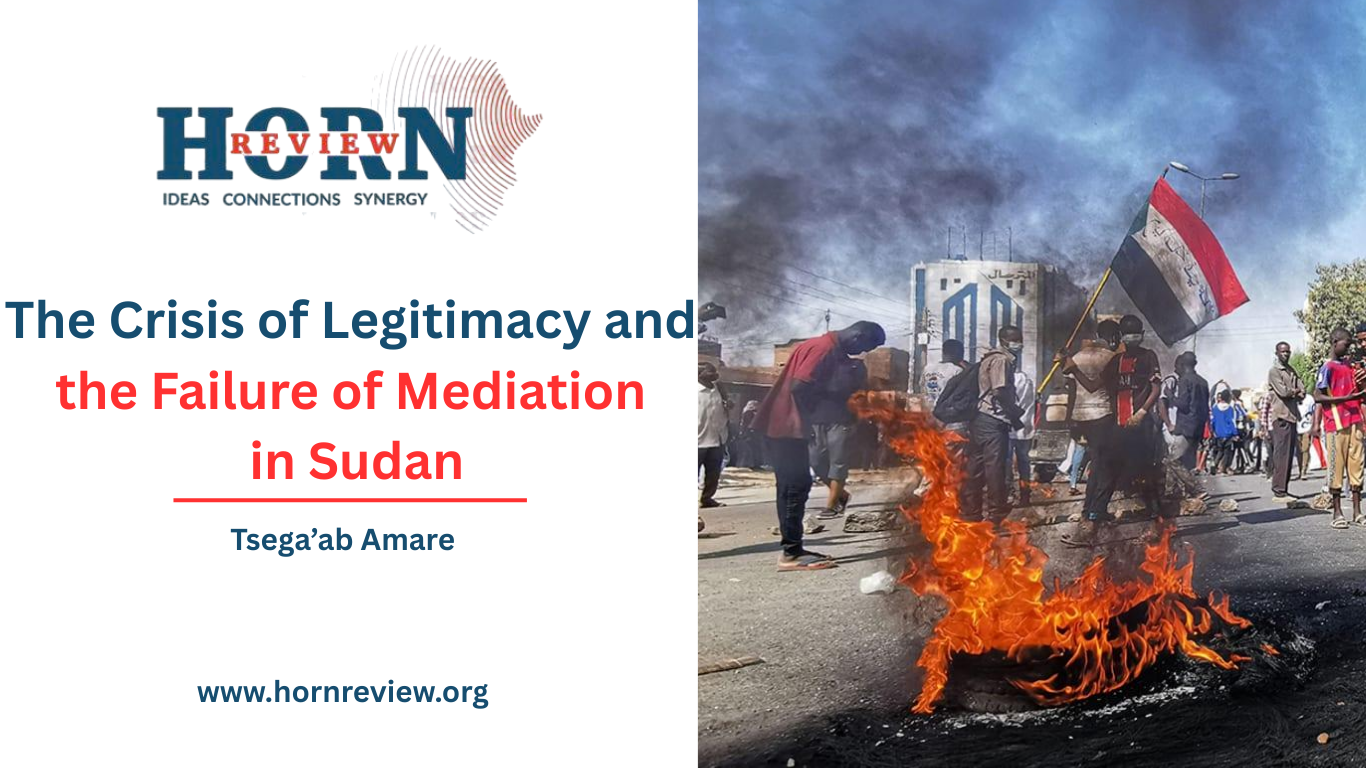
The catastrophic civil war in Sudan is fundamentally a conflict rooted in a profound crisis of legitimacy. This conflict marks the violent culmination of a failed democratic transition that began with cautious optimism in 2019. Following the ousting of President Omar al-Bashir, the nation adopted the 2019 Draft Constitutional Charter, which formalized a power-sharing arrangement between military and civilian factions. This document represents the only internationally and domestically recognized source of legitimate authority for the transitional period.
The fragile civilian-military compact quickly fractured, culminating in the military coup of October 2021 which dissolved the government led by Prime Minister Abdalla Hamdok. This move directly stymied democratic processes and laid the groundwork for the current military confrontation.The subsequent war, which began in April 2023, pits the two principal generals, Abdel Fattah al-Burhan (SAF) and Mohamed Hamdan Dagalo (RSF), against one another.
The African Union’s (AU) response to the 2021 coup was dictated by its foundational legal instruments, specifically the Lomé Declaration, which prohibits Unconstitutional Changes of Government (UCG). Because the takeover fell squarely within this definition, the AU Peace and Security Council immediately suspended Sudan.
However, the subsequent civil war presented a unique challenge. The Lomé framework was designed to punish external assaults on the rule, not to manage an internal war between the perpetrators of the UCG. This has created a profound Legitimacy Trap. To mediate, the AU must engage the men with the guns.
This dynamic, where the generals condition their participation on equal treatment or recognition, has already derailed mediation efforts, including US-backed talks in Geneva, as protocol debates trumped substantive peace discussions. The AU finds itself structurally unable to enforce a deal, as its key diplomatic tool, suspension, has ironically diminished its political leverage over the Sudanese state. The result is a stalemate where the military contest for supremacy dictates the political trajectory, leaving the continent’s premier peace and security body marginalized.
Sudan’s status within the AU is that of a Zombie State.Its seat in the AU plenary hall is empty due to suspension, raising the fundamental legal and political challenge: if the AU does not recognize the government, who possesses the sovereign mandate to sign a binding peace deal on behalf of the Republic of Sudan?
This has created a mediation vacuum which opportunistic external actors have aggressively filled, effectively bypassing African norms and continental institutions.This is not merely a legal technicality; it has devastating humanitarian consequences. As of December 2025, Sudan faces the world’s largest displacement crisis, with around 13 million peopleuprooted, both internal and external.
Sudan’s strategic location and mineral wealth (gold and oil) have turned the war into a regionalized proxy conflict. The UAE provides support to the RSF to secure economic interests, while Egypt backs the SAF to ensure its own national security. Both generals are now employing distinct strategies to assert statehood.
To break the cycle of military confrontation, the international community must pivot from addressing only the generals to neutralizing these external sponsors. Countries like the UAE and Egypt are indispensable to the generals’ war efforts, meaning the proposed mediation strategy requires coordinated action, including targeted sanctions on gold networks financing the RSF and diplomatic assurances to Egypt on border security. By raising the cost of intervention for these external actors, the international community can cut the financial and military lifelines that currently keep the two generals as coequal political principals. Both generals are now employing distinct strategies to assert statehood.
The SAF has adopted a strategy focused on projecting de jure continuity. Despite their role in the coup, the SAF-led Transitional Sovereignty Council (TSC) retains Sudan’s seat at the United Nations and is recognized by a key regional body, the Arab League. To reinforce this diplomatic façade, Burhan recently appointed a civilian prime minister, Kamal Idris, to lead the “Hope Government” from Port Sudan. The SAF is utilizing the institutional weight of the state to its advantage, even while facing military setbacks on the ground. This maneuver is designed to frame the military’s control within a framework that appears to move toward civilian-led governance, aligning with the AU’s desire for transition.
In direct contrast, the RSF is centered on consolidating de facto governance in the territories it controls, particularly Darfur and Kordofan. The RSF-backed “Tasis Alliance” (Sudan Founding Alliance) formally announced a parallel administration, the “Government of Peace and Unity,” appointing a presidential council and a prime minister. This deeply political maneuver seeks to force the RSF into international discussions not as a militia to be disarmed, but as a legitimate political stakeholder with territorial control. Regional and international bodies, including the AU PSC, have vehemently denounced this initiative, warning that it carries a huge risk of partitioning the country.
In what came to be a significant policy shift, the AU moved toward recognizing the SAF-appointed civilian PM, a reluctant compromise aimed at curbing the severe threat of fragmentation posed by the RSF’s parallel government.
The core of Sudan’s pathology remains the 2021 coup. While the civilian political class remains the only actor with a moral mandate, it is deeply fragmented. The Coordination Body of Civilian Democratic Forces (Taqaddum), led by Abdalla Hamdok, is a vital vehicle for legitimacy, but it faces internal cleavages.
Many grassroots Resistance Committees and regional parties view Taqaddum as too conciliatory toward the RSF. Furthermore, the role of political Islamists that are deeply embedded within the SAF’s bureaucracy cannot be ignored. Any mediation that treats the civilian camp as a monolith risk, excluding key stakeholders, potentially fuels a secondary insurgency even if the “Two Generals” reach an agreement.
The military contest for supremacy dictates the political trajectory in Sudan, leaving the continent’s premier peace and security body marginalized. To break this cycle and compel the generals to negotiate disarmament, the international community and continental bodies are urged to prioritize the restoration of genuine civilian legitimacy through a phased diplomatic strategy, using recognition as a sequenced tool to mitigate risk and address the hard power reality.
Building peace on the rotten foundation of the two generals only rewards the coup perpetrators. The goal must be to transform the generals from coequal political principals into subordinate military factions. By carefully sequencing the transfer of legitimacy to a unified, inclusive civilian front, the international community can move the focus from power-sharing between warlords to the essential task of state rebuilding and accountability for war crimes.
By Tsega’ab Amare, Researcher, Horn Review