The Sahel is one of the world’s most turbulent regions, marked by fragile states, persistent terrorist activity and repeated military coups. Its instability has attracted external powers, each seeking to shape the regional security architecture to serve their strategic interests. For the United States, this complex landscape has long justified a robust military presence, but shifting alliances and the rise of military governments increasingly opposed to Western influence are forcing a recalibration of strategy. Today, Washington is moving from a predominantly military-centric approach toward a diplomacy-enabled, multidimensional engagement reflecting the need to preserve influence and stability in a region where access and operational freedom are no longer guaranteed.
Historically, U.S. policy in the Sahel region primarily relied on counterterrorism activities. The contemporary U.S. presence in the Sahel dates back to 2002, when the Pan-Sahel Initiative was launched, laying the foundation for the Trans-Saharan Counterterrorism Initiative in 2005, which eventually covered 11 countries. U.S. military forces have also provided logistical support for French operations in the Sahel and for the United Nations Multidimensional Integrated Stabilization Mission in Mali. Additionally, the U.S. has offered logistical and advisory assistance to the G5 Sahel forces and the Multinational Joint Task Force, aimed at combating the Nigerian terrorist organization Boko Haram.
However, the dynamics began to shift dramatically with the 2023 coup in Niger, signaling new challenges for U.S. engagement in the region.in this year the country’s residential guard detained Mohamede Bazoum and the Presidential guard commander general Abdurahman Tchiani proclaimed himself the leader of the military junta, this incident brought significant changes in U.S. foreign policy toward the Sahel. The coup not only disrupted longstanding military partnerships but also limited U.S. access to key bases and operational areas in Niger. First deployment of U.S. troops in Niger was in 2013, when 100 military personnel were deployed. Washington later built one of its largest drone bases in Agadez, Niger, which enabled the U.S. to carry out intelligence, surveillance, and reconnaissance activities. Information gathered from this Military Bases 101 and Air Base 201 were very important and essential in tracking and fighting insurgents in the region. After the coup, the U.S. tried to negotiate a deal to maintain some sort of military presence in Niger however In March 2024, it was ordered to leave. The loss of this base has created problems for U.S. regional interests in Africa; this coup pushed the U.S. to limit its role in the Sahel and coincided with the rise of active actors like Russia and China.
A question can be raised as to why the Sahel states Mali, Niger, and Burkina Faso have sought to align with Russia, China, Turkey, and other actors rather than with the United States. One explanation is their strategy of sovereignty, which prioritizes the renewal and diversification of partnerships in order to achieve mutually beneficial agreements without relying on a single partner for security or development. Supporting this argument, at the time of the U.S. withdrawal from Niger, a spokesperson for the military government stated that Niger regretted what it viewed as the intention of the American delegation to deny the sovereign Nigerien people the right to choose their own partners and the type of partnership capable of effectively assisting them in the fight against terrorism. In addition, U.S. foreign policy restricts military support to countries that experience military coups, which weakened U.S. leverage at a time when Russia and other state actors were ready to step in.
Russia and China are expanding their influence in the region, each external state actor in the Sahel region has its own distinct interests. China primarily focuses on economic access, infrastructure development, and trade, whereas Turkey emphasizes defense cooperation, diplomatic engagement, soft-power expansion, and economic ties. Russia’s involvement appears to thrive in environments of insecurity and instability, and its re-engagement was accelerated by geopolitical shifts in the Sahel region. It has involved the deployment of private contractors, The Wagner Group now restructured as the Africa Corps has a presence in Burkina Faso, Niger, Mali, and Libya to defend the interests of the Russian Federation. Russia’s influence has risen significantly since 2020, whereas Gallup World Poll reports show that the U.S. has lost its position as the most influential power in Africa amid growing anti-Western sentiment. In response, Washington has increasingly emphasized diplomatic engagement, regional cooperation and development assistance alongside security operations, marking a clear shift from a primarily military-centric approach to a more multidimensional strategy.
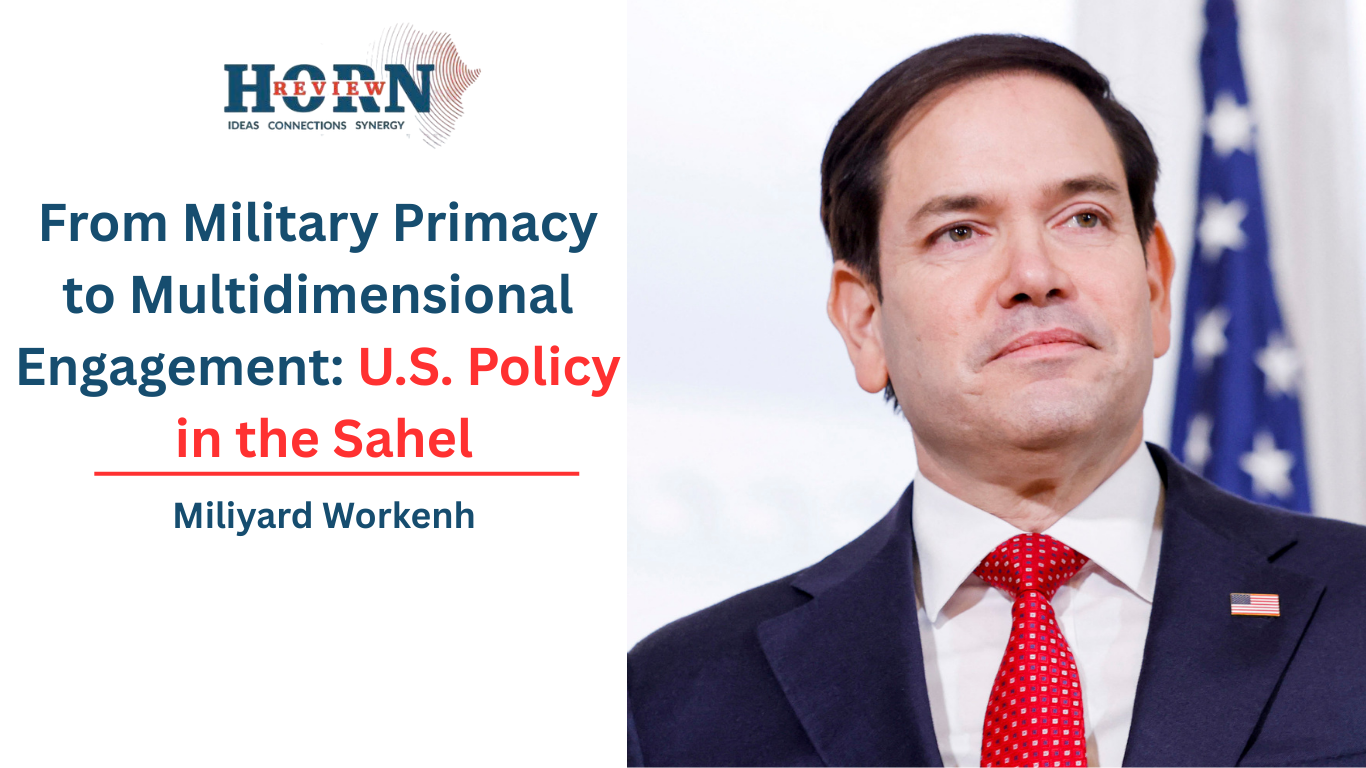
Recent developments suggest that the United States is gradually shifting from a predominantly military role in and around the Sahel toward a broader, multi-dimensional engagement that combines security, economic, development, and diplomatic initiatives. Following the end of major security agreements after the 2023 Niger coup, Washington has emphasized infrastructure investment, regional development, and trade partnerships. For example, cooperation between USAID and the African Development Bank has supported large-scale socio-economic programs across Mali, Niger, and Burkina Faso, In a clear demonstration of renewed diplomatic commitment, the U.S. also presented new ambassadors to Niger and Burkina Faso in 2025, signaling efforts to maintain political dialogue and engagement despite the suspension of certain military programs. At the same time, although a recent U.S.–Nigeria agreement primarily strengthens military and counterterrorism cooperation, additional areas of cooperation were also included. These include a five-year, $5.1 billion bilateral cooperation Memorandum of Understanding with the Federal Republic of Nigeria, as well as agreements on economic and energy cooperation and the protection of cultural property. it complements these broader development and diplomatic efforts. Taken together, these initiatives indicate that the U.S. strategy in the Sahel and neighboring areas is becoming more balanced, using trade, infrastructure, socio-economic development, and diplomacy as central tools of engagement alongside and in some cases partially replacing direct military partnerships.
The Sahel is a complex and turbulent region, and if current trends continue, the involvement of external powers is expected to persist, with competition between states to counter each other’s influence becoming inevitable. A solely militaristic approach is unlikely to succeed, as many Sahelian states advocate for anti-Western and anti-colonial policies. The U.S. rapprochement following the 2023 military coup in Niger demonstrates a strategic shift: rather than relying exclusively on military engagement, the United States is now pursuing a more multi-dimensional approach that combines diplomacy, development, and security cooperation. This includes large-scale socio-economic programs supported by USAID and the African Development Bank, infrastructure projects and the appointment of new ambassadors to strengthen diplomatic dialogue. At the same time, although a recent U.S.–Nigeria agreement primarily focuses on military and counterterrorism cooperation in Nigeria’s northern, Sahel-adjacent regions, it complements these broader development and diplomatic efforts. Taken together, these initiatives indicate that the U.S. strategy in the Sahel and neighboring areas is becoming more balanced, using trade, infrastructure, socio-economic development and diplomacy as central tools of engagement, while coordinating with Sahelian states and supporting their own development and security priorities.
By Miliyard Workenh, Researcher, Horn Review