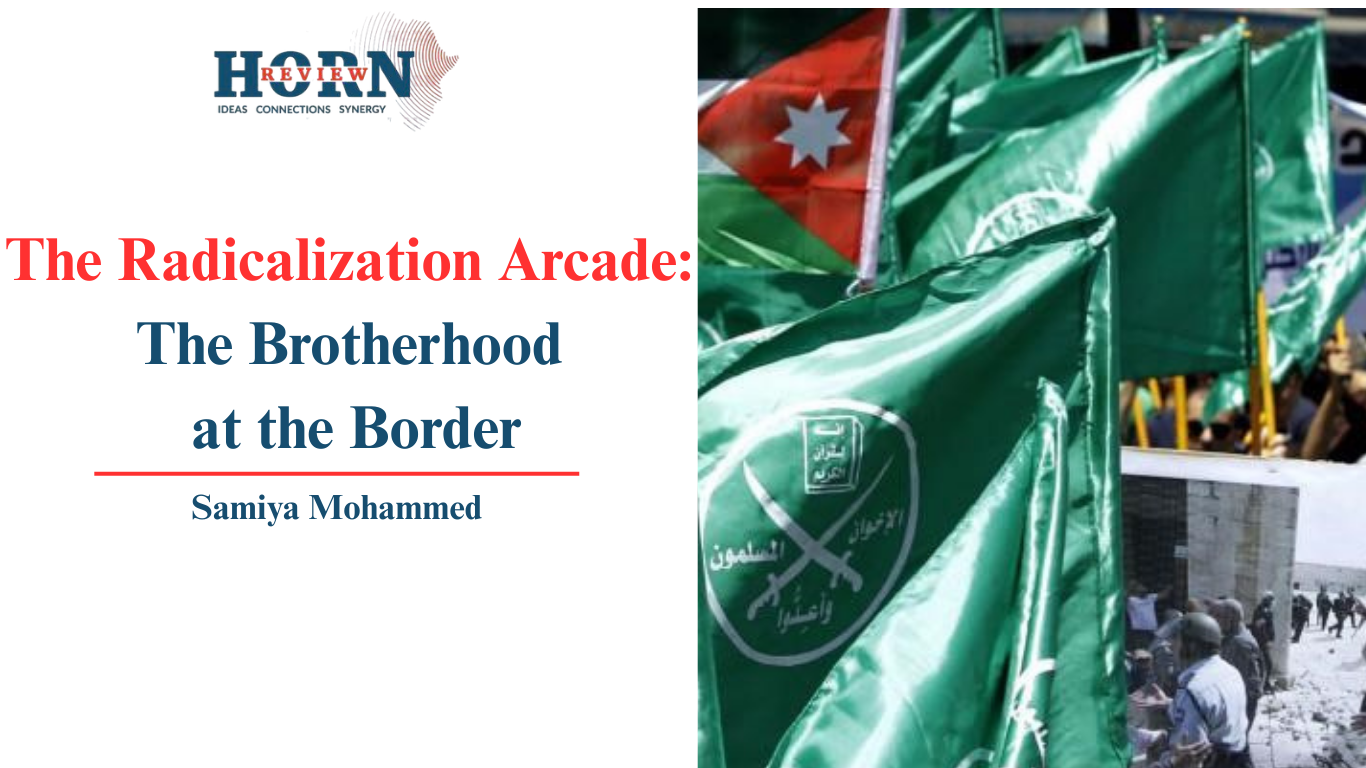
Why the Muslim Brotherhood’s Control of Sudan’s Military Is a Direct Threat
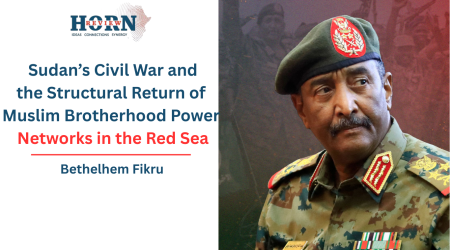
The United States decision to designate Sudan’s Muslim Brotherhood a foreign terrorist organization, Sudanese Army Assistant Commander General Yasser Al-Atta did not issue a denial. He did not distance himself from the Islamist movement or Iran backed fighters. Instead he offered an outright confession saying I am a member of the Muslim Brotherhood and we control everything, General Al-Atta declared issuing an open challenge to Washington while confirming what had long suspected the Brotherhood has not just only infiltrated the Sudanese Armed Forces however has effectively hijacked the institution.
This admission arrives at a moment when the United States has officially blacklisted the Sudanese Muslim Brotherhood including its political wing the Sudanese Islamic Movement and its armed faction, the al-Baraa bin Malik Brigade citing mass executions of civilians, ties to Iran’s Islamic Revolutionary Guard Corps and a campaign of unrestrained violence. The State Department’s designation effective March 16 accuses the group of contributing more than 20,000 fighters to the conflict many trained and armed by Tehran. However Sudan’s foreign ministry responded not with contrition but with defiance urging united states to designate the Rapid Support Forces instead.
This is not a distant diplomatic spat. It is a direct and national security threat coming along a porous border already strained by over a million Sudanese refugees. When a US designated terrorist group openly admits it controls the military of a neighbouring state and when that group maintains operational ties to Iran and ideological alignment with Egypt, Ethiopia’s posture of neutrality ceases to be prudent. It becomes a dangerous with the nation’s sovereignty, its water security and the hard-won gains of counter terrorism efforts.
To appreciate the gravity of General Al-Atta’s words it should be understood with what the US designation actually entails. The State Department’s announcement was not a symbolic gesture. It detailed a specific pattern of atrocities, fighters from the al-Baraa bin Malik Brigade conducting mass executions in captured areas, carrying out summary killings based on race or ethnicity and advancing a violent Islamist ideology through systematic brutality. Crucially the US identified Iran’s IRGC as the training and support apparatus behind these fighters, positioning the Sudanese Muslim Brotherhood within the broader network of Tehran aligned proxies operating across the Middle East and Africa.
General Al-Atta’s response words saying we control everything were therefore is not only a boast. It was an acknowledgment that the official state military ostensibly led by General Abdel Fattah al-Burhan has been subordinated to an organization the United States now places in the same category as al-Qaeda and ISIS. This is not a fringe faction operating independently and this is the chain of command itself.
At the same time Sudan’s demand that the US designate the RSF instead of the Brotherhood must be read through this lens. The foreign ministry’s statement cited the RSF’s proven crimes and documented violations of international humanitarian law including war crimes, crimes against humanity, genocide, and terrorism. These accusations with a UN finding mission recently concluded that the RSF committed acts of genocide in Darfur, specifically targeting non-Arab Zaghawa and Fur communities with systematic killing, rape, and destruction. But the Sudanese army’s effort to redirect international opprobrium onto its enemy does not erase the evidence of its own Islamist allies’ atrocities. Both parties to this conflict have blood on their hands. The difference is that one side the side now controlling Sudan’s official military openly celebrates its affiliation with a US-designated terrorist organization.
First consider the border. Ethiopia shares an extensive and largely frontier with Sudan where a region through which people, weapons and contraband have flowed for decades. With over a million Sudanese refugees already seeking shelter on Ethiopian soil, the potential for militant infiltration is not a future risk but a present reality. Refugee camps by their very nature can become fertile ground for radicalization and recruitment if host nations lack counter-radicalization programs. When a terrorist designated group controls the military next door, the likelihood that its operatives will exploit these vulnerable populations whether to recruit fighters, establish sleeper cells or launch cross border operations increases exponentially.
Second the Iranian connection compounds the threat. The US designation explicitly cites IRGC training and support for Brotherhood fighters. Iran’s objectives in the Horn of Africa are well documented with establishing naval presence, projecting power toward the Red Sea and cultivating proxy forces capable of pressuring adversaries. A Sudanese military apparatus controlled by an Iran backed Islamist organization effectively extends Tehran’s reach to the western flank. This is not a matter of distant geopolitics however is the creation of a ready made arcade for weapons, funding and ideological reinforcement that could destabilize the horn from within.
The Brotherhood’s influence in Khartoum intersects dangerously with the existential issue. Egypt, which coordinates closely with Sudan on Nile affairs, has long viewed the Dam as a threat. Now imagine a scenario in which Sudan’s military controlled by an Iran backed Islamist organization with ties to Egyptian intelligence and security establishments coordinates with Cairo to escalate pressure on Ethiopia. The Brotherhood’s ideological hostility combined with its operational capabilities and external backing, transforms a diplomatic dispute into a potential national security crisis.
There is a tendency to view the Sudanese conflict through a lens of neutrality and non interference. Ethiopia hosts peace talks, maintains diplomatic channels with all parties and refrains from taking sides in what it considers an internal affair. This posture has its merits but it becomes untenable when one party to the conflict openly declares its allegiance to a US-designated terrorist organization and admits to controlling the state’s military apparatus.
Neutrality does not mean blindness. It does not require ignoring evidence that a terrorist group has entrenched itself. It does not demand silence when that group’s patrons in Tehran and its allies in Cairo pursue policies inimical. The threat is not hypothetical and it is metastasizing in real time. General Al-Atta’s confession should serve as an alarm that Ethiopia’s cannot afford to ignore. When a neighbouring military leader declares that a terrorist organization controls everything, the only responsible response is to prepare for the consequences. None of these measures require Ethiopian troops to cross the border or intervene in Sudan’s war. They require something far more basic attention. They demand that the national Security Council treat the Muslim Brotherhood’s presence in Sudan as a tier one priority, allocate resources accordingly and communicate the gravity of the threat to both domestic audiences and international partners.
General Yasser Al-Atta’s boast was not a slip of the tongue. It was a declaration of fact delivered with the confidence of an officer who knows he has the upper hand. “We control everything,” he said and for now he is right. The Muslim Brotherhood controls key levers of Sudan’s military, enjoys support from Iran and maintains close ties to Egypt. Its fighters have committed atrocities, its ideology is antithetical to pluralism and stability and its presence on Ethiopia’s border poses a direct threat to national security.
Complacency has been the default for too long. The threat next door is no longer distant or ambiguous. It is real, it is growing, and it will not wait for to adjust its threat perceptions at a leisurely pace. Ethiopia has faced existential challenges before and has overcome them through vigilance, resilience, and clear eyed assessment of its interests. The Muslim Brotherhood’s control of Sudan’s army is such a challenge. It requires the same clarity of purpose, the same willingness to act, and the same refusal to accept unacceptable risks.
By Samiya Mohammed, Researcher, Horn Review