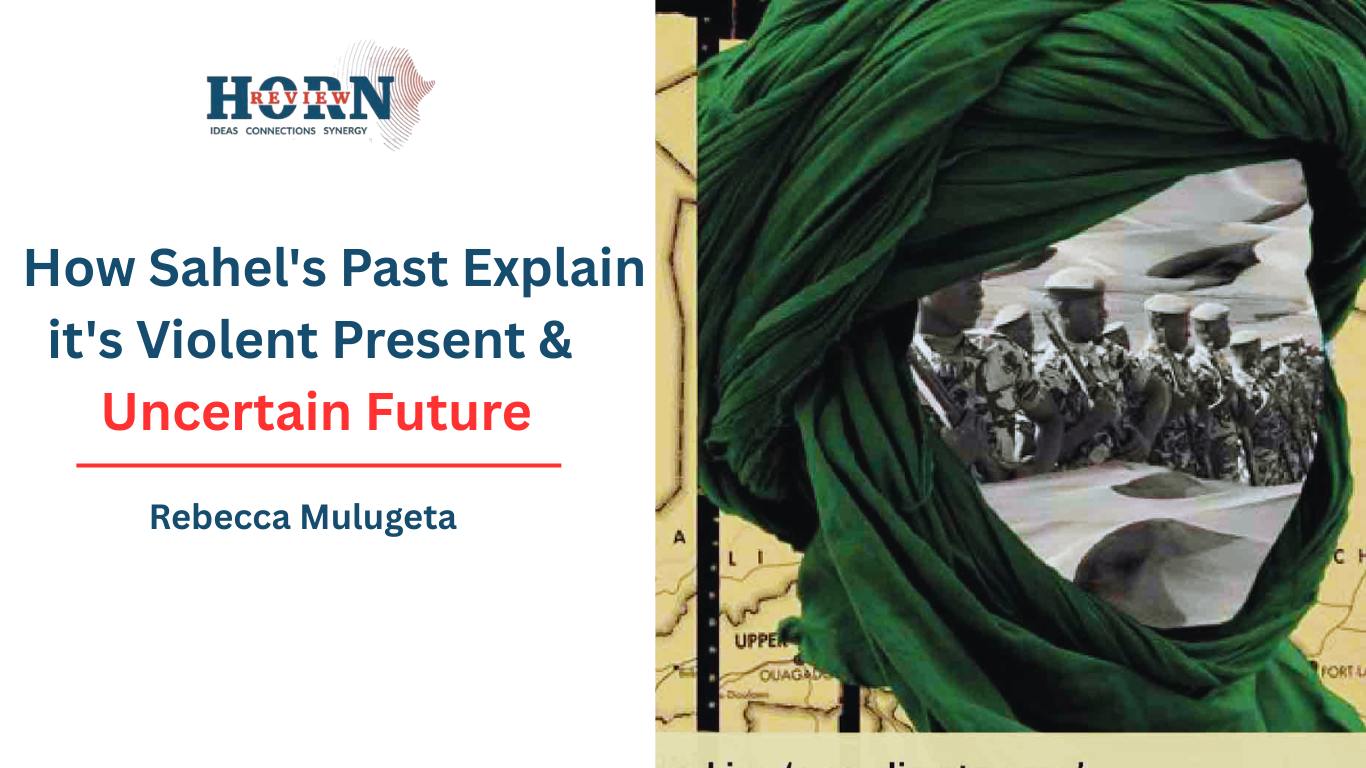
How did a region once built on trade, learning, and powerful empires become a landscape of violence, fragility, and an uncertain future, and what in its past helps explain this shift? The Sahel occupies a singular position in Africa’s historical and political imagination. Stretching from Senegal on the Atlantic to the Red Sea corridor near Eritrea, it has long served as a bridge rather than a boundary, connecting North Africa, Sub-Saharan Africa, the Middle East, and beyond. Today, however, the region is more often described through the jihadist violence, repeated military coups, humanitarian emergencies, and great-power competition over strategic resources. To understand why instability has become so persistent, it is necessary to look beyond immediate security failures and examine the deeper political and historical structures that have shaped the Sahel’s history.
For much of its early history, the Sahel was neither marginal nor fragile. Pre-colonial empires such as, Mali, and Songhai thrived precisely because they adapted to the region’s ecological constraints. Governance was built around negotiation, mobility, and shared access rather than fixed borders or absolute territorial control. Trade routes linking gold fields in West Africa to salt mines in the Sahara generated wealth that supported cities, and institutions. Timbuktu, Gao, and Djenné were not isolated outposts but integral nodes in global intellectual and commercial networks. Authority rested on mediation between communities, balancing the interests of pastoralists, farmers, traders, and religious leaders. Conflict existed, but it was managed through social contracts suited to a harsh and variable environment.
This adaptive order was dismantled during the colonial conquest of the late nineteenth century. European powers, imposed rigid borders and centralized administrative systems onto a region whose stability depended on flexibility. Colonial rule reorganized the Sahel around extraction. Gold, cotton, and later uranium were prioritized for export, while infrastructure was designed to move resources outward rather than connect societies internally. Seasonal migration routes were restricted, traditional authorities were weakened or instrumentalized, and local economies were reshaped to serve external markets. The borders drawn during this period cut across ethnic, economic, and ecological systems, embedding structural tensions that remain unresolved.
Independence in the 1960s did not reverse these dynamics. Newly formed Sahelian states inherited weak institutions, externally oriented economies, and political systems detached from local governance traditions. Rather than rebuilding inclusive authority, many post-colonial leaders consolidated power in centralized states that relied on security forces and patronage networks. Political legitimacy became increasingly narrow, concentrated in urban elites, while rural and mobile populations were marginalized. Development strategies favored large-scale projects that often ignored environmental limits and local livelihoods, particularly pastoralism. Corruption and mismanagement further eroded trust between citizens and the state.
Environmental pressures compounded these failures. Lake Chad’s dramatic shrinkage and the degradation of grazing lands undermined traditional coping mechanisms. Instead of mediating these pressures, states often responded with repression or neglect. Grievances among Tuareg, Fulani, and other marginalized communities were treated as security threats rather than political claims, pushing dissent into cycles of rebellion and militarized response.
It is within this context that violent extremism gained traction. Jihadist groups did not emerge in a vacuum; they exploited governance vacuums created by decades of exclusion, abuse, and institutional failure. In areas where the state appeared only through corrupt officials or predatory security forces, armed groups offered alternative systems of order. They resolved disputes, provided income through taxation or smuggling, and framed their violence as moral resistance. The collapse of northern Mali in 2012 marked a critical turning point, allowing jihadist movements to establish durable footholds and expand across borders into Burkina Faso and Niger.
Natural resources, rather than serving as engines of recovery, have intensified instability. Gold mining has expanded rapidly, particularly through artisanal and informal operations that operate beyond effective state control. These sites generate revenue for armed groups, criminal networks, and military elites alike. Niger’s uranium, vital to global energy markets, has long symbolized the disconnect between national wealth and local deprivation. New discoveries of lithium and hydrocarbons have further heightened competition. In this environment, resources function less as development assets and more as conflict multipliers, sustaining war economies in which violence becomes profitable.
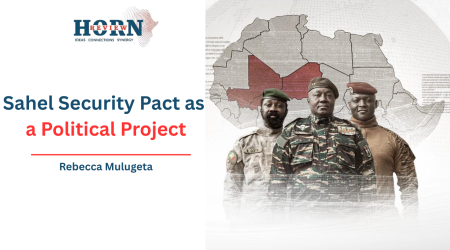
The wave of military coups in Mali, Burkina Faso, and Niger reflects both public frustration and institutional collapse. Many citizens initially welcomed military takeovers as a rejection of corrupt civilian elites and foreign dependency. However, military rule has not addressed the structural drivers of insecurity. Instead, it has narrowed political space, delayed transitions, and deepened isolation from regional and continental institutions. The suspension of these states from the African Union and their subsequent boycott of continental mechanisms have reduced opportunities for mediation and collective problem-solving, reinforcing a siege mentality among ruling juntas.
The formation of the Alliance of Sahel States represents an attempt to reclaim regional agency under these conditions. By emphasizing joint security operations, shared borders, and sovereignty over resources, the alliance draws on historical patterns of Sahelian cooperation. Yet its effectiveness remains uncertain. Without inclusive governance, economic reform, and diplomatic reintegration, the alliance risks becoming a militarized bloc focused on regime survival rather than social stability.
External actors have significantly shaped recent history. Western military interventions failed to contain insurgencies and became symbols of external dominance. Sanctions and diplomatic disengagement, while intended to pressure juntas toward civilian rule, often reinforced more isolation and resentment. This created space for alternative partners. Russia expanded its influence through security-for-resources arrangements, offering immediate military support without governance conditions. China continued to deepen its economic presence through infrastructure and mineral investments, maintaining a low political profile. The United States has recently begun reassessing its approach, recognizing that disengagement has reduced influence without improving security outcomes.
This convergence of internal fragility and external rivalry risks locking the Sahel into prolonged instability. Competing security partnerships and extractive economic models transform the region into an arena of geopolitical competition rather than a partner in development.Undermining social cohesion and overwhelming already weak institutions. Humanitarian needs continue to rise, even as access becomes more restricted.
The persistence of violence in the Sahel is therefore not the result of a single failure or actor. It reflects accumulated disruptions: the destruction of adaptive governance systems, the imposition of rigid states, the entrenchment of authoritarian rule, and the conversion of natural wealth into a source of conflict. Terrorism and coups are symptoms rather than causes. History shows that stability in the Sahel has always depended on flexibility, inclusion, and negotiated coexistence. Any strategy that relies solely on military force or external patronage will reproduce the same crises under new labels.
The region now stands at a decisive path, One path involves rebuilding governance around shared benefit, restoring trust between states and societies, and reintegrating the Sahel into continental and global systems on equitable terms. This would require political efforts, fair resource management, and investment in livelihoods suited to ecological realities. Another path risks deeper militarization, dependency on external security partners, and fragmentation along political and social lines. Sahel’s past demonstrates resilience and ingenuity. Whether that legacy can inform a modern political settlement remains the central question shaping its future.
What is happening in the Sahel is not so different from the Horn of Africa. Both regions were once deeply connected to global trade, learning, and political systems that managed diversity and harsh environments with a certain balance. Over time, colonial borders, outside interference, and weak post-independence governance broke those systems, replacing them with mistrust, militarized politics, and dependence on external actors. Today, the Horn faces the same choice as the Sahel: either rebuild governance that reflects shared interests, regional cooperation, and local realities, or continue down a path of fragmentation and permanent crisis. The African Union should move beyond statements and sanctions by leading real mediation, protecting constitutional order, and backing region-led development and security reforms instead of outsourced or foreign-driven fixes. Most importantly, the AU must treat the Sahel as a political and social crisis first, not just a battlefield, and act early before violence becomes the only language left.
The deeper question that hangs over both regions is this: if our past shows creativity, resilience, and adaptation, why has it shaped a present defined by instability, and how long will that unresolved past keep pushing our future further into uncertainty?
By Rebecca Mulugeta, Researcher, Horn Review