Over the past few months, questions have been raised about what the Gulf states’ true interests are, given that they have been with Iran, with high-risk diplomatic and security maneuvers behind the scenes. They want Washington to keep up the heat, even getting into serious talk about a military strike, but deep down, they’re concerned about an escalated regional war that can spin way out of their hands. Saudi Defense Minister Prince Khalid bin Salman’s January 29, 2026, trip to Washington was framed as routine strategic coordination. Yet it coincided with intense closed‑door U.S.–Iran talks. As Axios reported about the closed-door session in Washington, the Saudi Defense Minister told U.S. officials, “At this point, if a strike on Iran doesn’t happen, it’ll just embolden the regime.”
Recent publication by media outlets has it that Riyadh has given a quiet approval to the U.S. if it’d significantly degrade Iran’s nuclear capabilities and its regional proxy networks. Meanwhile, Saudi political elites have publicly drawn a firm red line, insisting the Kingdom will not permit its territory or airspace to serve as a staging ground for such operations. That mix of quiet push and encouragement and public restraint is the Gulf’s broader strategy of managed containment. Regional ruling elites in Saudi Arabia and the UAE are quietly urging Washington to shoulder the primary coercive burden toward Iran, supporting behind-the-scenes pressure on Tehran’s nuclear program and its regional proxy networks, while avoiding any public endorsement of a US strike that could expose them to retaliation. At the same time, they are pursuing careful diplomacy, including discreet shuttle efforts via Oman and Qatar to facilitate U.S.–Iran talks, maintaining selective economic ties such as limited trade and energy-related cooperation, and issuing restrained public statements that emphasize de‑escalation and respect for sovereignty. This calibrated approach aims to head off a full-scale conflict that could disrupt Gulf energy exports, undermine major infrastructure projects, and weaken their security arrangements and regional influence.
Saudi Arabia’s position on Iran, prior to Prince Khalid bin Salman’s talks in Washington, was thought to favor diplomacy and to avoid any direct role in a US strike. Riyadh had publicly stressed de‑escalation and even ruled out allowing its airspace to be used for an attack on Tehran. However, reports that Prince Khalid privately told US officials, that inaction would only embolden the regime, have reignited doubts about whether Riyadh genuinely wants peace or is instead playing a more ambiguous, hedging game,pushing Washington to keep up pressure while keeping its own distance from any military action.It is widely believed that the Saudi’s, like other regional states, ultimately prefer stability over chaos, they also appear open to the idea of a more constrained Iran rather than outright confrontation. Analysts argue that Saudi Arabia is walking a double line, publicly anchoring itself in Washington’s security orbit while quietly trying to avoid a war it cannot control and does not want on its doorstep. In practice, Riyadh has also floated the possibility of acting as a mediator between the Trump administration and Iran, seeking to shape any new nuclear or regional arrangement in a way that safeguards and fits its own strategic and economic interests.
Publicly, Saudi Arabia has maintained a cautious tone, stressing respect for Iran’s sovereignty and a preference for a diplomatic solution. Not long ago, Riyadh released a statement saying it would not allow its airspace to be used for an attack on Iran. On the contrary, the recent move says otherwise. Saudi officials now appear caught between concerns that a US strike could trigger severe regional consequences and fears that restraint would leave Iran in a stronger position.
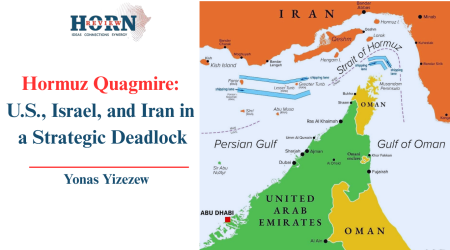
Beyond economics like oil markets and trade flows, the Gulf and the United States are closely aligned on one core red line, preventing Iran from acquiring nuclear weapons. Their heavy dependence on oil exports, control of key shipping lanes such as the Strait of Hormuz, and their role as major trade and logistics hubs give Gulf states real influence. They can warn Washington that a strike on Iran could trigger market shocks, shipping disruptions, and higher global energy prices. Gulf leaders can also quietly signal that prolonged escalation might complicate U.S. military basing and regional cooperation. Yet the United States ultimately decides its own red lines on Iran, and Gulf states are divided among themselves on how far to push Washington. As a result, the most realistic outcome is not a Gulf veto over a strike, but a behind-the-scenes effort to limit its scale, or create a negotiation panel where the two states could sort things out by creating a favorable condition for Iran, unless there is balance, Iran isn’t in a condition to accept U.S. discussion points. Either way, if things go so south, they can set the timing and targets while protecting regional stability and their own economies.
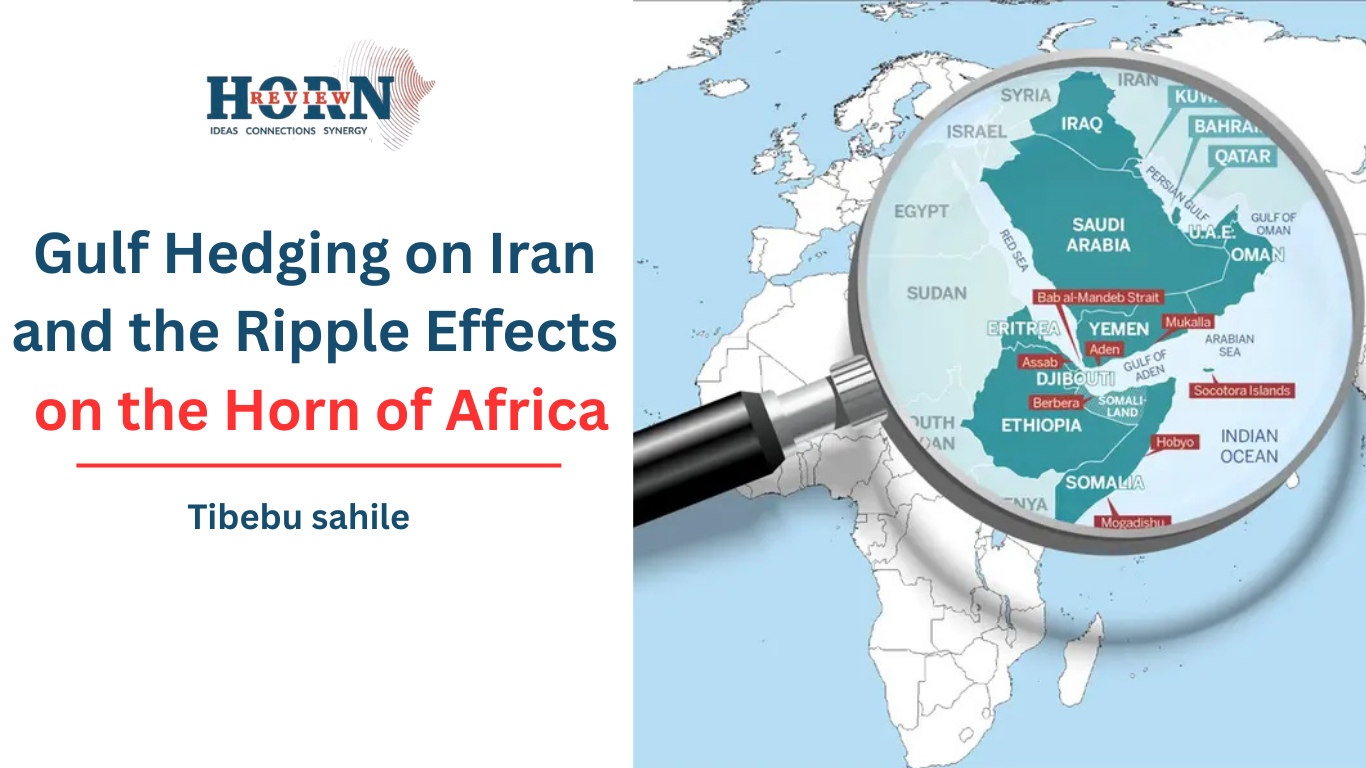
Yet the Gulf states are in a concerning scenario. They are using the situation to advance their own regional ambitions, sometimes at the expense of a clear commitment to regional peace and long‑term economic stability. While they may welcome a more restrained Iran that emerges from a negotiated settlement, recent signals suggest they are also open to a limited U.S. strike, as long as the risks are contained and the costs are not theirs alone to bear. This all fits their picture of increased regional ambitions, as long as things didn’t escalate further. Given how much the Gulf states are trying to manage U.S.–Iran tensions to protect their own economies and regional standing, the stakes are not confined to the Strait of Hormuz and the Gulf of Oman; any escalation or de‑escalation in this tangle will inevitably ripple outward to the Red Sea and Horn of Africa.
This fluid, Gulf–U.S.–Iran tangle is a very dynamic matter with any scenario that could ripple to the Horn. Gulf flare-ups ripple through Red Sea and Bab el-Mandeb routes, raising insurance costs. The Saudi–UAE rivalry has taken a toll on the Horn, let alone a strike on Iran could unfold scenarios like the Houthis’ revenge on the U.S. and its allies across the Red Sea Gulf, disrupting shipping lines and choking not only the Horn countries’ economy but the world’s. Last year’s attacks have cost global shipping lines staggering numbers running into several billions of dollars. If the Gulf states manage to keep escalation under control and push Washington toward a negotiated outcome, the Horn could benefit from greater stability in trade routes and a reduced risk of being dragged into Gulf‑led conflicts. In short, what happens between Washington, Riyadh, Abu Dhabi, and Tehran will not stay confined to the Persian Gulf; it will shape the security, economy, and political choices of Horn states for years to come.
By Tibebu sahile, Researcher, Horn Review