How Turkish Drones and Egyptian Red Lines Are Reshaping Sudan
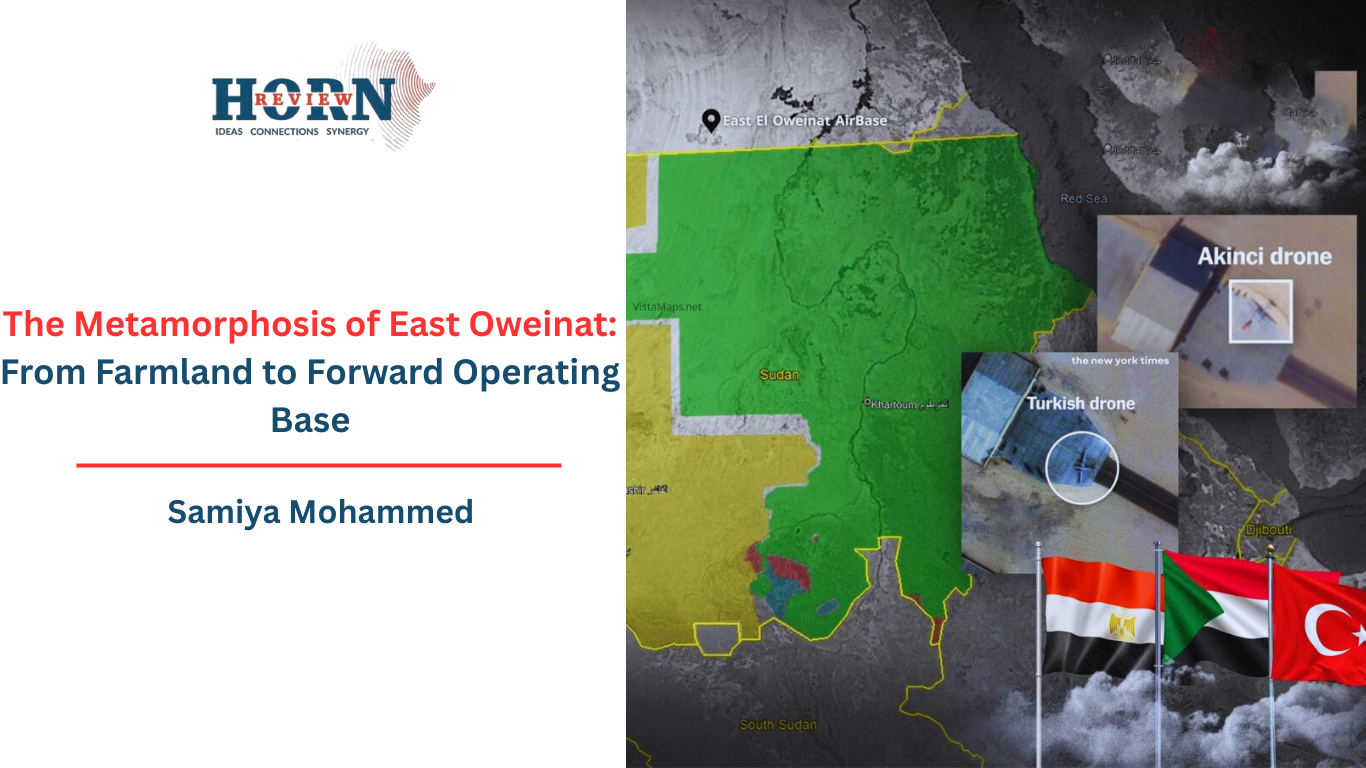
A recent investigative report by The New York Times has illuminated a crucial distension in the internationalization of the Sudanese conflict. The revelation of a secret Egyptian operated airbase at East Oweinat from which Turkish made Bayraktar Akinci drones are conducting strikes against the Rapid Support Forces is not an expose of covert operations. This arrangement peels back a single critical layer of a morass revealing a conflict where Sudan’s sovereignty is subordinate to the intersecting interests of regional powers pursuing objectives of strategic containment.
Egypt’s engagement in Sudan is an exercise in hydrological imperative and authoritarian machinations. Cairo’s posture is not discretionary but deterministic treating Sudan as a critical extension of its own national security planning where a buffer zone whose stability is synonymous with the integrity of Egypt’s Nile dependent political economy. The regime’s alignment with the Sudanese Armed Forces reflects a doctrinal preference for hierarchical institutionalized military structures that mirror its own. Egyptian interventions are calibrated not toward Sudanese sovereignty or democratic consolidation but toward the preservation of a compliant client in Khartoum a wall against hydrological revisionism, transnational instability and the erosion of its hegemonic influence along the Nile’s course.
The RSF’s military successes particularly the capture of El Fasher in Darfur and advances in Kordofan presented a direct threat to this vision crossing what the Egyptian presidency in December 2025 explicitly termed red lines. This area is not only sensitive but also rich in gold and crisscrossed with smuggling routes.
An RSF entrenchment there could empower non state actors, disrupt Egyptian economic interests and potentially alter the potent of Nile Basin politics. Therefore Egypt’s distention epitomized by the drone campaign from East Oweinat is a preemptive move to shape the battlefield. It is an effort to check RSF expansion, signal resolve to regional adversaries and ensure the survival of a partner in the SAF that mirrors Cairo’s own preference for militarized governance. This intervention is a wall against any scenario that might compromise Egyptian national security as defined in its most stringent terms.
The involvement of Turkish made advanced drones in this Egyptian led campaign introduces a layer of interest driven expediency that overrides historical animosities. Relations between Egypt and Turkey have been fraught for years by ideological differences stemming from Ankara’s support for the Muslim Brotherhood. However the potent in Sudan demonstrate that strategic necessity and economic opportunity can swiftly eclipse ideological divides. From Turkey’s perspective this situation presents a dual opportunity which is a lucrative arms sale and an expansion of influence.
Turkey’s defense industry with Baykar is at the forefront. The 2023 deal between Sudan and Baykar, worth approximately $120 million for TB2 drones established a contractual relationship. The subsequent use of the more advanced higher altitude Akinci drones with a unit cost around $25 million from Egyptian territory indicates a deepening of this military supply line whether directly to Egypt or through channels benefiting the SAF. While the Turkish government formally denies direct involvement in operational strikes the provision of such sophisticated hardware to a party in an active conflict is a form of intervention with clear battlefield effects.
However the context is political. Turkey’s drone diplomacy in Africa evident in its military base in Somalia and previous involvement in Libya is a tool for building alliances and countering the influence of its regional rivals. This presents a cunning play. It potentially allowsTurkey to profit from conflict, weaken a rival’s proxy and cultivate influence with Egypt which is a potential pathway to diplomatic normalization on Ankara’s terms all while maintaining a veneer of plausible deniability regarding operational conduct. This is a classic case of cash and clout overriding any consistent ideological commitment.
The convergence of Egyptian and Turkish interests in Sudan however tactical lays bare the hypocrisy at the heart of this external meddling. Both nations engage in rhetoric promoting regional stability and peaceful resolution. Yet their actions on the ground the establishment of covert forward operating bases and the funnelling of advanced weaponry into a war that has created the world’s largest displacement crisis are inherently escalatory. They are not investments in Sudanese peace they are investments in a preferred outcome that serves external agendas. The narrative of supporting the legitimate army loses moral force when that support prolongs a brutal war of attrition against a heavily armed force.
The human cost is rendered an externality in this arthimetic. Every Akinci drone sortie launched from the East Oweinat base a facility ironically carved out of an agricultural project presents not a step toward peace but an intensification of a conflict. The drones themselves become symbols of foreign prioritization. The New York Times report does more than reveal a secret base and it shows the core drivers of Sudan’s agony. Egypt’s intervention is a coldly move for hydrological security and regional dominance employing the tools of an authoritarian to shape its periphery. Turkey’s role is that of a leveraging its defense industry to gain economic and geopolitical advantage while sidestepping direct accountability.
Their collaboration however uneasy is built on a foundation of shared interests that deliberately exclude the welfare of the Sudanese. The war continues not because of an irresolvable internal schism alone but because it is actively fuelled and manipulated by external actors for whom Sudan or would the war be sustainable ? The image of drones flying from a converted desert airstrip over the sands of Darfur and Kordofan is a powerful metaphor for this reality from the skies, foreign technology enforces foreign designs while on the ground in part manufactured and sustained beyond their borders. Peace must begin with an unflinching acknowledgment of this and a demand for the cessation of this destructive, self-interested interference.
By Samiya Mohammed, Researcher, Horn Review