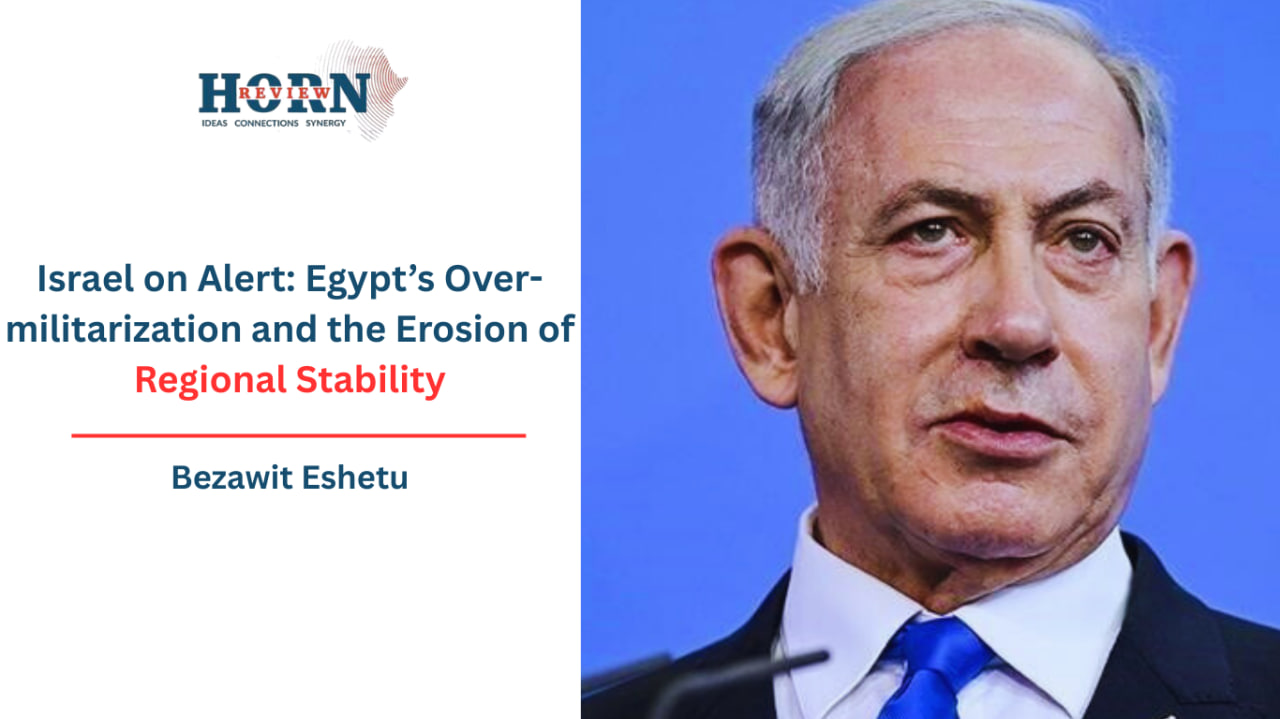
On 5 February 2026, Israeli Prime Minister Benjamin Netanyahu told a closed session of the Knesset Foreign Affairs and Defense Committee that the Egyptian army is getting stronger and we need to monitor it to prevent excessive buildup. This wording was intentional, but the underlying concern was clear. Netanyahu had given a similar warning in September 2025 when he asked U.S. Secretary of State, Marco Rubio to persuade Cairo to reverse runway extensions, underground facilities, and suspected missile storage sites in the Sinai. These repeated warnings highlight a longstanding Israeli security principle: the 1979 Camp David peace depends on a carefully managed imbalance. Any significant military improvement by Egypt, even with defensive justifications, is seen in Jerusalem as a gradual dismantling of the treaty’s demilitarized buffer.
The Sinai Peninsula is the most evident area of this tension. Annex I of the 1979 treaty limited Egyptian forces in Zone C, the area directly next to Israel, to lightly armed civil police. By early 2026, Israeli assessments showed nearly 40,000 troops permanently stationed throughout the peninsula, along with tanks, armored personnel carriers, and HQ-9B long-range air-defense systems in previously restricted zones. The expanded runways at Umm Khashiba and Rafid, along with stronger storage facilities and advanced radar systems, now enable monitoring of Israeli air activities deep in the Negev region.
Egypt claims these deployments are needed for counter-terrorism efforts and to address issues related to Gaza. Israel, however, views these changes as permanent replacements for temporary measures. What started as coordinated actions has evolved into a solidified approach, creating sensor networks and mobility corridors that remain long after the threats they claim to address. Every concession made by Israel leads to corresponding changes in Egypt, steadily diminishing the psychological barrier that has kept the border peaceful for many years.
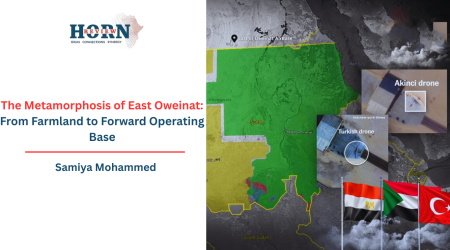
This pattern in Sinai is deeply linked to Cairo’s actions further south, where the same logic of layered deterrence against eastern threats has driven Egypt into overt over-militarization hundreds of kilometers from its own borders. In Sudan, Egypt has quietly shifted from diplomatic mediator to active covert participant. A New York Times investigation published, backed by satellite imagery, flight records, and interviews with Western and Arab officials, exposed a clandestine airbase at East Oweinat, hidden inside a vast agricultural reclamation project in Egypt’s Western Desert. From this base, Turkish-made Bayraktar Akinci drones have been striking Rapid Support Forces convoys inside Sudan for at least the past six months.
These operations deliver direct military support to the Sudanese Armed Forces and are calibrated to prevent Sudan’s fragmentation, a scenario that would rob Egypt of a compliant downstream partner in Nile-water negotiations. President Abdel Fattah el-Sisi presents the activity as necessary for regional stability and border security. In practice, however, it serves as a strategic safeguard against the Grand Ethiopian Renaissance Dam. Each setback imposed on the Rapid Support Forces helps keep Khartoum aligned on water issues and diplomatically isolates Ethiopia. This projection of force far beyond Egypt’s traditional defensive border forms the next link in a widening encirclement strategy, one that ultimately weakens the psychological and strategic buffer that has preserved the Egyptian-Israeli cold peace since 1979.
This strategy of encirclement reaches its most ambitious expression in the Horn of Africa, where Egypt has turned a nominal counter-terrorism mission into one of its largest overseas military commitments, a textbook example of the over-militarization that now defines Cairo’s regional posture. Following the August 2024 defense agreement with Somalia, Egypt pledged around 10,000 troops and advisers, officially to combat al-Shabaab as part of the African Union Support and Stabilization Mission. That scale surged sharply after Israel recognized Somaliland in late 2025.
Cairo saw the move, correctly, as the crystallization of an Israeli-Ethiopian axis that would give landlocked Ethiopia a Red Sea outlet, thereby reducing Addis Ababa’s dependence on Nile negotiations and stripping Egypt of its most powerful leverage over the Grand Ethiopian Renaissance Dam. By entrenching forces in Mogadishu, expanding influence in Djibouti and Eritrea, and prioritizing the survival of the Somali federal government, Egypt is not merely stabilizing the region. Instead, it is building a forward strategic barrier thousands of kilometers from its own borders to block Ethiopia’s maritime ambitions while simultaneously neutralizing Israeli footholds in the same landscape.
This excessive projection of power far beyond traditional defensive needs exemplifies Egypt’s over-militarization, transforming the Horn into a new proxy arena where any skirmish or naval incident could quickly threaten Red Sea shipping lanes on which Israel relies. Such overreach not only risks escalating regional tensions but also undermines long-term stability, as Egypt’s intrusive presence in the Horn disrupts local dynamics and invites broader conflicts that could spill over into neighboring areas.
For Israel, the risk lies in the weakening of deterrence. The Sinai buffer, once a solid guarantee against attacks, has turned into a contested area. Ongoing armored deployments and advanced radars shorten early-warning times and lessen the psychological barriers that have maintained border stability since 1979. Economic ties remain strong, as shown by the $35 billion Leviathan gas deal in December 2025, but economic interdependence without strategic trust is fragile. Jerusalem now faces the challenge of compensating measures: increasing border surveillance, boosting military superiority, or renewing diplomatic efforts to reinforce the agreements. Each of these options carries costs.
In the Horn of Africa, Egypt’s stance could turn an already unstable area into a fully militarized zone. Competing alliances, with the Cairo-Mogadishu coalition against the Jerusalem-Abu Dhabi partnership, risk sparking conflict or naval confrontations. The resulting chaos could raise migration pressures towards Europe, empower non-state actors, and place additional strain on already stretched counter-terrorism operations.
Globally, an over-militarized Egypt controlling the Suez Canal while facing perceived existential threats creates a structural risk. The canal typically handles around 12 percent of world trade; disruptions have shown how quickly rerouting costs can lead to inflation and supply chain issues. If Cairo ever decides to use this crucial route as leverage, whether in response to a water crisis or a Red Sea situation, the economic fallout would affect countries far and wide. The 1979 treaty, once a foundation of post-Cold War order, could become irrelevant, replaced by mutual suspicion, where peace is imposed rather than genuinely secured.
In conclusion, Egypt’s direction contradicts the common view of a status-quo player driven solely by defense. Fuelled by fears over water control from upstream and key maritime routes, Cairo has chosen to project power and expand its military strategies. The result is a steady, harmful normalization of rivalry that threatens security and prosperity for all involved, making them more dependent on the very imbalances the original treaty aimed to stabilize. Without renewed and credible commitments to transparency and shared interests, the region is likely to slide into ongoing conflict, where prevention hardens into constant vigilance and cold peace becomes increasingly colder.
By Bezawit Eshetu, Researcher, Horn Review