Duplicate Destinies?
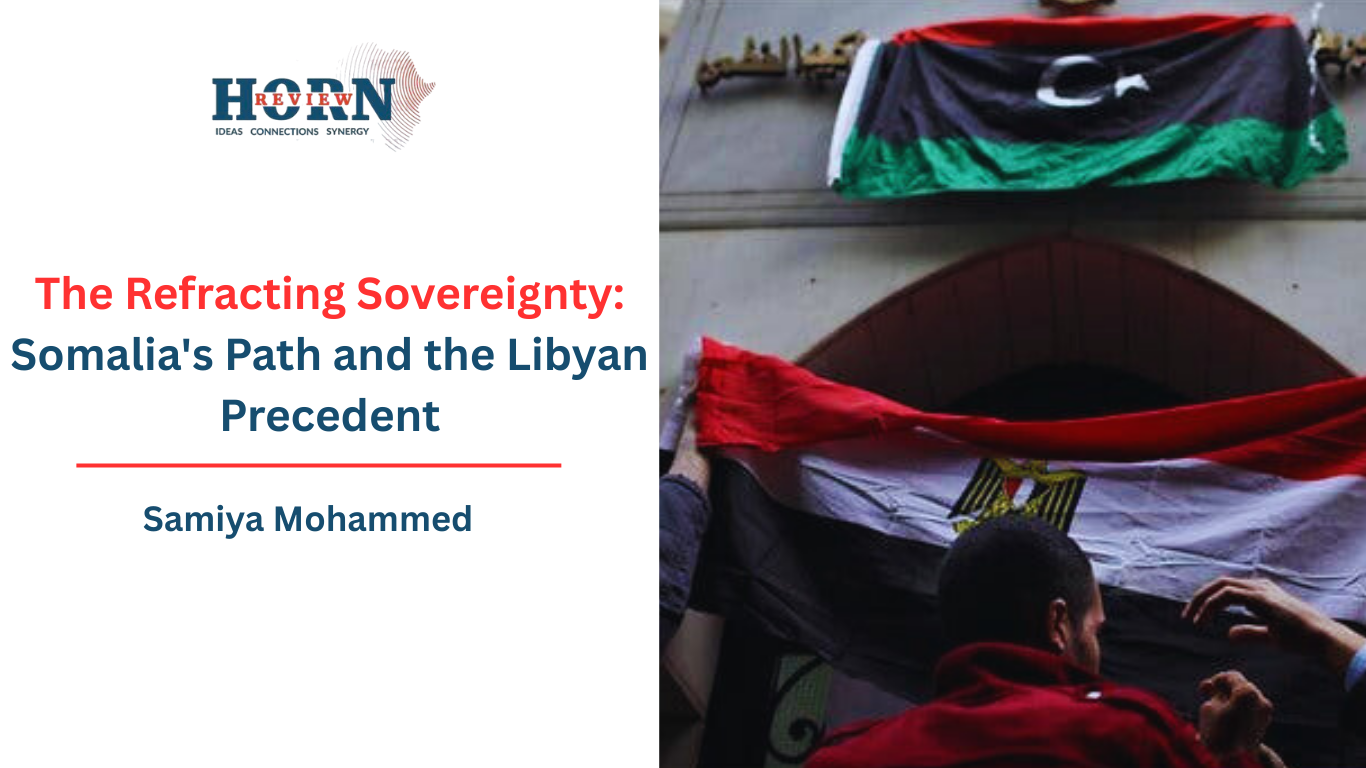
In response to Israel’s December 2025 recognition of Somaliland, State Minister for Foreign Affairs Ali Omar articulated an objective to establish a durable framework with Saudi Arabia and Egypt for Red Sea security directly countering what Mogadishu perceives as an existential threat to its unity. In seeking foreign patrons to reinforce sovereignty Somalia risks the very autonomy it aims to protect potentially entering a cycle of dependency where external agendas supersede local imperatives. This finds a cautionary parallel in the history of Libya where foreign intervention initially seen as supportive catalysed a state collapse that transformed the nation into arena for proxy competition. Somalia’s road toward the Saudi-Egypt axis may not be a path to durable integrity but a mirror reflecting Libya’s road of eroded sovereignty and instability.
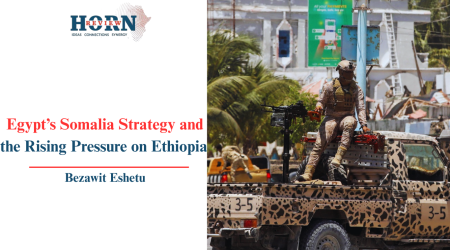
Egypt’s rapid military deployment to Somalia in January 2026 reportedly involving thousands of troops and advisors shows this alignment in action. While seen as support for Somalia’s unity and counterterrorism efforts Cairo’s motivations are linked to its own national security arithmetic centered on the Nile River and the Red Sea. By fortifying the Somali government Egypt aims to contain Ethiopian, maritime trade routes. Thus Somalia’s plea for support has been answered by a patron whose commitment is fundamentally conditioned by its own hegemonic interests in the Horn of Africa.
To comprehend the long term risks of Somalia’s strategy the case of Libya serves as analytical mirror. The 2011 NATO intervention authorized under the Responsibility to Protect doctrine to prevent a humanitarian catastrophe rapidly transcended its mandate. Evidence suggests the mission’s objective shifted decisively toward regime change culminating in the overthrow of Muammar Gaddafi and the deliberate destruction of the Libyan state’s institutional policy.
What followed were not liberation but disintegration and the proliferation of armed militias, the flooding of the region with weapons and the descent into a multi sided civil war that persists today.
The most pernicious outcome was Libya’s transformation into a coliseum for unchecked foreign interference and proxy conflict. This external patronage did not stabilize Libya however it institutionalized its fragmentation. Foreign backers prioritized the military fortunes of their local allies over a cohesive national peace process ensuring that the conflict remained intractable and the Libyan state remained a fiction. The principle of national sovereignty was utterly hollowed out as Libya’s territory, resources and political future became commodities to be bargained over in foreign capitals.
The parallel with Somalia’s current road is not one of identical circumstance but of structural similarity. In both cases a sovereign state facing internal fragility invites or accepts deep security partnerships with external powers to address an immediate threat. In Libya the threat was an internally generated civil war and in Somalia it is internal secessionism amplified by external recognition. In both instances the intervening partners possess compelling interests that align only partially and often temporarily with the stated goal of saving the host state. The danger lies in the transition from a supportive partnership to a relationship of dependency where the internal political and military dynamics of the state become subordinate to the geopolitical competition of its patrons.
Somalia’s engagement with the Saudi-Egypt axis risks forging precisely this dependency trap with consequences that could perpetuate the country’s fragmentation. The proposed durable framework for Red Sea security while promising short term military and diplomatic relief effectively outsources a core function of state the monopoly on legitimate force and the defense of territorial integrity to foreign actors. This outsourcing is not neutral and it comes with strings attached. For Egypt the primary return on its investment of troops and political capital is the containment of Ethiopia and the Nile waters. For Saudi Arabia the goal is to counter the influence of its regional rival secure the Bab el-Mandeb strait against Houthi forces in Yemen.
When the security priorities of Mogadishu diverge from those of Cairo or Riyadh Somalia’s government reliant on their support may find its autonomy constrained. Similarly counterterrorism operations against Al-Shabaab may be redirected or prioritized based on their relevance to securing Saudi maritime interests rather than on establishing comprehensive state authority across Somali territory.
This creates a perverse incentive structure that can perpetuate weakness. In the case of Somalia the result is not autonomy but a new form of subordination. The federal government may become more accountable to its foreign backers for its survival than to its own citizenry for effective governance. This undermines the long term project of building legitimate, capable and inclusive national institutions the only true foundation for defeating secessionism and extremism.
Furthermore, the involvement of multiple patrons with overlapping but distinct can import their geopolitical fissures into Somalia’s already composite federal politics. Different external powers may align with different Somali federal member states or political factions as seen with the UAE’s historic ties to certain regional authorities. This risks balkanizing Somalia’s political space, hardening internal divisions and making a cohesive national project even more elusive. The country risks becoming a mosaic of foreign influenced fiefdoms rather than a unified sovereign state an outcome disturbingly reminiscent of Libya’s.
Avoiding the Libyan fate requires a conscious recalibration of strategy however difficult. Somalia’s regional partners must recognize that a sustainable solution in the Horn of Africa cannot be engineered through external security guarantees that treat Somalia as a pawn in a larger game. The cornerstone of any effective policy must be commitment to a Somali owned political process.
Somalia’s pursuit of a Saudi-Egypt security axis is a rational tactic born of vulnerability. In its structure and implications, it reflects the very pattern that led to Libya’s disintegration a state trading sovereignty for survival in a deal brokered by powerful external actors with their own agendas. The historical record is clear. When foreign interventions prioritize competition over genuine local empowerment they do not resolve conflicts but they reconfigure and prolong them embedding dependency and fragmentation.
The irony for Somalia is that the quest to prevent one form of fragmentation. The erosion of national autonomy and the balkanization of political authority under the influence of competing patrons. Breaking this cycle demands a difficult but essential shift from a security paradigm based on external reliance to one centered on internal resilience. The stability of the Red Sea and the future of the Somali nation depend on learning the harsh lessons of Libya and choosing a different path.one where sovereignty is not a bargaining chip but the inviolable foundation of peace.
By Samiya Mohammed, Researcher, Horn Review