
23
Jan
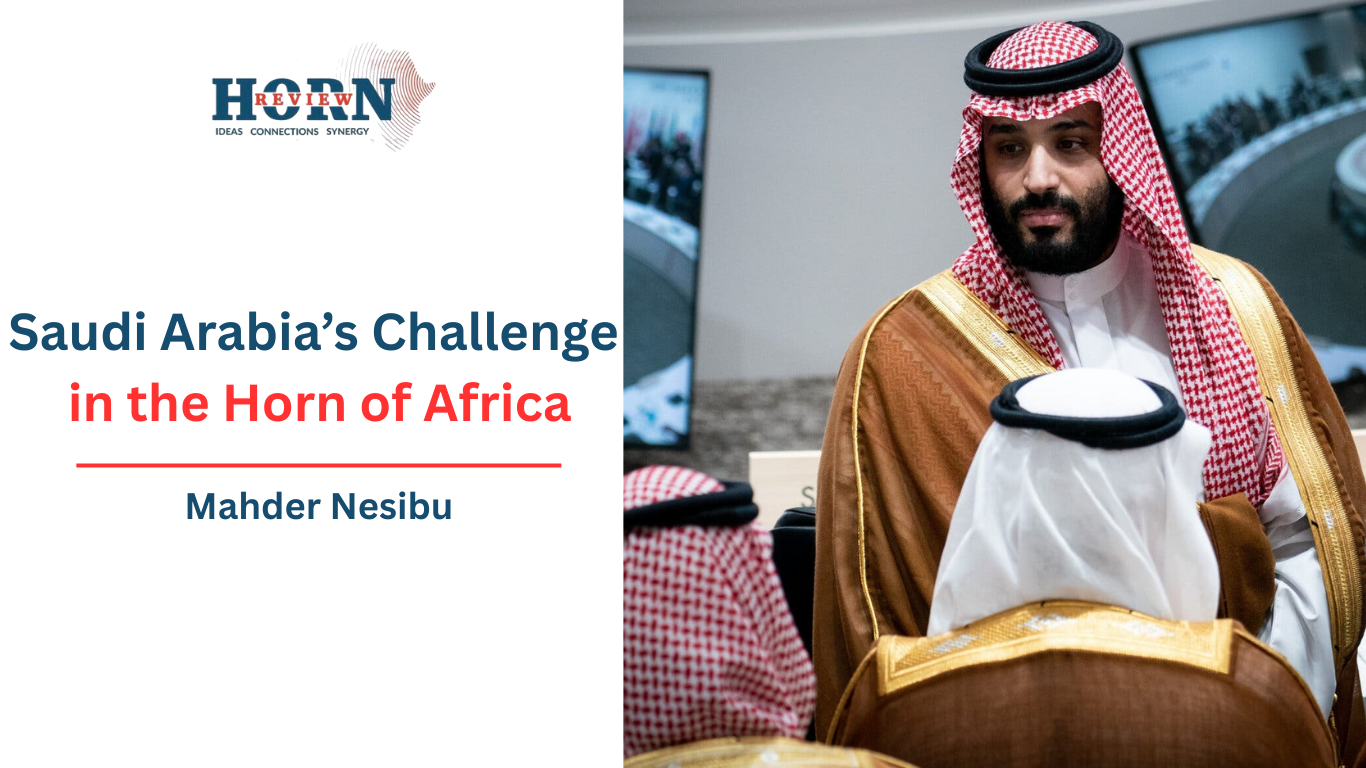
Saudi Arabia’s Challenge in the Horn of Africa
As Riyadh moves to curb the UAE’s influence, it appears to be gaining momentum across the Middle East. Replicating this effort in the Horn of Africa, however, presents a far more complex challenge.
The split between Saudi Arabia and the United Arab Emirates appears to have reached an unprecedented stage. What was previously the subject of debate and speculation has now developed into an open and visible rivalry. Abu Dhabi and Riyadh are no longer operating within a shared regional understanding, but appear to be moving toward an era of axis politics and bordering indirect confrontation. Each side is fostering alliances and extending its rivalry beyond the Middle East. This process has increasingly placed states along an emerging alignment spectrum. The rivalry has extended beyond the Arabian Peninsula and is now visible across wider regional theatres. Even outside the Middle East, the effects are evident, with powers such as India and Pakistan entering into differing political and strategic arrangements with the two monarchies.
Saudi Arabia’s position within this shifting environment reflects a departure from its earlier caution. Since the failure of its intervention in Yemen in 2014 to uproot the Houthis, Riyadh had adopted a reserved posture, relying on quiet diplomacy while other Middle Eastern powers expanded their regional presence. This approach has begun to shift as developments in Yemen sharpened Saudi threat perceptions. Riyadh’s decision to designate Yemen as a red line in response to Emirati activity set off a broader diplomatic reaction, opening an extensive front against the UAE’s long-standing influence across the region.
The rivalry is not confined to the Arabian Peninsula. Across Sudan, Somalia, and Yemen, Middle Eastern competition is increasingly visible. This is particularly significant given that the two most powerful Gulf states, and among the central middle powers within the Middle East–Horn of Africa security complex, are now in open confrontation. Developments within these arenas both shape and are shaped by wider Middle Eastern arrangements. Other regional actors have responded dynamically, signing military agreements, taking diplomatic positions, and engaging in negotiations that signal a shift toward bloc-oriented politics. Saudi Arabia appears to be rallying regional powers in its effort to curb what it views as the UAE’s expansive and destabilising foreign policy. Along the same lines, other Middle Eastern actors, including Turkiye and Israel, are adjusting their positions to protect their interests and extract advantage from the Gulf rivalry.
Over the past decade or so, the Horn of Africa has witnessed increased attention from the Middle East. Regional middle powers, driven by ambitions to expand influence and secure economic interests, have invested heavily in the region and established extensive political and security arrangements. This engagement has thus far been led primarily by the United Arab Emirates and, to a lesser extent, Saudi Arabia.
For the powers of the Middle East, the Horn’s significance is immense. Ethiopia, Somalia, Somaliland, Eritrea, and Djibouti all maintain relationships with Middle Eastern states, often granting favourable access to one actor amid competing interests from others. The region’s geopolitical relevance has increased sharply. Beyond questions of ideology and security, competition in the Horn is tied closely to economic influence, access to resources, and favourable commercial arrangements. Gulf states have sought opportunities linked to extractive industries such as gold, agriculture, ports, and logistics, areas where the Horn compensates for structural limitations in the Gulf.
Beyond Saudi Arabia and the UAE, other Middle Eastern actors have also placed growing attention on the region. Turkiye, Israel, Qatar, and Iran have all sought leverage in the Horn to preserve and expand their strategic positions. Influence is pursued through economic agreements, political partnerships, and security cooperation. Broader foreign policy objectives shape these engagements. Egypt’s approach to the Horn, for example, is driven by its rivalry with Ethiopia and its desire to apply pressure over the Nile issue.
Sudan’s descent into civil war has reinforced this pattern of competition. Saudi Arabia, the UAE, and a wide range of middle and global powers hold vested interests in the conflict’s outcome and in Sudan’s future political configuration. Across the Horn, middle powers operate within overlapping areas of cooperation and competition. In some cases, interests diverge sharply. In others, ideological divides, including disputes over political Islam, create fractures even within nominal alliances. Riyadh’s actions in Yemen were widely understood as a direct move against Emirati activity. Having previously avoided decisive confrontation, Saudi Arabia reacted forcefully to developments surrounding the STC and drew a clear red line against moves threatening its interests in the neighbouring country. Saudi policy has continued to prioritise Yemeni unity through the integration of competing political and armed groups, placing it at odds with Emirati preferences.
The rift, however, extends beyond Yemen as a single theatre. The UAE has maintained an extensive foreign policy presence across the wider region, with particular visibility in the Horn of Africa. Its footprint is evident in Somaliland, in its reported backing of the Rapid Support Forces in Sudan, and in its economic reach across Kenya, Uganda, South Sudan, and beyond. Ethiopia is also widely understood to be a key Emirati partner. Recent developments surrounding Somaliland further illustrate the scope of Emirati engagement. The de facto state was recently recognised by Israel, prompting a sharp reaction from Somalia’s federal government. Mogadishu accused Abu Dhabi of undermining its sovereignty and proceeded to cut ties with the UAE altogether. This episode occurred within a broader pattern of reaction.
Despite Mogadishu’s reaction and setbacks in Yemen and growing scrutiny over its role in Sudan, the UAE’s long-cultivated influence across the Horn remains intact.
Saudi Arabia has now adopted a more assertive foreign policy direction. The period of restraint that followed its Yemen intervention appears to have ended. Through an extensive diplomatic campaign, Riyadh is moving to weaken the UAE’s regional standing. This effort has contributed to a rapid shift in Middle Eastern geopolitics. After defeating the Emirati-backed STC in Yemen, Saudi Arabia moved to court Egypt, Turkiye, and Pakistan. While their interests diverge extensively, these actors have aligned around concerns regarding Emirati behaviour. Within the Middle East, the UAE appears increasingly constrained as major powers converge around efforts to limit its influence.
Countering Abu Dhabi in the Horn of Africa presents a more difficult challenge. Emirati engagement in the region is long-standing and deeply embedded. The UAE’s material presence and political networks in the Horn exceed those of other Middle Eastern actors. Its foreign policy has shaped dense and overlapping interests that cannot be easily displaced.
Riyadh appears to lack comparable depth. Saudi Arabia’s broader axis places its middle eastern partners with Horn actors such as Eritrea, Somalia, and the Sudanese Armed Forces (SAF). Its influence in the Horn rests on a loose set of partnerships formed largely in response to regional crises. Saudi partners pursue independent and interest-based engagements, and their reach lacks the durability of Emirati networks. Interests among Saudi Arabia, Turkiye, and Egypt frequently diverge, making the formation of a coherent counterweight difficult. The Saudi alliance structure in the Horn remains fragile and internally contradictory.
Sudan presents a particularly unstable partner. The SAF functions as a state-like structure engaged in a civil war against a capable rival force. It has struggled to consolidate control, while its opponent has secured battlefield gains that cast doubt on the SAF’s capacity to stabilise the country. Somalia, on the other hand, is home to chronic instability. The federal government claims sovereignty over Somaliland without exercising any control. Beyond this dispute, it struggles to assert authority across much of the country. Recent al-Shabab gains have further undermined confidence in federal governance, while autonomous regions increasingly act independently.
Notably, the UAE maintains close relations with Somaliland, controls the port of Berbera, and is part and parcel of Somaliland’s movement toward wider international recognition, a trajectory that increasingly contrasts with Somalia’s uncertain stability.
Eritrea represents a limited and unreliable partner. Its foreign policy is highly militarised and transactional, often fostering regional tensions to advance narrow objectives. Eritrea’s shifting loyalties are well documented. It maintains ties with Iran and had previously aligned with the UAE, which operated a military base in Assab until 2021. These dynamics raise questions about Saudi Arabia’s ability to rely on Eritrea as a partner in a regional order.
Beyond its existing partners lies the question of Ethiopia. Any serious attempt by Saudi Arabia to counter Emirati influence in the Horn requires cooperation with Addis Ababa. Ethiopia occupies a central position in the region and has become increasingly important to Gulf economic ambitions. Ethiopia’s relations with Gulf monarchies appear to be carefully managed. Both Saudi Arabia and the UAE have pursued engagement with the country, and Addis Ababa for its part, has balanced relations with rival Middle Eastern states, though within the Gulf it appears to have tilted toward the UAE. Abu Dhabi now stands as a primary strategic partner, while Turkiye also maintains a significant relationship.
Although Saudi–Ethiopian relations remain relevant, Emirati engagement is more extensive and strategic. Saudi interaction is largely economic, while the UAE–Ethiopia partnership extends into political and security domains. This raises a central dilemma for Riyadh. Ethiopia’s partnerships are shaped by its own priorities, including managing pressure from Egypt, a Saudi ally. Under these conditions, Saudi Arabia’s ability to draw Ethiopia away from the UAE appears limited.
Riyadh has moved decisively to challenge Emirati influence across the Middle East, finding broad, if uneven, support among regional powers to constrain Abu Dhabi’s reach. The Horn of Africa, increasingly integrated into a wider Middle East–Horn security complex, has become a critical theatre of this rivalry. Yet the UAE’s entrenched presence, combined with the Horn’s structural volatility, renders Saudi Arabia’s task exceptionally difficult and strategically uncertain.
By Mahder Nesibu, Researcher, Horn Review

RELATED
Posts
26
Mar
Could Iran's Proxy Model Reach the Sahel?
Recently It looks like the Sahel has graduated from a...
23
Mar
How the Israel–Iran War Is Reshaping Sudan’s Conflict
The launch of Operation Epic Fury on February 28,...
23
Mar
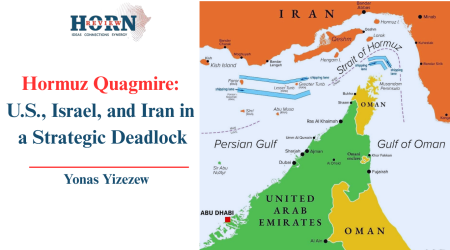
Hormuz Quagmire: U.S., Israel, and Iran in a Strategic Deadlock
The current U.S.–Israel–Iran war has crystallized around the Strait of...
23
Mar
Ports of Last Resort: Lamu Port and the New Logic of Redundancy in the Indian Ocean
On March 18, 2026, the Grande Florida, a car...
23
Mar
From Air Superiority to Digital Leash: The Evolution of Fighter Jets and the New Logic of Control
The history of fighter jets is a quite astonishing ride...

18
Mar
The Architecture of State Survival, Security and Power
Intelligence can move ahead of military power in ways that...
17
Mar
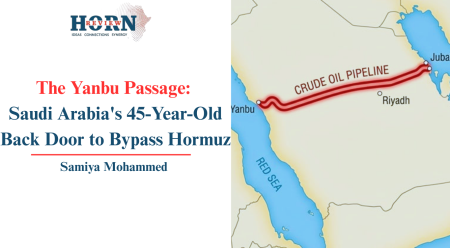
The Yanbu Passage: Saudi Arabia's 45-Year-Old Back Door to Bypass Hormuz
Can the Horn of Africa Shoulder the Weight of...
17
Mar
Why Pakistan Won’t Fight Iran for Saudi Arabia
As tensions between Iran and several Middle Eastern states continue...
16
Mar
Israel’s Seven Front War and The Future of Regional Power
The geopolitical map of the Middle East was remade in...