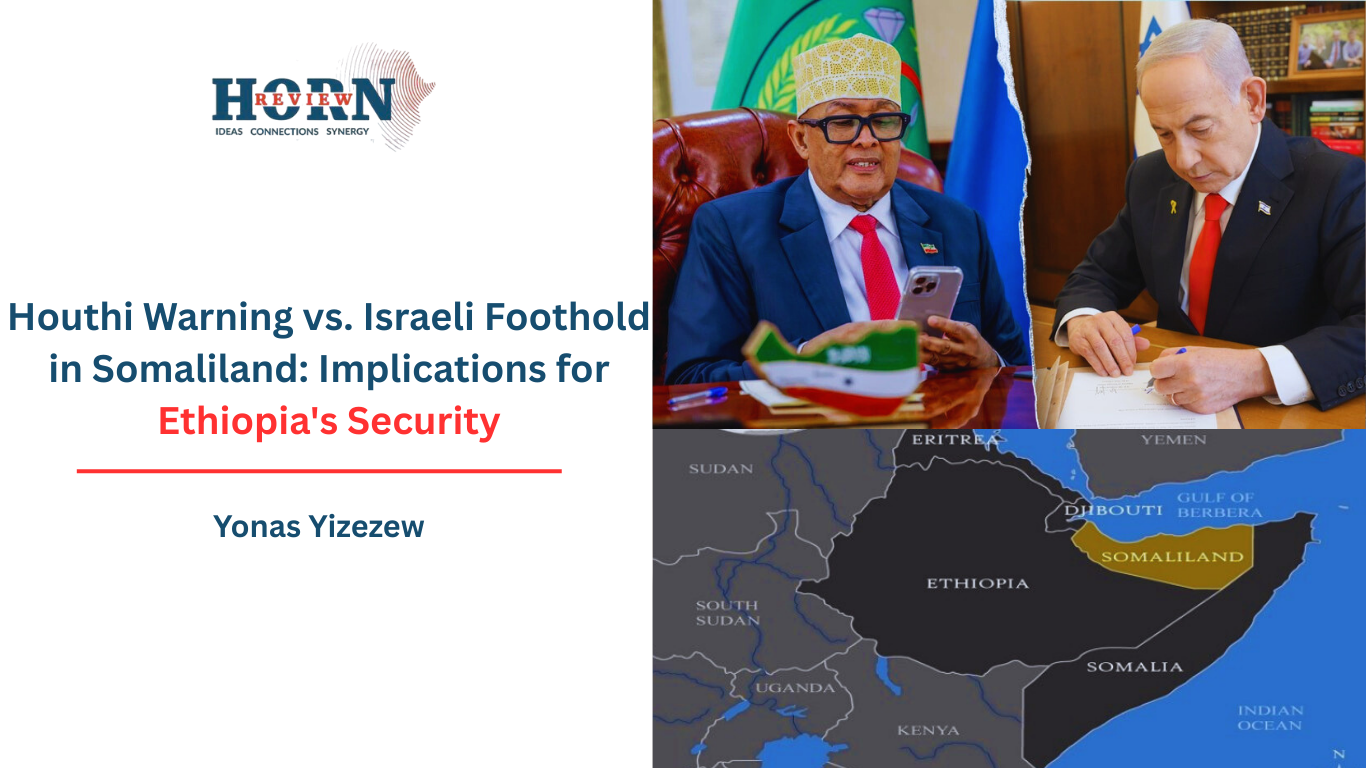
The recent warning issued by Abdul-Malik al-Houthi, the leader of Yemen’s Houthi movement, that any Israeli presence in Somaliland would constitute a legitimate military target has thrust the Horn of Africa into a new vortex of geopolitical tension. This statement, came just days after Israel’s unprecedented recognition of Somaliland as an independent state on December 26, 2025, marking the first such diplomatic move by any nation since Somaliland’s self-declared independence from Somalia in 1991.
Israel’s decision, announced by Prime Minister Benjamin Netanyahu, was framed as a strategic alignment to bolster security in the Red Sea basin, where Houthi attacks on shipping lanes have disrupted global trade routes since late 2023. The Houthis, backed by Iran, have positioned themselves as defenders of Palestinian causes and opponents of Israeli influence, extending their reach beyond Yemen’s borders through drone strikes, missile launches, and maritime interdictions. Al-Houthi’s threat explicitly ties Israel’s Somaliland policy to broader regional interventions, accusing Israel of undermining Somali and Yemeni sovereignty while aiming to establish military footholds in the Gulf of Aden.
This escalation demonstrates a deepening interplay of proxy conflicts, resource rivalries, and great-power maneuvering in one of the world’s most volatile chokepoints. To understand the depth of this geopolitical maneuver, one must first contextualize Somaliland’s position. Situated on the southern shore of the Gulf of Aden, Somaliland controls the strategic port of Berbera, which overlooks the Bab al-Mandab Strait—a narrow waterway through which nearly 12% of global trade, including vital oil shipments, passes annually. Unlike chaotic Somalia to its south, Somaliland has maintained relative stability, democratic elections, and economic partnerships, yet it remains unrecognized by the international community. Israel’s recognition breaks this stasis, promising full diplomatic relations, intelligence cooperation, and potential military ties.
This move aligns with Israel’s broader “periphery doctrine,” revived in recent years to counter Iranian encirclement by forging alliances with non-Arab states or entities on the fringes of the Middle East. In the Horn of Africa, this doctrine manifests as a counterweight to Iran’s proxy network, which includes the Houthis in Yemen and, increasingly, ties to Somali militant groups like Al-Shabaab. Israel’s intelligence-sharing and technological prowess could enhance Somaliland’s defenses against piracy and terrorism, while providing Israel with a vantage point to monitor Houthi activities across the strait.
The Israeli Foreign Minister’s visit to Somaliland, further solidified this bond, amid protests from Somalia, which decried it as a violation of its sovereignty. The Houthi warning amplifies these dynamics by injecting a direct threat of an attack. The Houthis, formally known as Ansar Allah, control much of northern Yemen, including the capital Sanaa, and have developed sophisticated asymmetric warfare capabilities with Iranian support. Since October 2023, they have launched hundreds of attacks on commercial vessels in the Red Sea, using anti-ship missiles, drones, and hijackings to protest Israel’s actions in Gaza. Their arsenal, bolstered by smuggled Iranian components, allows strikes up to 2,000 kilometers away, potentially reaching Somaliland’s coastline.
Al-Houthi’s declaration frames Israeli presence—whether diplomatic outposts, military advisors, or economic investments—as an extension of hostility against Yemen and Somalia, warning of “grave consequences.” This rhetoric is not mere bluster; the Houthis have previously targeted Saudi and Emirati assets in the region, and their alliance with Al-Shabaab could facilitate cross-border operations, turning Somaliland into a proxy battlefield.
Israel’s Somaliland gambit thus risks provoking an escalation, where Houthi strikes could target Berbera port or Israeli-linked vessels, further destabilizing the waterway and drawing in coalition forces. Geopolitically, this episode reshapes alliances across the Red Sea basin, pitting Iran-aligned actors against a nascent Israel-Somaliland axis supported by tacit Gulf approvals.
The United Arab Emirates, which operates Berbera port through DP World, has invested heavily in Somaliland’s infrastructure. Saudi Arabia, while having de-escalated its confrontation with the Houthis as part of a broader effort to concentrate on its domestic transformation agenda, nonetheless shares Israel’s concerns regarding Houthi threats, shaped by its direct experience of missile and drone attacks during the Yemen war. Egypt, however, views Israel’s move as a threat multiplier that could complicate its efforts to contain Ethiopia, exacerbating tensions over the Grand Ethiopian Renaissance Dam (GERD) on the Nile, where water security increasingly intersects with Red Sea rivalries. Cairo is concerned that an empowered Somaliland, backed by Israel, could embolden Ethiopia—Somaliland’s key partner in regional disputes.
Ethiopia’s security is deeply intertwined with this dynamic due to its geographic position, economic interactions, its regional calculus and existing ties to Somaliland. As Africa’s second-most populous nation and a landlocked giant, Ethiopia has long sought a sovereign and reliable sea access to fuel its economic ambitions. In January 2024, Ethiopia inked a Memorandum of Understanding (MoU) with Somaliland, granting Addis Ababa a coastline for a naval base and commercial port in exchange for potential recognition of Somaliland’s independence. This deal ignited fury in Mogadishu, even though de-escalated through the Ankara Declaration, it led to the creation of anti-Ethiopia alliance with Egypt and Eritrea, while Al-Shabaab exploited the chaos to launch attacks,
Ethiopia’s strategic position faces acute escalation risks from Houthi threats against Israel’s Somaliland recognition, centered on Berbera port and the shared border, requiring a rapid threat assessment before countermeasures. Immediate dangers include Houthi missile overflights, Al-Shabaab cross-border probes with the support of the Houthis, and Somalia’s desperate moves.
On the security front, the Houthis’ warning heightens the specter of transnational jihadism; their reported alliance with Al-Shabaab, facilitated by shared anti-Israel ideology, threatens Ethiopia’s borders, where Addis Ababa has deployed troops under the African Union mission in Somalia. This coordination (already emerging) might target Ethiopian interests in Somalia or along borders.
Partnership with Israel could provide Ethiopia with advanced intelligence, drone technology, and training to combat shared threats like Al-Shabaab. This bolsters border security and joint counterterrorism efforts, as Ethiopia and Somaliland have collaborated against extremism for years. The alignment would then become a matter of necessity. However, alignment with Israel might alienate Ethiopia from Turkey and Somalia, who see this as a threat to Red Sea control and sovereignty violation. Ethiopia should leverage its regional anchor status (as a major Horn player with influence in IGAD, the AU, and bilateral ties) and strong diplomatic capacity to maintain equilibrium. Ethiopia has vital stakes in the stability and sovereignty of the Horn of Africa. It is deeply concerned by any engagements that risk escalating tensions, provoking proxy conflicts, or undermining established regional frameworks. The Red Sea and Gulf of Aden are shared lifelines for millions—disruptions there directly threaten Ethiopia’s economic security and the broader region’s peace. For Somaliland, Israel’s backing offers a pathway to de facto legitimacy, potentially encouraging other nations, but it also paints a target on its back, inviting Houthi or Somali reprisals.
Ultimately, this crisis reveals the fragility of Horn of Africa stability, where colonial legacies, resource scarcities, and external interventions converge. Israel’s bold stroke may secure short-term gains against Iran, but the Houthi response threatens a cascade of violence, compelling Ethiopia to navigate between opportunity and peril in a region where every alliance carries the weight of potential escalation. With Israeli diplomats embedding in Hargeisa and Houthi drones buzzing the strait, the stage is set for a pivotal realignment—one that could either fortify or fracture the fragile peace in this strategic crossroads.
By Yonas Yizezew, Researcher, Horn Review