
7
Jan
Cohesion and Liberal Fractures in the Horn of Africa’s Strategic Schism
The global order has transitioned from the unipolar dominance of the United States in the post-Cold War era to a fragmented multipolar reality by early 2026, driven by the erosion of liberal institutions, the solidification of authoritarian alliances, and profound divisions within democratic blocs that render them increasingly ineffective. This shift marks a profound departure from the optimism of the 1990s, when one hegemony promised perpetual stability through rules-based multilateralism, to a security-centric landscape where great-power rivalries, hybrid threats, and economic coercions redefine sovereignty and power projection. Authoritarian states have coalesced into a formidable axis, pooling military technologies, evading sanctions, and promoting revisionist narratives, while democracies grapple with internal polarization and alliance fatigue, classifying them as reactive rather than resolute actors in this competitive realism.
In the aftermath of the Cold War, the United States stood as the unchallenged architect of international affairs, leveraging its military supremacy, economic might, and ideational appeal to embed liberal norms across global institutions. The United Nations Security Council, NATO’s eastward expansion, and Bretton Woods financial architecture facilitated a unipolar moment where interventions from the Gulf War to Balkan peacekeeping reinforced America’s role as global guarantor, underwriting open seas, stable markets, and democratic transitions. Globalization intertwined economies under Washington-led rules, with China’s integration into the WTO in 2001 seemingly affirming the triumph of markets over Marxism.
Despite its apparent dominance, the post-Cold War architecture contained the seeds of its own institutional erosion. The 1997 Asian financial crisis first signaled the volatility of unregulated global capital, while 9/11 demonstrated that even absolute military superiority is insufficient against decentralized, non-state threats. By the 2010s, this “unipolar moment” gave way to systemic paralysis. The rise of Russian assertiveness and Chinese mercantilism challenged Western hegemony, while the international community’s inability to address conflicts in Syria, Libya, and Ukraine exposed the veto-locked obsolescence of collective security frameworks. Ultimately, the perception of the global order shifted from a universal ideal to a perceived instrument of Western privilege, prompting rising powers to demand a more polyarchic and transactional reality.
The acceleration arrived with Donald Trump’s reelection and second term, embodying what Eurasia Group’s Ian Bremmer terms the “U.S. Political Revolution” the top risk for 2026, characterized by executive consolidation, multilateral disengagement, and a revived Monroe Doctrine that prioritizes hemispheric security over global stewardship. This manifests starkly in the early January 2026 U.S. capture of Venezuelan leader Nicolás Maduro through “Operation Absolute Resolve,” a precision operation that dismantled a key proxy hub for adversarial influences in Latin America, disrupting illicit networks and reasserting dominance in Washington’s traditional backyard.
Such moves signal a selective interventionism: robust defense of core interests while retreating from peripheral commitments, creating power vacuums in Europe, the Middle East, and Asia that embolden challengers. Persistent conflicts, unresolved wars, nuclear brinkmanship, and territorial grabs further delegitimize the UN and NATO, pushing states toward self-reliant postures and ad hoc minilaterals like AUKUS or the Quad, where broad consensus proves elusive amid burden-sharing disputes.
Authoritarian regimes have masterfully exploited this void, forging an “Axis of Authoritarianism” that transcends opportunistic ties to become a resilient counter-order, united by shared rejection of liberal hegemony and pragmatic synergies in survival strategies. This coalition demonstrates extraordinary adaptability, evolving bilateral exchanges into multilateral bulwarks: military pacts enable seamless arms flows and joint exercises, economic circuits bypass SWIFT via alternative payments, and technological collaborations accelerate parity in drones, hypersonics, and surveillance.commodity barter, and industrial offshoring insulate against sanctions, sustaining wartime economies and projecting an image of inexorable momentum.
Ideologically minimalist, the bloc appeals to sovereignty absolutists worldwide, offering no-strings patronage that contrasts with Western conditionality, thereby expanding influence through forums that dilute veto powers and normalize coercive diplomacy. Hybrid tactics cyber intrusions, disinformation campaigns, migrant weaponization blur conflict thresholds, allowing low-cost attrition that exhausts open societies without inviting retaliation. This axis not only endures encirclement but proactively reshapes norms, institutionalizing multipolarity around exclusive spheres where might supplants right.
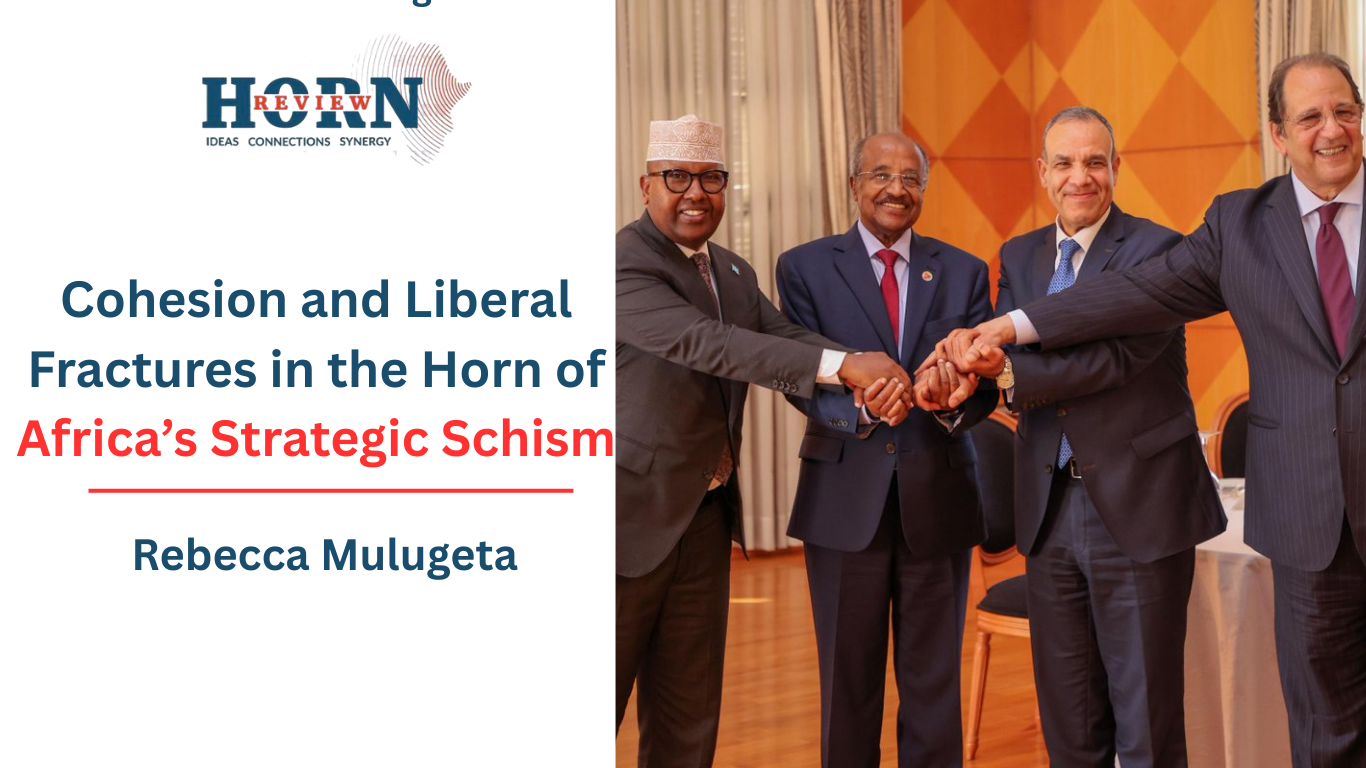
In the Horn of Africa, authoritarian regimes exemplify convergence through strategic alliances like the 2024 trilateral summit in Asmara between Egypt’s President Abdel Fattah el-Sisi, Eritrea’s President Isaias Afwerki, and Somalia’s President Hassan Sheikh Mohamud, who formalized cooperation via a joint committee of foreign ministers to enhance security. These leaders, presiding over systems marked by centralized power, military dominance, and limited political pluralism, aligned to bolster military ties, intelligence sharing, and Somali state institutions against perceived aggressors, demonstrating how autocrats unite for geopolitical leverage. In contrast, liberalization processes have fueled fragmentation, as seen in Somalia’s post-2024 shifts under Mohamud’s more inclusive governance experiments, Egypt’s selective economic openings clashing with Nile disputes, and Eritrea’s rigid isolationism cracking under alliance pressures, leading to internal divisions, proxy tensions, and weakened cohesion rather than sustained reform.
authoritarian regimes and their superpower backers have converged strategically for security and influence, as seen in the post-Cold War axis supporting Eritrea and Somali federal states against Iranian and Qatari proxies, exemplified by having military bases and joint operations to secure Red Sea shipping lanes against Houthi threats, while some countries bolsters Egypt’s military with arms sales and Wagner-linked mercenaries in Sudan to counter Western sway. Conversely, liberalization has bred fragmentation among pro-Western or reformist actors, evident in the splintering of US-supported Somali factions post-2022 elections, Turkey’s faltering Ankara-Mogadishu ties amid clan rivalries, and EU-backed peace processes in Sudan unraveling into civil war as democratizing impulses clashed with entrenched elites, leaving liberals isolated while authoritarians consolidate via Gulf and Russian lifelines.
Modern democracies are currently navigating a crisis of internal fragmentation, rendering them increasingly compromised in the face of long-term, bloc-scale competition. The erosion of domestic policy coherence driven by populist-induced gridlock over defense and trade has transformed once-solid alliances into platforms for mutual recrimination. This systemic short-termism, fueled by the electoral volatility of 2026, prioritizes domestic pandering over credible deterrence, while the internal decay of rule-of-law standards undermines the moral authority required to lead global coalitions. Even as neutral states adopt comprehensive security frameworks to counter hybrid threats, these actions often serve as a hedge against democratic disunity rather than a signal of strength. Ultimately, the inability of democratic systems to transcend internal tribalism has created a strategic vacuum, inviting adversarial exploitation of their structural indecision.
Resource gaps widen underinvestment in cutting-edge capabilities cedes initiative to state-directed innovation, while open societies prove porous to subversion. Democracies thus operate as a loose network prone to free-riding and defection, their pluralism a liability in velocity-driven contests where centralized adversaries pivot unencumbered. Technological and economic domains intensify this disequilibrium, elevating security to encompass digital, supply-chain, and cognitive battlefields that fragment the old interdependence model.
In the current landscape, economic interdependence has been weaponized, transforming critical mineral supply chains and semiconductor access into primary instruments of embargo warfare. This shift is forcing a bifurcation of global trade: authoritarian blocs are retreating into autarkic, closed-loop systems, while traditional powers struggle to secure vulnerable, globalized networks. As financial architectures are increasingly militarized, the global south is moving toward parallel settlement systems to bypass dollar hegemony, fueled by an energy transition that has traded oil dependency for rare-earth coercion.
Consequently, regional stability is being replaced by hardened spheres of influence where naval exclusion zones and fortified corridors are the new norms. In this era of “gray-zone” encroachments and calibrated escalation, the Global South has emerged as the ultimate strategic arbiter. By leveraging infrastructure megaprojects and prioritizing transactional pragmatism over ideological alignment, these nations are successfully arbitraging competing bids from great powers to secure their own sovereign interest
As we move into 2026, the global landscape is defined by controlled disorder, a state of permanent volatility where the primary objective is managing risk rather than seeking total stability. This environment is characterized by systemic fragilities from the threat of cyber-physical collapses to the potential for fiscal contagion demanding a pivot toward total resilience. It is needed to integrate public and private sectors to harden national defenses, mitigate supply chain vulnerabilities through strategic friend-shoring, and replace rigid alliances with agile, minilateral lattices. Ultimately, leadership in this fragmented era will be won by those who move beyond ideological rhetoric to deliver tangible, value-based outcomes for the Global South, turning institutional rupture into a platform for strategic dominance.
In the current landscape, the Red Sea has transitioned from a shared global commons into a primary theater of fragmented sovereignty, where the Gulf states have effectively replaced international legal frameworks with their own autonomous security architectures. As the influence of the international organizations wanes, incapable of addressing the “veto-locked” instability, middle powers like Saudi Arabia and the UAE have emerged as the region’s de facto security providers, prioritizing transactional, maritime-centered alliances over rigid multilateralism. This “self-rule” is manifest in the proliferation of dual-use logistical hubs and “security-for-access” deals, such as the Israel-Somaliland diplomatic realignment and the Saudi-led Red Sea Council, which prioritize the containment of rivals like Iran and Turkey over universal norms. Ultimately, the region is no longer governed by the collective ideals of the post-Cold War era but by a realist disequilibrium where power is projected through the control of strategic corridors and the “militarization of the political marketplace.
We are transitioning from the era of global liberal convergence into a period of strategic realignment where national security dictates economic and social policy. In this new landscape, the survival of the state depends on its ability to achieve operational resilience balancing technological innovation with the hardening of domestic systems against external shocks. Success will not be determined by ideological purity, but by the agility of hybrid governance models that can navigate a fragmented, polyarchic world where influence is exerted through cognitive and supply-chain dependencies rather than traditional warfare. Ultimately, the future belongs to those who replace complacency with a vigilant, security-first posture, transforming systemic disruption into a competitive advantage to build a new, durable order.
By Rebecca Mulugeta, Researcher, Horn Review

RELATED
Posts
17
Mar
Reassessing Egypt’s Myth of Regional Leadership
In the unstable landscape of the Middle East and North...
17
Mar
The Profits of Collapse: Sudan’s Civil War and the Rise of an Industrial Narco-Economy
This analysis examines how the ongoing conflict in Sudan is...
16
Mar
The Radicalization Arcade: The Brotherhood at the Border
Why the Muslim Brotherhood's Control of Sudan's Military Is...
16
Mar
The Profits of Collapse: Sudan’s Civil War and the Rise of an Industrial Narco- Economy
This analysis is based on the landmark report released by...
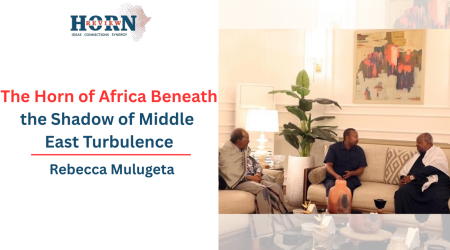
13
Mar
The Horn of Africa Beneath the Shadow of Middle East Turbulence
The Horn of Africa has officially evolved from a silent...
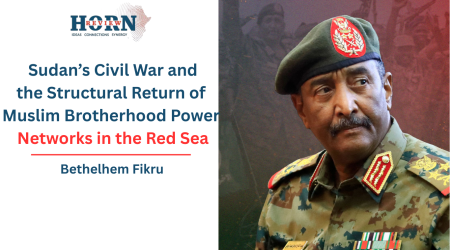
13
Mar
Sudan’s Civil War and the Structural Return of Muslim Brotherhood Power Networks in the Red Sea
Sudan’s current foreign alignment reflects the structural imperatives imposed by...

13
Mar
South Sudan’s Violence and The Strategic Unraveling of The Horn
For decades, the Horn of Africa has been defined as...
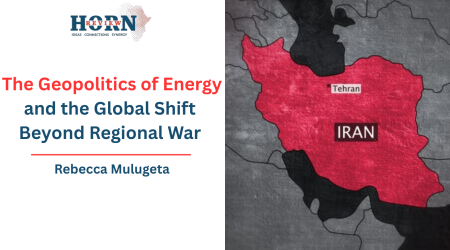
13
Mar
The Geopolitics of Energy and the Global Shift Beyond Regional War
Many scholars ask that, Do current U.S. strategic maneuvers from...
12
Mar
The Asymmetry Problem: Egypt’s Quiet Dependency Crisis
Regional Power, Structural Weakness
From a distance Egypt appears structurally...
12
Mar
Iran, SAF, & Eritrea: The Shadow Alliance Threatening Red Sea Security
The intensifying confrontation between Iran and Gulf states, the ongoing...