The Middle East is undergoing a phase of intensified diplomatic engagement unfolding alongside unresolved conflicts and intersecting regional interests. Senior officials from multiple capitals have been engaged in consultations as developments in Yemen, Sudan, and the Horn of Africa increasingly inform one another. Political and security dynamics along both shores of the Gulf of Aden are evolving in ways shaped largely by Middle Eastern calculations, with tangible implications for political trajectories in the Horn.
Recent diplomatic activity offers an entry point into this pattern. Saudi Arabia’s foreign minister Faisal bin Farhan held meetings in Cairo with President Abdel Fattah al-Sisi, while Somalia’s foreign minister travelled earlier to Riyadh for consultations. These engagements coincided with two developments that have carried broader regional significance. In Yemen, the Southern Transitional Council’s recent military advance reshaped internal alignments and exposed fractures within the Saudi-led coalition. Across the Gulf of Aden, Israel’s decision to extend state recognition to Somaliland introduced a new variable into an already crowded diplomatic landscape. Though unfolding in separate theatres, both developments are now read through a shared strategic frame linking Red Sea security, Gulf rivalries, and the Horn of Africa.
The Southern Transitional Council has consolidated its position as a central actor in Yemen’s south through expanded territorial control and secessionist ambitions. Initially incorporated into the Saudi-led coalition as a partner against the Houthis, the STC has long articulated a project centred on re-establishing a southern Yemeni state resembling the pre-1990 order. Its recent offensive accelerated this trajectory, shifting the internal balance within the anti-Houthi camp and compelling external sponsors to reassess their posture.
Saudi Arabia’s response combined political signalling with operational engagement. Riyadh publicly criticised the STC’s advance and militarily backed forces aligned with the Presidential Leadership Council in efforts to regain territorial control. This approach reflected Saudi calculations shaped by the broader arc of the Yemen war. The Kingdom continues to operate within a complex security environment while attempting to move toward a negotiated arrangement with the Houthis that would reduce long-term exposure. A rapidly expanding southern authority operating outside a Saudi-managed political framework adds another layer of uncertainty to this effort.
These calculations unfold against a regional backdrop defined by escalating Israeli-Iranian antagonism. Since 2023, Israel has intensified military operations against components of Iran’s regional network, inflicting significant damage on allied groups across the Levant. The Houthis have remained a notable exception, retaining the ability to project force beyond Yemen and to affect maritime activity linked to Israeli interests. Their continued operational relevance has ensured that Yemen remains tied to wider regional confrontations rather than contained within a local frame.
Within this context, Israel’s recognition of Somaliland has been interpreted by regional actors through a practical lens. Somaliland has functioned as a separate political authority since 1991, during which Somalia has exercised no effective control over the territory. The recognition has been viewed less as a symbolic diplomatic gesture and more as an assessment of strategic utility. Proximity to the Gulf of Aden and the Red Sea offers value amid persistent tensions involving the Houthis and ongoing militarisation of maritime corridors. From this perspective, Somaliland provides geographic depth relevant to broader calculations surrounding Red Sea security and anti-Houthi operations.
The move also intersects with competition over influence in Somalia, where Turkiye has established a deep and sustained presence. Ankara’s engagement combines military training, security cooperation, and extensive commercial involvement. Turkish forces operate from Ankara’s largest overseas military facility, while Turkish companies maintain roles in ports, logistics, and infrastructure. Turkish influence has extended beyond Somalia itself, illustrated in 2024 when Ankara played a role in persuading Ethiopia to suspend its memorandum of understanding with Somaliland. Prior to Israel’s recognition, this network gave Turkiye considerable leverage over Somali political arrangements. The introduction of a new external actor altered that balance.
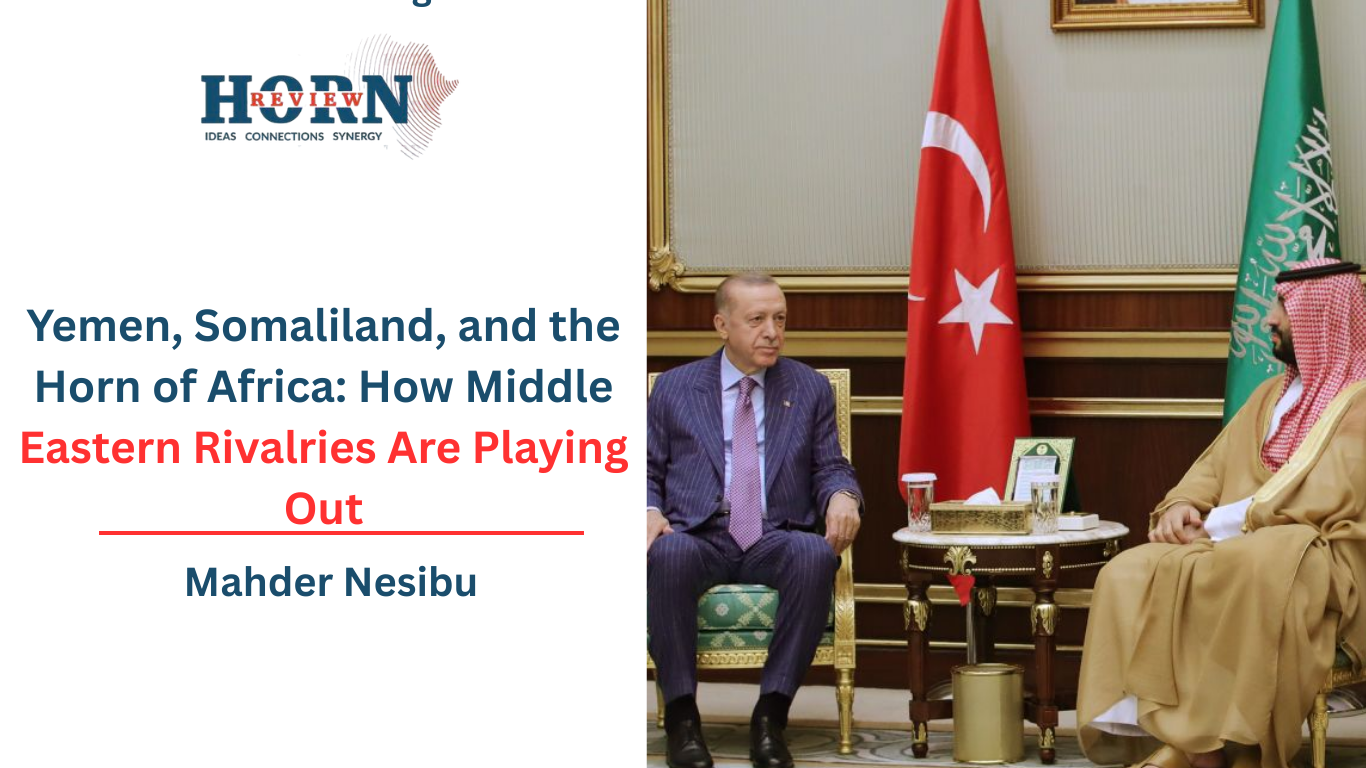
Regional responses reflected these overlapping concerns. Egypt, Saudi Arabia, and Turkiye rejected the recognition and reaffirmed alignment with Mogadishu. Turkiye’s reaction was particularly pronounced. Relations between Ankara and Tel Aviv remain tense amid developments in Gaza and Syria, and the Somaliland issue added another source of friction. President Recep Tayyip Erdogan’s late-December meeting with Somali President Hassan Sheikh Mohamud, accompanied by announcements of new strategic projects, reinforced Ankara’s commitment to Somalia’s federal framework and its resistance to diplomatic moves that dilute Mogadishu’s external backing.
Egypt’s position aligns with its expanding engagement in the Horn of Africa. Cairo has increased political and security cooperation with Somalia as part of a broader strategy linked to its dispute with Ethiopia over the Nile waters. Mogadishu’s approval for an Egyptian troop presence has provided Cairo with an additional pressure point against Addis Ababa. Supporting Somalia’s stance on Somaliland also reinforces Egypt’s effort to anchor its presence along the Horn’s eastern flank, while responding to Ethiopia’s parallel interest in regaining access to the Red Sea.
These Horn of Africa dynamics have unfolded alongside growing strain between Saudi Arabia and the United Arab Emirates. In Yemen, the UAE agreed to withdraw its forces following pressure from Riyadh and the Presidential Leadership Council. Saudi Arabia’s subsequent efforts to counter STC gains further tested the relationship. The divergence reflects contrasting approaches to regional order, with Riyadh prioritising managed political frameworks and Abu Dhabi maintaining long-standing ties with local actors that secure maritime access and logistical reach.
Similar divergences are visible in Sudan. The UAE has been associated with support for the Rapid Support Forces, while Saudi Arabia has aligned itself with the Sudanese Armed Forces and General Abdel Fattah al-Burhan. Egypt and Turkiye have also backed the SAF, placing them on the same side of Sudan’s conflict. The Sudan file has thus become another arena where a loose alignment among Riyadh, Cairo, and Ankara contrasts with Emirati preferences.
The UAE’s restrained public response to Israel’s recognition of Somaliland added to this pattern. Reports suggesting Emirati facilitation for Tel Aviv’s move drew attention to Abu Dhabi’s established relationship with Somaliland, including security cooperation dating back to 2018. These ties reflect an Emirati approach centred on long-term access to ports and logistics nodes along the Red Sea and Gulf of Aden, often pursued independently of broader regional consensus. Saudi Arabia appears to be responding to these overlapping pressures through active diplomacy. Engagements with Egypt, outreach to Somalia’s leadership, and coordination with Turkiye suggest an effort to consolidate positions on Yemen, Somalia, and Sudan. Bringing Turkiye into this process reflects Saudi recognition that Ankara’s footprint across the Horn of Africa and the Red Sea corridor carries leverage that has to be utilized, even where interests diverge.
President Erdogan’s reported phone calls with both Saudi Crown Prince Mohammed bin Salman and UAE President Mohammed bin Zayed illustrate Turkiye’s balancing posture. Ankara appears to be aligning more closely with Riyadh on selected regional files while preserving channels with Abu Dhabi. Emirati investments across the Horn limit prospects for major recalibration, though Saudi Arabia’s willingness to openly challenge UAE-backed dynamics in Yemen points to a firmer Saudi posture than in earlier years.
These developments point to a gradual shift in how politics along the Gulf of Aden and the Horn of Africa are shaped. Decisions taken in Middle Eastern capitals increasingly influence political and security outcomes across Yemen, Somalia, Somaliland, and Sudan. Local actors continue to shape events on the ground, yet external interests now weigh more heavily on the direction and tempo of developments. As Saudi, Turkish, and Egyptian priorities increasingly align, competition for influence is likely to intensify. Israel’s recognition signals an intention to establish a presence in the Horn, while the UAE’s regional posture shows continuity. Middle Eastern rivalries continue to expand in geographic scope, drawing in Horn states such as Ethiopia, Eritrea, and Djibouti as they navigate an increasingly complex regional environment.
By Mahder Nesibu, Researcher, Horn Review