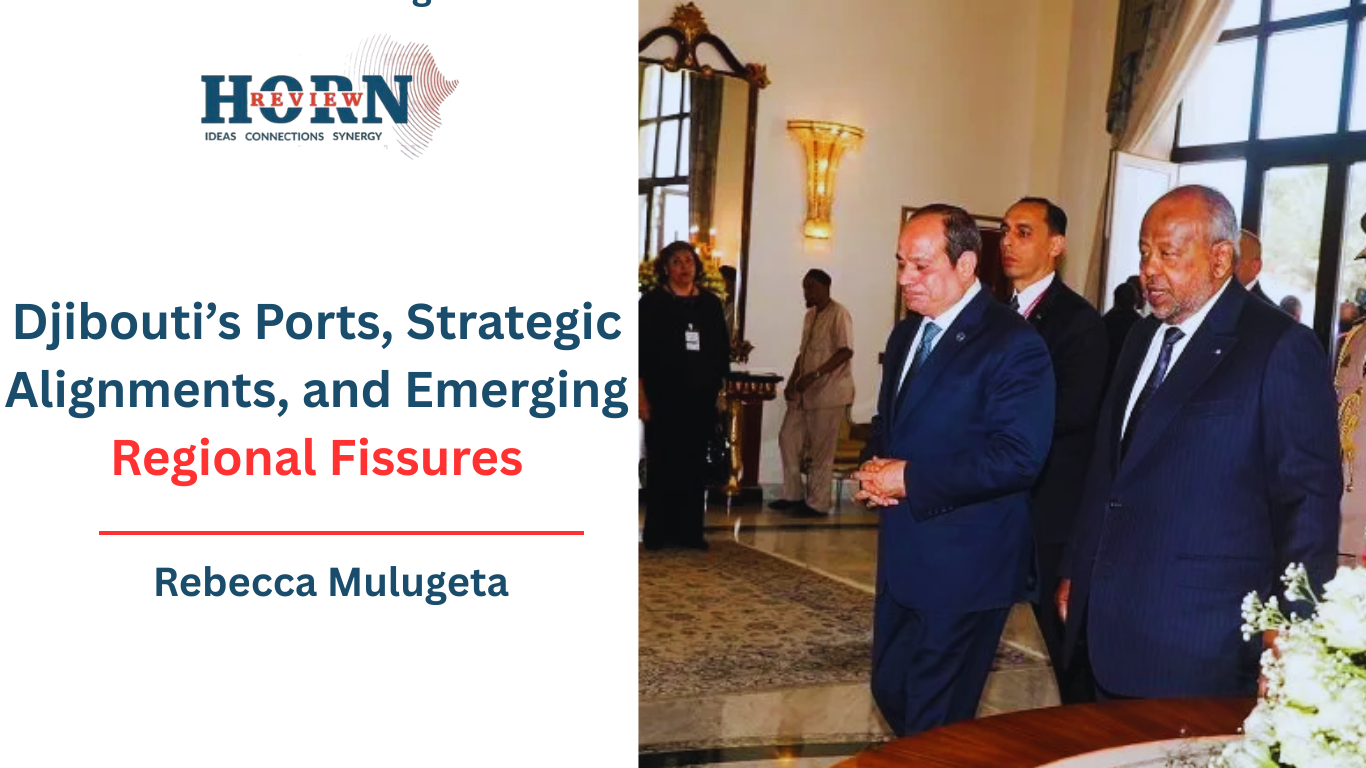
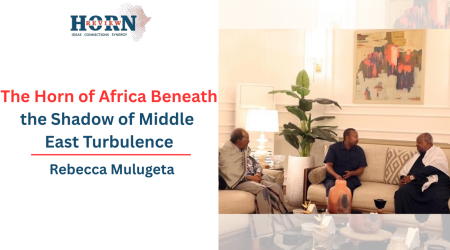
The Horn of Africa simmers with intrigue, where tiny Djibouti plays a dangerously oversized role in the continuous challenges between Ethiopia and Egypt. Egypt’s Deputy Prime Minister Kamel El-Wazir arrived in Djibouti amid great fanfare, signing three cooperation agreements for port development, solar energy, and logistics. The ceremonies unfolded at the bustling Doraleh Container Terminal and the Djibouti International Free Trade Zone, with Djiboutian Minister Hassan Houmed and ambassadors from both nations looking on approvingly. But beneath the handshakes and photo ops lies a stark reality: this deal hands Egypt a strategic foothold from Ethiopia’s border, amplifying Cairo’s containment strategy against landlocked Addis Ababa amid the escalating Nile waters dispute over the Grand Ethiopian Renaissance Dam.
The timing could not be more provocative. Reports indicate that only days earlier, Ethiopia’s intelligence chief Redwan Hussien had visited Djibouti, seeking assurances about these very port developments. Instead of reassurance, Djibouti swung open the gates to Egypt. For a nation whose economy depends utterly on Ethiopia, 90% of its port throughput comes from Ethiopian imports, generating over $1 billion annually in fees that constitute half its GDP. This represents betrayal at its most brazen. Djibouti imports 80% of its electricity from Ethiopian grids, sources most of its meat and construction materials from across the border, and relies on 20 cubic litres of fresh water daily. Yet when Ethiopia faces existential threats from Egypt’s GERD opposition, Djibouti chooses Cairo’s embrace, auctioning its coastline to the very power encircling its neighbour.
This is no aberration but the latest in Djibouti’s long history of abandoning Ethiopia in times of challenges. Freshly independent from France in 1977, Djibouti navigated a treacherous birth amid Somali irredentism under Siad Barre. Barre had supported Djibouti’s Issa-led independence movement as a stepping stone to Greater Somalia. But when Somali forces invaded Ethiopia’s Ogaden region in 1977, Djibouti took some of our armaments that came through its borders. During the Derg regime’s collapse from 1974 to 1991, grappling with Ogaden fallout, Eritrean insurgency, famine, and Somali border threats, Djibouti distanced itself further. Whispers persist of the tiny state harbouring elements sympathetic to Somali interests, tilting away from a haemorrhaging Addis while courting Western patrons for protection.
The pattern repeated relentlessly. After Eritrea’s 1993 secession stripped Ethiopia of its Red Sea ports like Assab, Djibouti rebuffed Addis’s pleas for permanent naval basing or land access. During Ethiopia’s 1998-2000 border war with Eritrea and internal EPRDF transitions, Djibouti maintained calculated neutrality, leasing its prized 900 square kilometres instead to foreign powers. China established its first overseas military base at Doraleh in 2017, the United States expanded Camp Lemonnier into a counterterrorism fortress with Chabelley airstrip, France retained century-old facilities, Japan stationed anti-piracy forces, and Italy deployed frigates. Germany, Spain, the UK, and even Saudi Arabia proposed Saudi outposts crowded in. Ethiopia, the economic engine behind Djibouti’s ports, watched helplessly as its neighbor transformed into the world’s most militarised micro-state, hosting more foreign bases than any other African nation along the vital Bab el-Mandeb Strait.
Cairo has successfully operationalised a strategic encirclement of Ethiopia by weaponising the region’s logistics architecture to transform Ethiopia’s landlocked vulnerability into a permanent state of containment. By integrating its footprint in Djibouti’s Doraleh and PK23 zones with reported infrastructure upgrades in Eritrea’s Assab, Egypt has engineered a maritime pincer that places Egyptian-controlled hubs within kilometres of Ethiopia’s vital economic centres in Jijiga and Dire Dawa. This presence extends beyond mere commerce; the deployment of off-grid solar assets at Doraleh functions as a power source for persistent ISR (Intelligence, Surveillance, and Reconnaissance) capabilities to monitor Ethiopian troop movements and logistics in real-time. Crucially, Cairo’s influence over these transit corridors allows for the execution of asymmetric economic warfare, where “security reviews” can be leveraged as deliberate chokepoints to throttle the import of critical equipment, effectively stalling Ethiopia’s developmental sovereignty whenever Nile negotiations stall.
The National report of an “Assad deal” for outright Egyptian basing rights gained chilling credibility post-signature. Egyptian marines could embed under commercial cover. Egypt’s 1.3 million-strong army and modernising navy, bolstered by French Mistral carriers, gains forward denial capabilities, a hybrid warfare toolkit mirroring Israel’s Haifa port strategy but inverted against upstream GERD filling. This “logistics denial doctrine” preps synchronised dual-port strangulations: Djibouti and Eritrea halt 90% of Ethiopia’s imports during crises, immune to grid retaliation thanks to solar redundancy. Intelligence collection becomes child’s play from bases so perilously close.
Djibouti’s current path suggests it is evolving from a strategic asset into a congested proxy theatre where foreign military saturation invites inevitable friction. The state has effectively auctioned its sovereignty to seven major powers, creating a high-density military funnel for 10% of global trade. The presence of Chinese PLAN vessels at Doraleh alongside American counterterrorism assets at Camp Lemonnier and French, Japanese, and Italian task forces creates a volatile proximity that defies the logic of smart diversification.
Cairo’s recent move to secure dedicated berths and deploy elite contingents further crowds this space, introducing thousands of Egyptian troops into a jurisdiction smaller than a mid-sized city. This concentration of force is increasingly reactive rather than strategic; historical disputes, such as the 2018 DP World conflict that forced Ethiopia’s pivot to Berbera, illustrate how quickly commercial friction scales into geopolitical realignment. As US-China tensions simmer and Egypt-UAE rivalries intersect with the Houthi crisis in Yemen, Djibouti risks becoming a flashpoint where any localised miscalculation could trigger a systemic collapse of the region’s primary trade artery.
Djibouti’s transition from a strategic partner to a congested proxy theatre represents a critical risk to Ethiopia’s economic sovereignty, as foreign military saturation highlighted by Cairo’s recent acquisition of dedicated naval berths and elite troop placements threatens to transform the trade corridor into a flashpoint for Nile-related conflict. This geopolitical pincer, reinforced by Egypt’s development of infrastructure at Doraleh and Eritrea’s Assab, leverages “security reviews” and persistent ISR surveillance to weaponize Ethiopia’s transit dependence. Addis Ababa must respond with structural leverage by formalising and potentially conditioning things with Djibouti and electricity. Djibouti “guzzles” from Ethiopia, while aggressively pivoting GERD-driven power and trade volumes toward the Berbera and LAPSSET corridors to dismantle the Egyptian-led encirclement. And Ethiopia need to work to have core allie partner in the horn of africa that is not going to change in terms of crisis, its is known that countries interest will not remain same especially lining in very traject region but ethiopia need allies that not change by other countries offer.
Djibouti’s current prioritisation of immediate rental income ignores the looming strategic “tsunami” of military saturation that threatens to dissolve its sovereignty into a permanent proxy battlefield. This pattern of opportunistic hedging stretching from the 1977 Ogaden duplicity to the 2025 Egyptian security pact underscores a micro-state survival instinct that selectively betrays Ethiopian interests whenever Addis Ababa faces regional pressure. However, as Cairo attempts to operationalise its encirclement via logistical hubs and surveillance infrastructure at Doraleh, Ethiopia is leveraging its GERD-driven energy dominance and continental influence to execute a bold maritime diversification toward more resilient corridors. By transitioning from a policy of “blind faith” to one of hardened geopolitical realism, Ethiopia is positioning itself to outlast this Egyptian-led pincer, and Djibouti might risk turning its crowded ports into a theatre of systemic collapse.
By Rebecca Mulugeta, Researcher, Horn Review