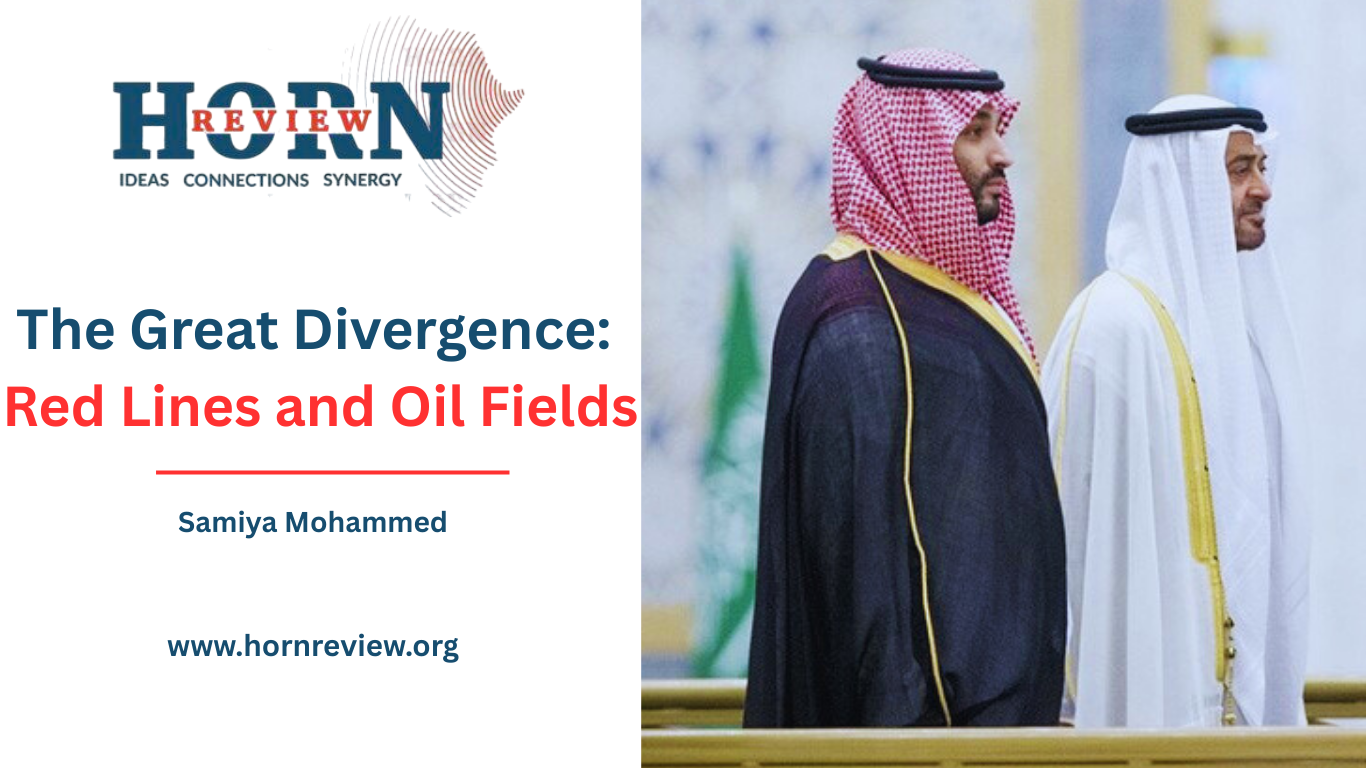
In December 2025, the Southern Transitional Council , a separatist group backed by the United Arab Emirates executed a decisive military offensive that fundamentally redrew the political map of southern Yemen. The operation has formalized a deep schism within the Gulf coalition that entered the war a decade ago effectively partitioning areas outside Houthi control into rival Saudi and Emirati spheres of influence and calling into question the future of a unified Yemeni state.
The catalyst for this shift was the STC’s Operation Promising Future, launched on December 2nd. In a matter of days, its forces spearheaded by the Hadrami Elite Forces swept through the resource-rich governorates of Hadramawt and al-Mahra seizing key cities like Seiyun and Tarim with minimal resistance from the internationally recognized government’s troops. This lightning advance secured control over roughly eighty percent of Yemen’s oil reserves and its entire southern coastline, including critical infrastructure like the PetroMasila oil fields.
This territorial grab represents more than a local power shift, it is the culmination of a long evolving divergence between Saudi Arabia and the UAE, nominal allies in the war against the Houthis. The two nations entered the conflict with fundamentally different objectives. Saudi Arabia’s primary aim was to restore a unified Yemeni government and secure its southern border against the Houthi threat.
Conversely, the UAE focused on cultivating reliable local partners, securing maritime access, and containing the influence of political Islamist groups like Islah, which it views as a threat. The STC has been the principal instrument of this Emirati strategy since its formation in 2017.
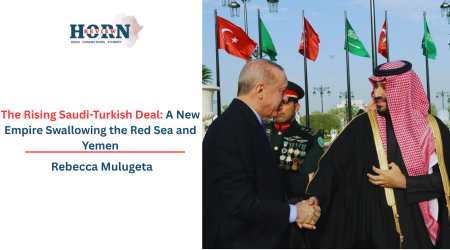
The Saudi response to the STC’s offensive has been one of strategic retrenchment rather than confrontation. In another development, Saudi-backed military units notably the National Shield Forces have withdrawn from their bases in Aden, Lahj, and Abyan. These forces have reportedly redeployed to a corridor between the al-Wadiah border crossing and al-Abr, positioning them as a buffer west of Hadramawt to secure Saudi Arabia’s frontier. This redeployment appears to be part of a tacit understanding between the Gulf powers, ceding population centers and oil infrastructure to the UAE-backed STC while Saudi Arabia consolidates its position along the border regions.
The repercussions of this partition are acutely felt by Yemen’s internationally recognized government, the Presidential Leadership Council.Designed in 2022 as a unified anti-Houthi front, the PLC is now described as being hollowed out from within, with its authority evaporating on the ground. Its legitimacy is further undermined by economic paralysis, the government has warned that the International Monetary Fund has suspended its activities in Yemen, a direct consequence of the instability triggered by the southern offensive. Control over oil revenue is now a central point of leverage, with the STC’s grip on PetroMasila threatening the PLC’s ability to pay public sector salaries and provide basic services.
Against this intra-coalition fragmentation, the Houthis in the north emerge as inadvertent beneficiaries. Every clash between STC and Saudi-backed forces erodes the cohesion of the front arrayed against them, allowing the Houthis to consolidate their rule and strengthen their negotiating position for any future settlement. Furthermore, the STC’s consolidation of the southern coast, while potentially disrupting some Houthi smuggling routes may paradoxically incentivize the group to intensify its disruptive maritime operations in the Red Sea to project power and secure resources.
The STC’s next moves carry implications. The group is actively constructing the plan of a state, having recently established a Southern Fatwa Authority to issue religious rulings, a clear step toward claiming full sovereignty. However, it faces formidable internal challenges including managing tribal dynamics in Hadramawt and containing the persistent threat from extremist groups like Al-Qaeda in the Arabian Peninsula. Externally, it lacks formal recognition and its leadership’s expressed openness to future relations with Israel contingent on a resolution for Palestine adds a layer to regional diplomacy.
A joint Saudi-Emirati military delegation has arrived in Aden in an effort to manage the crisis, focusing on mechanisms to withdraw STC forces from the eastern governorates. However, given the STC’s entrenched gains and the fundamental divergence of Gulf interests these talks appear aimed at crisis management rather than reversing the new status quo. The Saudi backed PLC continues to publicly support these mediation efforts, emphasizing the need for political solutions and the dangers of further economic collapse.
The emerging reality in Yemen is one of entrenched division. The country is now effectively fractured into three entities, a Houthi-controlled north, an STC-dominated south and east, and a dwindling zone of influence for the recognized government. This two and a half Yemens scenario, overturns decades of international consensus on Yemeni unity and establishes a new unstable equilibrium. The partition between Saudi and Emirati proxies may temporarily freeze front lines, but it does not address the underlying grievances or provide a pathway to sustainable peace, instead institutionalizing fragmentation and setting the stage for future conflict.
By Samiya Mohammed, Researcher, Horn Review