Yemen’s civil war, now in its second decade, has reached a critical point as the balance of power within the anti-Houthi coalition shifts dramatically. This change is driven by the rapid territorial gains of the UAE-backed Southern Transitional Council in southern and eastern Yemen. This development threatens to upend the fragile stalemate that has held since 2022. As the STC consolidates control over oil-rich provinces and key ports, it positions itself not just as a southern separatist force but as a potential contender for broader influence, including bold rhetoric about advancing on the Houthi-held capital of Sanaa. While the Houthis remain entrenched in the northwest, their position benefits indirectly from the infighting among their opponents, raising risks of renewed civil war amid regional tensions in the Gulf of Aden and Red Sea.
The conflict’s roots trace back to the 2011 Arab Spring uprisings, when mass protests against corruption and economic hardship forced longtime president Ali Abdullah Saleh from power under a Gulf-brokered deal that installed Abdrabbuh Mansur Hadi as transitional leader. Hadi’s government struggled with stalled reforms and factional gridlock. It created an opening for the Houthis—a Zaydi Shia movement from northern Saada province to seize Sanaa in 2014 with support from Saleh’s loyalists. Hadi fled to Aden and then Saudi Arabia, prompting Riyadh to launch a military coalition in March 2015, backed prominently by the UAE. It aimed to restore his internationally recognized government and counter what it saw as Iranian influence behind the Houthis. The coalition recaptured Aden but faced a grinding stalemate, as Houthi resilience and Saleh’s eventual 2017 assassination allowed the rebels to consolidate control over the populous northwest, including the capital and vital Hudaydah port.
From the outset, tensions simmered within the anti-Houthi camp. The UAE, focused on southern security and countering jihadist groups like Al-Qaeda in the Arabian Peninsula (AQAP), cultivated local militias that evolved into the STC. It was formed in 2017 as an umbrella for southern separatists nostalgic for the pre-unification independent South Yemen state of 1967-1990. Clashes erupted in Aden in 2019, with STC forces ousting Hadi loyalists and Islah Islamists favored by Saudi Arabia, leading to the Riyadh Agreement for power-sharing. The 2022 formation of the Presidential Leadership Council (PLC) including STC leader Aidarus al-Zubaidi as vice president aimed to unify the coalition. However, the council masked ongoing rivalries, with STC militias like the Security Belt and Elite Units dominating ground control in the south while the PLC handled diplomacy.
This uneasy equilibrium held through UN truces and Saudi-Houthi backchannels that traded airstrikes for fuel access, reducing large-scale violence. But the current situation has shattered that calm. In late November 2025, the Saudi-aligned Hadramaut Tribal Alliance seized Yemen’s largest oil facility at PetroMasila, demanding greater revenue shares from the PLC for local services. The STC seized the moment, launching a swift offensive in early December that captured much of Hadramaut province including Mukalla port, and oil infrastructure. The STC advanced into neighboring Mahra province, capturing a key Omani border crossing, and took control of the presidential palace in Aden, the nominal seat of the PLC. Saudi troops withdrew from Aden bases in a move officials described as a “repositioning strategy,” avoiding direct clashes with their UAE-backed allies.
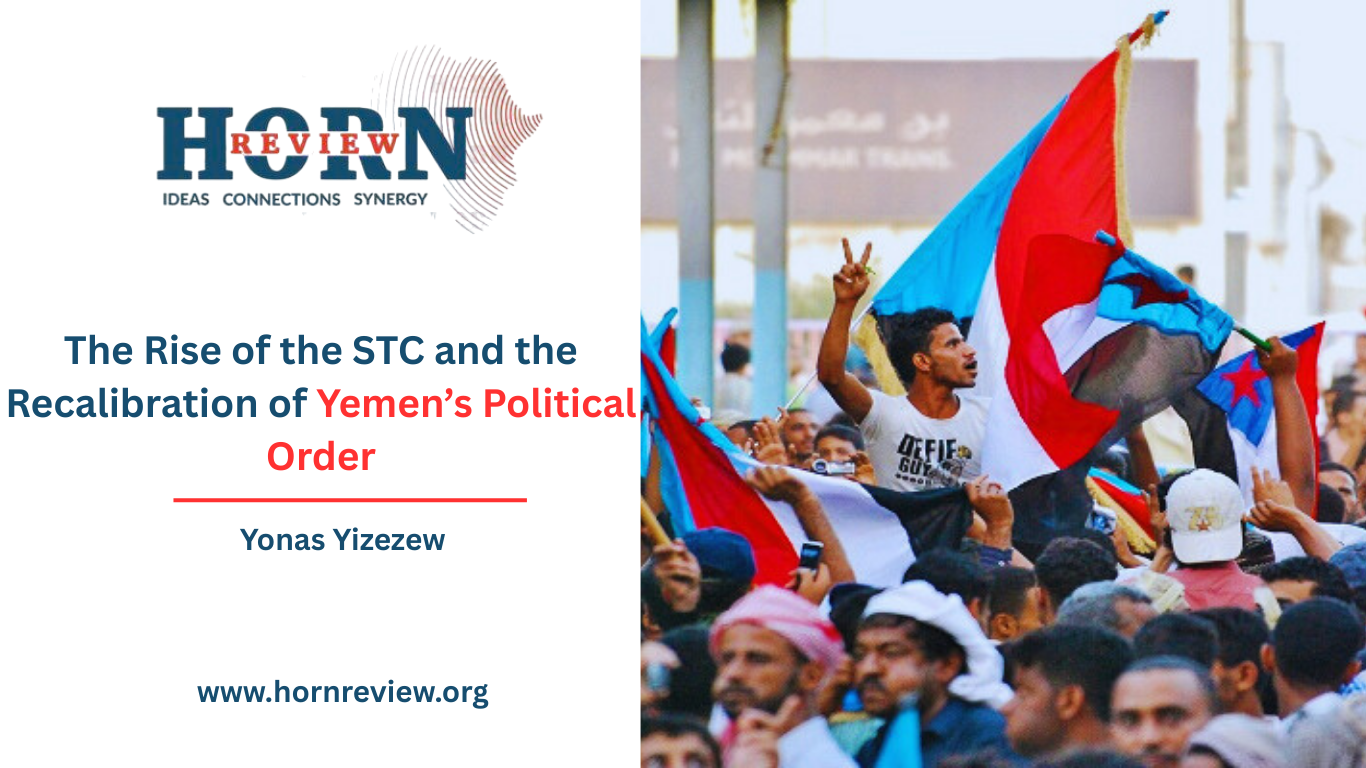
These moves have given the STC control over nearly 90 percent of former South Yemen territory, most of the country’s oil production, and key ports such as Aden. The resulting revenues far exceed the PLC’s budget and allow the STC to fund parallel institutions in the south. Their advances have also raised fears that the group might secede in an effort to revive the once independent South Yemen. However, STC rhetoric has grown bolder as al-Zubaidi declared Sanaa the “next objective, peacefully or by force,” framing the push as anti-Houthi liberation while hoisting southern independence flags to rally separatist bases. The UAE maintains its support aligns with a “political process,” emphasizing Yemeni-led outcomes, while Saudi delegations, led by Maj. Gen. al-Qhtani, have moved to Hadramaut for talks with tribes and the governor, rejecting any “fait accompli” but prioritizing de-escalation.
The implications ripple across Yemen’s divided landscape. For the Houthis, who dominate Sanaa, Hudaydah, and northern highlands with Iranian-supplied missiles and port taxes funding their governance, the southern chaos is a windfall. Their forces, battle-hardened but stretched by sanctions and US-UK strikes, face no immediate threat. An STC thrust toward Sanaa would overextend the separatists’ lines, exposing them to Houthi counterattacks in terrain favoring defenders. Yet the rebels’ vulnerabilities make them wary of escalation, preferring to exploit anti-Houthi fractures through Red Sea leverage tied to Gaza solidarity.
Within the coalition, Saudi Arabia appears deeply dissatisfied, as the STC exceeds boundaries set by past accords like Riyadh. Riyadh’s aid helps the PLC maintain control over eastern areas like Marib, but the diversion of oil revenues to the south reduces national funds and weakens Islah and tribal allies who were pushed out of Hadramaut. The UAE emerges as the clear beneficiary, embedding influence over maritime chokepoints and energy flows without heavy footprints, mirroring its strategies in Socotra and the Horn of Africa. Oman, wary of Mahra smuggling disruptions, pushes quiet mediation.
This southern power grab might disrupt the anti-Houthi framework at a delicate moment. The PLC, meant to embody unity, now risks irrelevance as STC fiscal might and militias overshadow its diplomatic role. Saudi repositioning preserves coalition cohesion but signals a strategic retreat from southern micromanagement, focusing instead on border security and Houthi deterrence. For the STC, these gains provide leverage to push for self-determination in any settlement and to strengthen its position on the international stage, including improving relations with Israel. Such moves could enhance recognition from the US and its allies. However, overreach or overextension could provoke significant backlash.
The STC’s momentum could also force a confederal reckoning, with a Houthi north, STC south, and PLC-managed center, codified through UN processes if Gulf talks yield revenue-sharing pacts. Persistent infighting risks fragmenting the south further, spawning Hadramaut autonomy councils and proxy wars over Shabwa gas that benefit Houthi consolidation. Worst case, Sanaa ambitions ignite multi-front clashes, pitting overstretched STC militias against Houthi depths and fracturing Saudi-UAE ties, reigniting 2019-style civil war within the coalition. However, the balance of pressure with the STC’s limited capacity, Houthi sanctions, and Saudi exhaustion leans toward a controlled stalemate, where southern separatism limits but does not break the wider anti-Houthi coalition.
By Yonas Yizezew, Researcher, Horn Review