
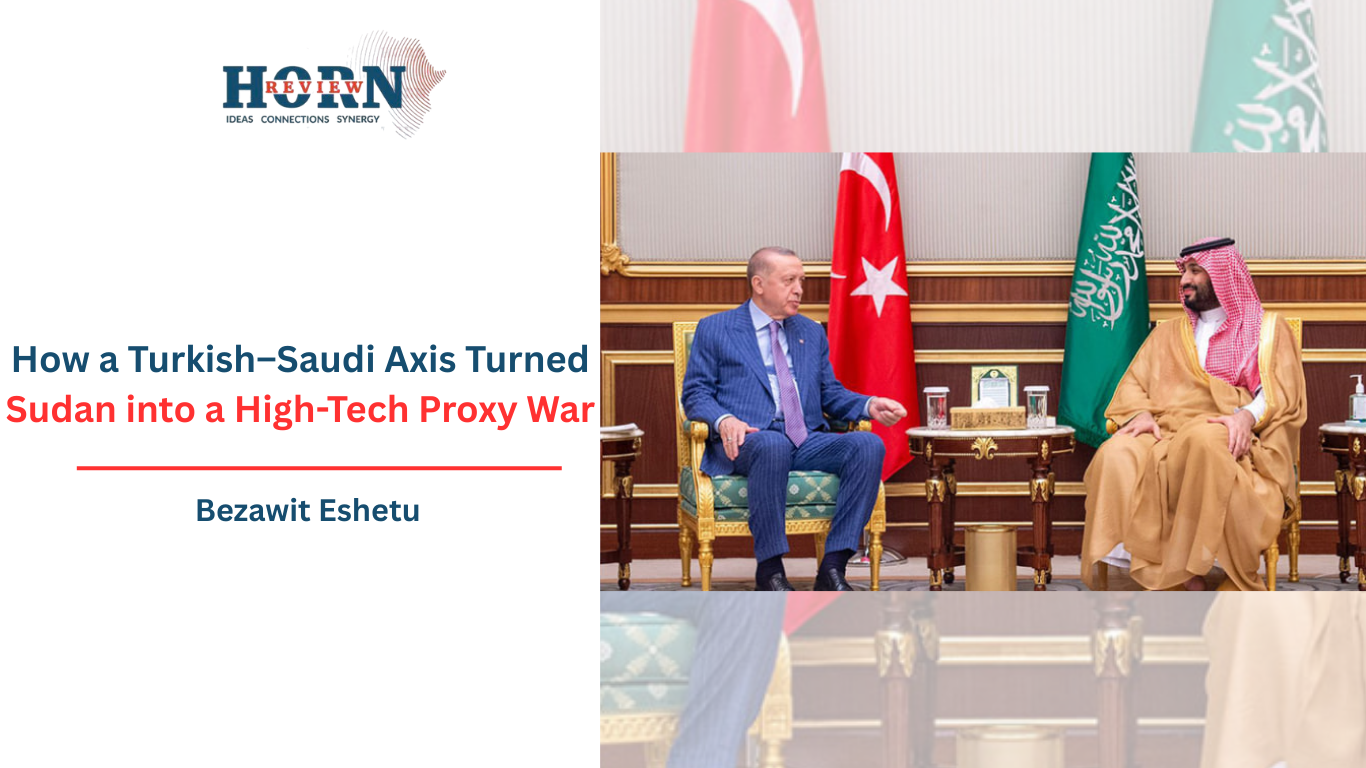
How a Turkish–Saudi Axis Turned Sudan into a High-Tech Proxy War
The delivery of military cargo via a Russian Ilyushin Il-76TD aircraft from Istanbul to Port Sudan underscores the escalating proxy dimensions of Sudan’s ongoing conflict. It signals a shift from an internal power struggle to a field for regional proxy warfare. The era of hostility between General Abdel Fattah al-Burhan’s Sudanese Armed Forces and Mohamed Hamdan Dagalo’s Rapid Support Forces has been overshadowed by a larger geopolitical conflict.
The situation has evolved beyond civil war, with Sudan becoming a battleground for Middle Eastern and Eurasian powers. This change is not motivated by a shared wish for peace or democracy in Sudan; rather, it stems from a fierce competition for influence over the Red Sea and the African region. External involvement has entrenched the violence, tying any possible resolution to the strategic needs of foreign capitals, not the immediate concerns of the Sudanese people.
Turkey’s strengthened military ties with the Sudanese Armed Forces are the result of a ten-year strategic shift toward Africa. Through its “Africa Opening” policy, Turkey has long seen Sudan as a key entry point for expanding its economic and military presence. Under Omar al-Bashir, Turkish investment focused on infrastructure projects and reclaiming Suakin Island, aiming to create a lasting maritime foothold.
The upheaval after Sudan’s 2019 revolution and the outbreak of full-scale war in April 2023 led Turkey to adopt a cautious diplomatic approach, protecting sizeable investments in infrastructure, agriculture and the redevelopment of Suakin Island as a prospective maritime gateway. Behind this pragmatic stance was Ankara’s longstanding preference for a centralized military-style state similar to its own model, one that could underpin stable, long-term partnerships rather than fragmented paramilitary rule.
In the conflict’s early stages, Turkish defense firms such as Baykar took a balanced, low-profile approach, maintaining contacts with multiple actors, including the Sudanese Armed Forces under General Abdel Fattah al-Burhan and the Rapid Support Forces led by Mohamed Hamdan Dagalo, known as Hemedti, to limit risk to projects and preserve access where front lines were fluid. That outreach prompted accusations of dual support, with opaque reports of arms transfers or logistical aid, though available indicators suggested stronger commercial and political links with the SAF.
As the RSF began to erode Sudan’s institutional framework and won significant battlefield gains, including the late-2025 capture of El Fasher that highlighted SAF weaknesses, Turkey reassessed the situation and shifted its posture. Ankara came to view the RSF’s decentralized, mercenary-style model as a direct threat to its Red Sea interests, where a unified state is crucial for securing trade routes, port concessions and countering rival influence from actors such as the UAE.
By late 2025 that reassessment crystallized into a more overt defense alignment with the SAF, marked by increased military assistance, Bayraktar drones and technical support intended to suppress the RSF insurgency and restore centralized control. The shift was reinforced in early 2026 by visible cargo deliveries to Port Sudan, signaling Turkey’s growing integration into a Saudi-led effort that drew on Pakistani and Russian arms channels to push back against paramilitary fragmentation.
The drive behind this Turkish escalation lies in the changing foreign policy of Saudi Arabia. In the early years of the conflict, Saudi Arabia sought to appear neutral, facilitating the Jeddah talks and joining the Quadrilateral Mechanism. However, this pretense has crumbled amid a growing divide between Saudi Arabia and the United Arab Emirates. Sudan has become the primary stage for a fierce rivalry between these two powerful countries.
Saudi intervention is not a selfless act to promote stability; it is a calculated move to contain the Emirati influence. Riyadh has become increasingly worried as the UAE has used paramilitary groups to secure important maritime routes and resource-rich areas. The fall of Emirati-aligned groups in other regions alerted Saudi leaders that a fragmented Sudan would directly threaten their vision of a regional order based on traditional states. Thus, Saudi Arabia has begun to finance the transfer of advanced military technology to the Sudanese Armed Forces, transforming it into a means to curb Abu Dhabi’s ambitions.
The logistical framework of this new alliance is a complex operation aimed at giving the Sudanese Armed Forces a clear technological advantage. Central to this is a triangular agreement with Pakistan, aided by Saudi Arabia’s financial influence over Islamabad. By converting large loans into a source of Pakistani arms, Riyadh has facilitated the arrival of Karakorum-8 light attack aircraft and JF-17 multirole fighters for the Sudanese Air Force.
These aircraft mark a significant technological upgrade aimed at countering the Rapid Support Forces’ advantage in quick and decentralized ground movements. The connection to South Asia allows the partnership between Riyadh and Ankara to provide the Sudanese military with the tools needed to push paramilitary groups out of cities and into open areas, where they can be effectively targeted from the air. This situation shows how regional powers are using smaller nations to supply support and fuel the conflict without directly getting involved.
In early 2026, the effects of this external assistance became evident, shifting the dynamics of a struggle that had reached a standstill. Although the Rapid Support Forces achieved a strategic victory by taking El Fasher in late 2025, their momentum has diminished against a revitalized national army. Armed with Turkish drones, the Sudanese Armed Forces have regained control of crucial areas in Khartoum, demonstrating that decentralized forces struggle against a well-equipped and technologically advanced air campaign.
What once gave an advantage to the insurgency has now become a liability; without civilian infrastructure for protection, their vehicles are easily targeted by precision airstrikes. This move to high-tech warfare not only changes the nature of the conflict but also creates distrust among paramilitary leaders. As the military gains ground with foreign assistance, the possibility of a negotiated peace diminishes. The Sudanese Armed Forces are now more focused on achieving complete military control rather than pursuing a political solution.
The surge of foreign aid has effectively dismantled the existing international peace framework, specifically the Quadrilateral Mechanism. The Quad was based on the belief that a negotiated power-sharing deal was the only way to end the violence. However, the reality that two of its key players—Saudi Arabia and the UAE—are now actively supporting opposing factions has rendered the platform useless.
For the Riyadh-Ankara coalition, the goal is no longer to restore a civilian-led government, but to impose a unified military command under their control. This places them at odds with the UAE and complicates de-escalation efforts favored by Western nations. This creates a paradox where the regional sponsors’ push for a decisive military victory only deepens divides and erodes trust needed for lasting reconciliation.
The geopolitical situation is further complicated by Somalia’s proactive stance, which in early 2026 banned Emirati military and cargo flights from its airspace. This decision was triggered by accusations that the UAE facilitated the unauthorized extraction of Yemen’s Southern Transitional Council leader, Aidarous Al-Zoubaidi, using Somali airspace and possibly airports, amid ongoing claims that Abu Dhabi was using Somali facilities, particularly in Puntland, to send mercenaries and arms to the Rapid Support Forces. The disruption of these southern supply routes, along with the Saudi-led blockade of northern flights, has severely limited the paramilitary’s access to resources needed to maintain control in Darfur.
While the UAE may look for alternative routes through neighboring countries, the overall impact of this “encirclement” strategy has significantly weakened the insurgency’s operational capability. However, this military success for the Sudanese Armed Forces comes at the expense of national sovereignty. The more the national military leans on these foreign connections, the less it operates as an independent institution, becoming instead a vehicle for a regional agenda that values state security over public representation.
Despite the military’s tactical advances, the underlying ethnic and resource grievances driving the conflict remain unaddressed. Sudan’s history shows deep divisions between the center and its periphery, and the current state-centric stabilization strategy overlooks the fact that military wins don’t guarantee political legitimacy. Even if the Rapid Support Forces are pushed out of the capital, remnants of the group are likely to retreat to the periphery, where they can continue a low-key insurgency for years.
The Turkish-Saudi partnership may succeed in restoring a central government in Khartoum, but it risks creating a “Two Sudans” reality, where the country’s outskirts remain chaotic battlegrounds for proxy conflicts. The humanitarian toll of this “stabilization” is already enormous, with millions displaced and famine spreading, yet the regional powers involved seem to think that the costs of continued war are preferable to a peace that lets their rivals hold onto influence in the Red Sea.
Ultimately, the Turkish-Saudi axis in Sudan represents a new model of regional intervention that bypasses traditional mediation in favor of military solutions focused on state control. By combining Turkish technical expertise, Saudi financial strength, and logistical cooperation from partners like Pakistan and Kazakhstan, this coalition aims to reshape security in the Horn of Africa. However, this brand of stabilization has a downside.
It prioritizes the survival of a conventional military state over the democratic hopes of the Sudanese people, essentially rebuilding the nation through the lens of a regional war apparatus. As the conflict endures, Sudan’s fate is increasingly determined not within its own borders but through the logistics chains from Ankara, Islamabad, and Riyadh. The war has evolved into a high-tech proxy conflict, where the quest for regional dominance ensures that violence will persist as long as it aligns with the strategic interests of its external supporters.
This cynical realignment shows that the stability sought by Riyadh and Ankara does not equal peace for Sudan. Instead, it aims for a manageable order that benefits their specific interests. For Saudi Arabia, the main goal is to counter the Emirati influence, which it views as a threat to its regional standing. For Turkey, Sudan is a key part of its broader strategy to control trade routes and energy resources in the Red Sea.
In both cases, the Sudanese people suffer as they become hostages in a larger game where sovereignty is exchanged for military support and legitimacy depends on the quality of one’s air power. The arrival of that Turkish cargo plane did not signal the end of conflict, but the beginning of a new and deeper phase of interventionism, where the lines between internal issues and regional power struggles have blurred. This high-stakes game ensures that Sudan remains a battlefield, where efforts to restore order are merely side effects of a larger fight for regional power.
By Bezawit Eshetu, Researcher, Horn Review

RELATED
Posts
12
Oct
The Recurring Script of Eritrea’s Invasion-Victim Cycle
In the Horn of Africa, history under Isaias Afwerki does...
12
Oct
Under the Banner of Red Sea Security, Egypt Encircles Ethiopia
Reports of Egyptian naval movements toward the southern Red...
12
Oct
Egypt's Attack on Sudan's Gold Mines and the Long Road That Led to It
The airstrikes that tore through the artisanal gold mining...
9
Oct
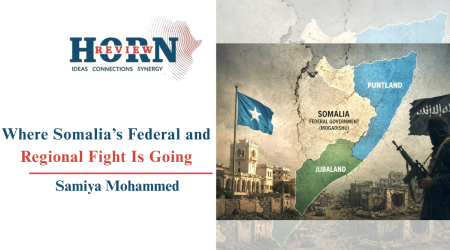
Where Somalia’s Federal and Regional Fight Is Going
The 2012 federal settlement was less a constitutional order...

9
Oct
Eritrea’s Post-Pretoria Strategy and the Escalation in Ethiopia
Our latest report examines Eritrea’s post-Pretoria trajectory and how selective...
8
Oct
The Houthi-al-Shabaab Nexus and the Emerging Security Architecture of the Gulf of Aden
The growing relationship between Yemen’s Houthi movement and Somalia’s al-Shabaab...
7
Oct
“Decaffeinated Sovereignty”: Eritrea’s One-Way Street with Ethiopia
There is a peculiar contradiction at the heart of Eritrea’s...
7
Oct
Leaked Documents Allege Sudanese Army Weapons Pipeline to TPLF-Aligned Forces as Tigray War Reignites
Leaked documents alleging a Sudanese army weapons pipeline to TPLF-aligned...
7
Oct
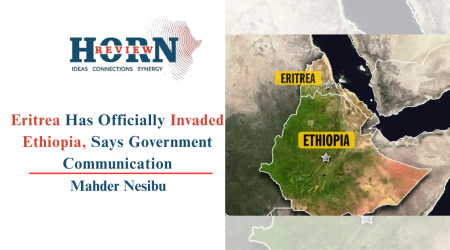
Eritrea Has Officially Invaded Ethiopia, Says Government Communication
Ethiopian Government Formally Condemns Eritrean Territorial Incursion as Its Forces...
7
Oct
Turkey, Somalia and the Transactional Reading of Alamein
The Alamein Declaration functions less as a coherent framework...