Think of Ethiopia as Africa’s sleeping giant 130 million people across vast highlands, a nation that once commanded Red Sea trade routes for millennia, now cruelly landlocked since Eritrea’s 1993 secession. That split wasn’t just a breakup; it was a calculated move, backed by Egypt to rob Ethiopia of its coastline and chain it to dependence. Assab port, built and run by Ethiopians for generations without any treaty handover, became Eritrea’s prize, kicking off decades of blockade. Fast forward to late 2025: Egypt, still fuming over Ethiopia’s Grand Ethiopian Renaissance Dam on the Nile, dusts off this old playbook.
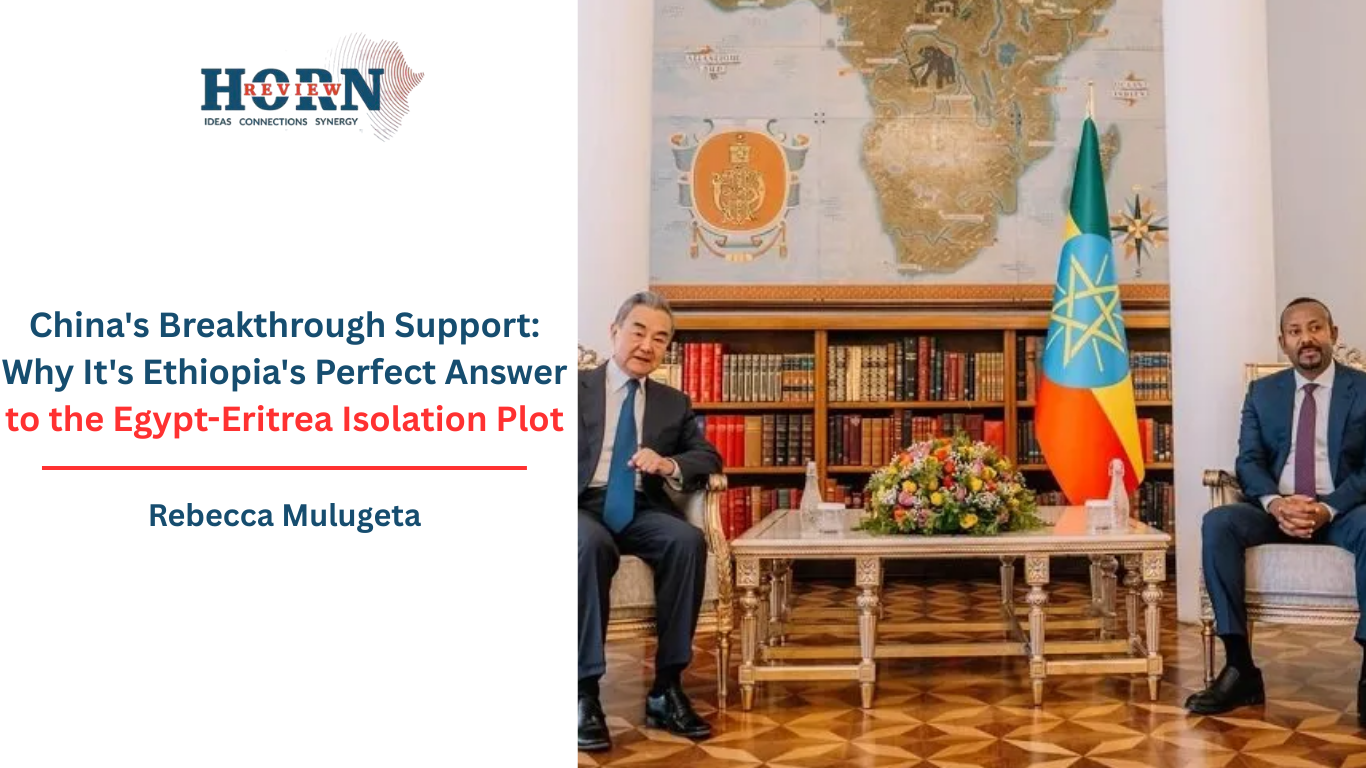
Egypt and Eritrea form a new axis with Saudi deals, arms shipments, port upgrades at Assab and Djibouti for Egyptian ships, even pulling Somalia into their anti-Ethiopia huddle. Their message? Ethiopia has “no right” to the Red Sea. Trade costs skyrocket 25%, 95% of goods stuck via pricey Djibouti, hurting everyday Ethiopians amid war recovery and global shipping chaos from Houthi attacks. They want Ethiopia weak, isolated, begging for access.Then, right on cue, China’s Foreign Minister Wang Yi lands in Addis Ababa in January 2026. He doesn’t mince words: Ethiopia’s push for Red Sea access is a “national necessity,” best solved through talks that respect everyone’s borders.
Coming from a UN Security Council heavyweight, this is dynamite. Wang Yi pairs it with real action fixing the Addis-Djibouti railway, billions in projects, and a fast BRICS entry. Why now? Because Ethiopia desperately needed this boost exactly when the Egypt-Eritrea squeeze tightened. It’s like a shield appearing just as the walls close in, turning defense into attack.
This is pure gold for Ethiopia ,First it smashes the isolation game. Egypt and Eritrea thought their pact would scare off partners, painting Ethiopia as the bad guy grabbing land. Wrong. China’s nod flips the script suddenly, Addis has P5 backing, making UN law on sea access (like UNCLOS rules for landlocked countries) a real threat to Asmara’s blockade. It’s a shell without Ethiopia’s massive market behind it. A tiny 3.5 million people, crumbling economy, endless sanctions Assab means nothing if Ethiopian trucks aren’t rolling in. They’re useless as a standalone “country” in this fight; their whole leverage crumbles once Ethiopia gets sea feet. Egypt’s bluster over the dam? It’s backfired before, and now China’s shadow makes their axis look shaky, China’s voice says, “This is fair,” pushing Eritrea and Egypt to talk or lose face globally
Economically, it’s a lifesaver Ethiopia has craved. Djibouti drains $2 billion a year; Red Sea options cut that in half, explode coffee exports to $10 billion by 2030, and create jobs for frustrated youth. China’s rails and ports make Ethiopia Africa’s trade boss, safe from Houthi hiccups. Diplomatically, Abiy shines outsmarting monopolies, filling the dam despite threats. Now with Beijing, he mixes Russian weapons, Turkish tech, and Chinese cash for unbeatable balance.
But let’s talk about risks and why China changes everything. Eritrea might lash out, Egypt stir proxies. Before, Ethiopia stood alone. China’s clout deters mess P5 vetoes any funny business at the UN. Eritrea becomes irrelevant fast; without Ethiopia’s cargo, Assab’s a ghost town. Egypt risks alienating Gulf pals who want stable trade.
In 2026, the arrival of Chinese Foreign Minister Wang Yi in Ethiopia marked a decisive shift in the Red Sea power struggle, effectively shattering the “strangulation axis” formed by Egypt and Eritrea. While the Cairo-Asmara alliance seeks to weaponize Ethiopia’s landlocked status leveraging arms shipments and naval patrols to isolate the 130-million-strong “sleeping giant” China’s high-profile backing of Ethiopia’s maritime logistics and “access to the sea” serves as a powerful geopolitical shield. By elevating Ethiopia to an All-Weather Strategic Partner and facilitating its rapid BRICS integration, Beijing has signaled to the UN Security Council that Ethiopia’s sovereign sea access is a legitimate “national necessity,” rendering Egypt’s exclusionary rhetoric and Eritrea’s blockade tactics increasingly obsolete in a multipolar era.
This strategic alignment transforms Ethiopia from a defensive actor into a regional “gatekeeper,” as Chinese-backed infrastructure like the Addis-Djibouti railway and potential naval logistics hubs ensure that the nation’s $100-billion economy can no longer be held hostage by regional proxies. The Egypt-Eritrea pact, once intended to weaken Addis Ababa over the GERD dispute, has instead triggered a pro-Ethiopian counter-alignment involving Chinese capital, Turkish technology, and Russian military cooperation. Ultimately, with a P5 heavyweight now underwriting its maritime aspirations, Ethiopia is poised to reclaim its historical role as a Red Sea power, proving that in the face of 2026’s “controlled disorder,” the giant has not only awakened but has secured the international clout to turn a calculated rupture into a permanent national renewal. Lastly, Eritrea is nothing for Egypt when Ethiopia gets red sea access.
By Rebecca Mulugeta, Researcher, Horn Review