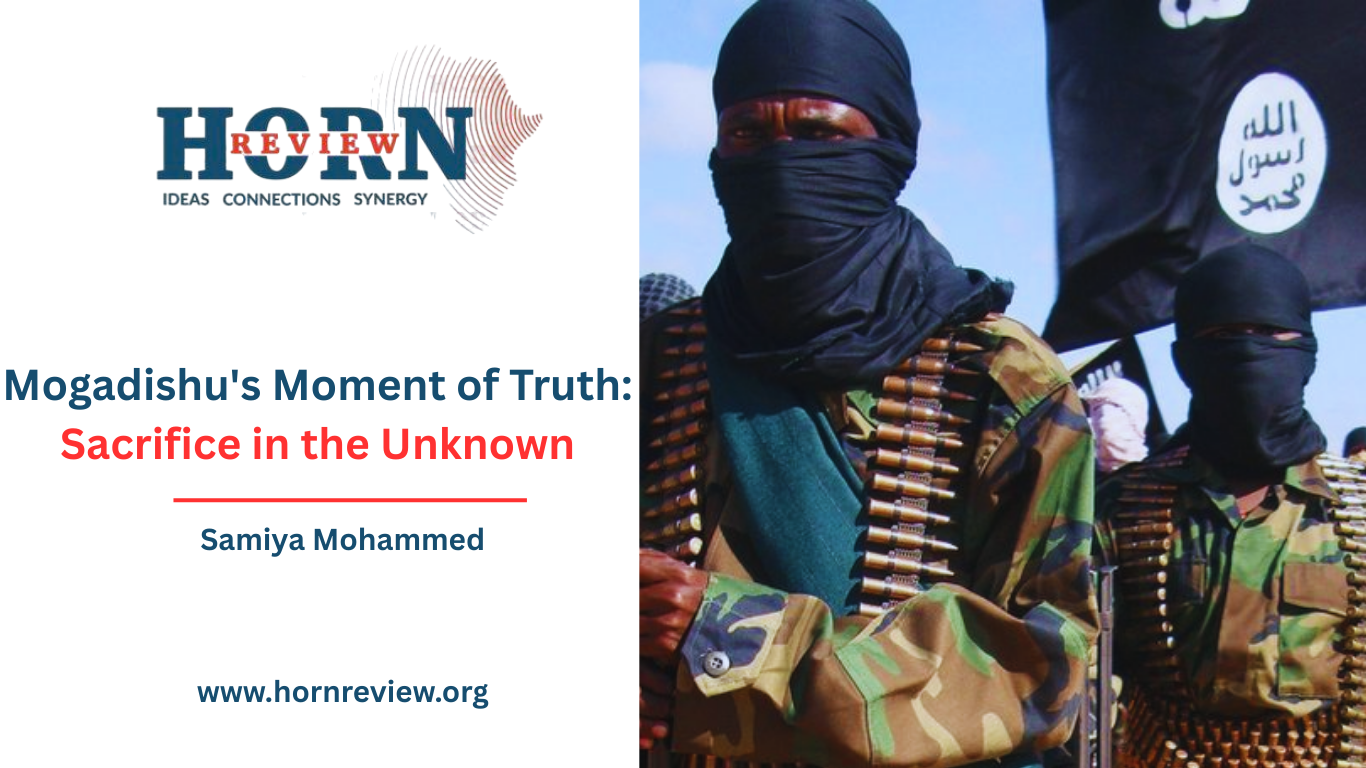
The circulation of unverified reports alleging diplomatic contact between the Federal Government of Somalia and the Al-Shabaab militant group and their official denial has given rise to a state of keen strategic apprehension within the corridors of power in Ethiopia. These persistent rumors, while formally repudiated by Mogadishu penetrate to the core of a bilateral security arrangement predicated on Ethiopian national sacrifice and a mutually acknowledged although serious, commitment to regional stability. Such allegations cut across just speculative discourse, they signify a latent existential breach of trust capable of dismantling a decade spanning plan of costly counter-insurgency collaboration and posing an immediate, direct threat to Ethiopian territorial integrity and national security. The propagation of these claims irrespective of their factual veracity, indicate an erosion of political will coinciding with the demonstrated and resurgent operational capacity of Al-Shabaab, whose forces have demonstrated the capability to threaten the periphery of the Somali capital itself.
Ethiopia’s investment in Somalia’s stability has been substantive and steep. For nearly two decades, Ethiopian forces have served as a base of international efforts to degrade Al-Shabaab, contributing thousands of troops to African Union missions and paying a heavy price in lives lost. This commitment is not altruistic but existential. Al-Shabaab’s ideological vitriol consistently targets Ethiopia, framing it as a historical foe and launching cross border attacks that threaten Ethiopian towns and sovereignty. The group’s resurgence is a direct national security threat to Ethiopia, making stability in Mogadishu an imperative and not a choice.
Even unverified rumors of Mogadishu negotiating with this very adversary are anathema. The potential consequences are catastrophic. Any formal dialogue would inevitably center on Al-Shabaab’s non-negotiable core demand like the complete withdrawal of all foreign forces. For Ethiopia, this would mean a forced retreat, creating an immediate security vacuum that Al-Shabaab would exploit to consolidate territorial control and regenerate offensive capabilities. Such a scenario would not only betray the sacrifices of Ethiopian soldiers but also hand a militant group, linked to global jihadist networks, a victory on Ethiopia’s doorstep. The resulting surge in militant confidence would directly translate to increased threats against Ethiopian border regions and interior.
The diplomatic context makes these rumors all the more disquieting. They emerge just as Ethiopia and Somalia have painstakingly navigated a period of significant tension, finding a fragile diplomatic off-ramp through the Ankara Declaration. This agreement, welcomed by the international community, was predicated on mutual respect for sovereignty and a recommitment to joint security cooperation. Furthermore, a notable diplomatic thaw had begun, exemplified by Somali President Hassan Sheikh Mohamud’s presence at the inauguration of Ethiopia’s Grand Ethiopian Renaissance Dam and his supportive comments regarding Ethiopia’s regional concerns. Talks with Al-Shabaab would shatter this nascent trust, showing that Mogadishu’s assurances are negotiable and that its partnerships are transactional.
Far of the bilateral relationship, the implications would ripple across the Horn of Africa triggering a severe regional crisis. Neighbouring countries like Kenya and Djibouti, which also contribute troops and suffer from Al-Shabaab’s violence would see a Somali negotiation as an act of bad faith that undermines the entire regional counter-terrorism compact. It could precipitate a fracturing of the African Union mission, as contributing nations reassess the risks of operating in a coliseum where the host government might be treating with the enemy. The resulting fragmentation would be a gift to Al-Shabaab, allowing it to employ divide and conquer tactics against a disunited front.
Internationally the fallout would be swift and severe. The United States maintains Al-Shabaab’s designation as a terrorist organization and opposes negotiations that would legitimize it. American military and financial support, already a subject of intense debate in Washington would likely face immediate review or curtailment. The European Union, while supporting stabilization emphasizes the sovereignty and territorial integrity of both Somalia and Ethiopia, principles that would be thrown into chaos by such unilateral talks. A crisis of confidence among donors could cripple the already precarious financing for the AU mission, which is struggling to secure the necessary funds for troop allowances.
The notion that a negotiated settlement with Al-Shabaab is a viable shortcut to peace is a dangerous illusion. The group is an insurgent force with a totalitarian vision, controlling roughly thirty percent of Somalia’s territory more than the federal government itself. Its political ideology, affiliated with Al-Qaeda is fundamentally opposed to the pluralistic, federal model enshrined in Somalia’s provisional constitution. Any deal would not be a peace agreement between political equals but a potential capitulation that surrenders the Somali state to theocratic rule, setting a catastrophic precedent for the region.
Therefore, Ethiopia’s stance is rooted in strategic reality. The only path to lasting security is the continued, military and political partnership between Somalia, its regional neighbours, and the international community. This requires Mogadishu to demonstrate resolve. Ethiopia has recently moved to solidify this partnership, with military chiefs from both nations meeting to develop a formal Status of Force Agreement to enhance bilateral counter-terrorism operations. This is the direction of travel that must be strengthened, not undermined by shadow diplomacy.
In the face of these destabilizing rumors, Ethiopia’s call is for clarity and commitment. The government in Mogadishu must not only deny these reports but actively demonstrate through its actions that no channel to Al-Shabaab exists. The focus must remain on unifying Somalia’s politics strengthening its national army, and fully supporting the AU mission. For Ethiopia, the stability of Somalia is inseparable from its own. While Ethiopia remains committed to the Ankara framework and the recent positive diplomatic gestures, it will be forced to re evaluate all options should the foundation of security cooperation crumble. The message is clear that unity against extremism is the only viable course. Any dalliance with terror real or perceived is a bet with the future of the entire Horn of Africa, and Ethiopia will have no choice but to respond decisively to protect its people and its sovereign interests.
By Samiya Mohammed, Researcher, Horn Review